How backyard chicken keepers can protect egg quality and safety
Clean nests, prompt collection, and cold storage do most of the work. The biggest mistakes are easy to fix: leaving eggs in hot boxes, washing them wrong, or letting them sit unrefrigerated.
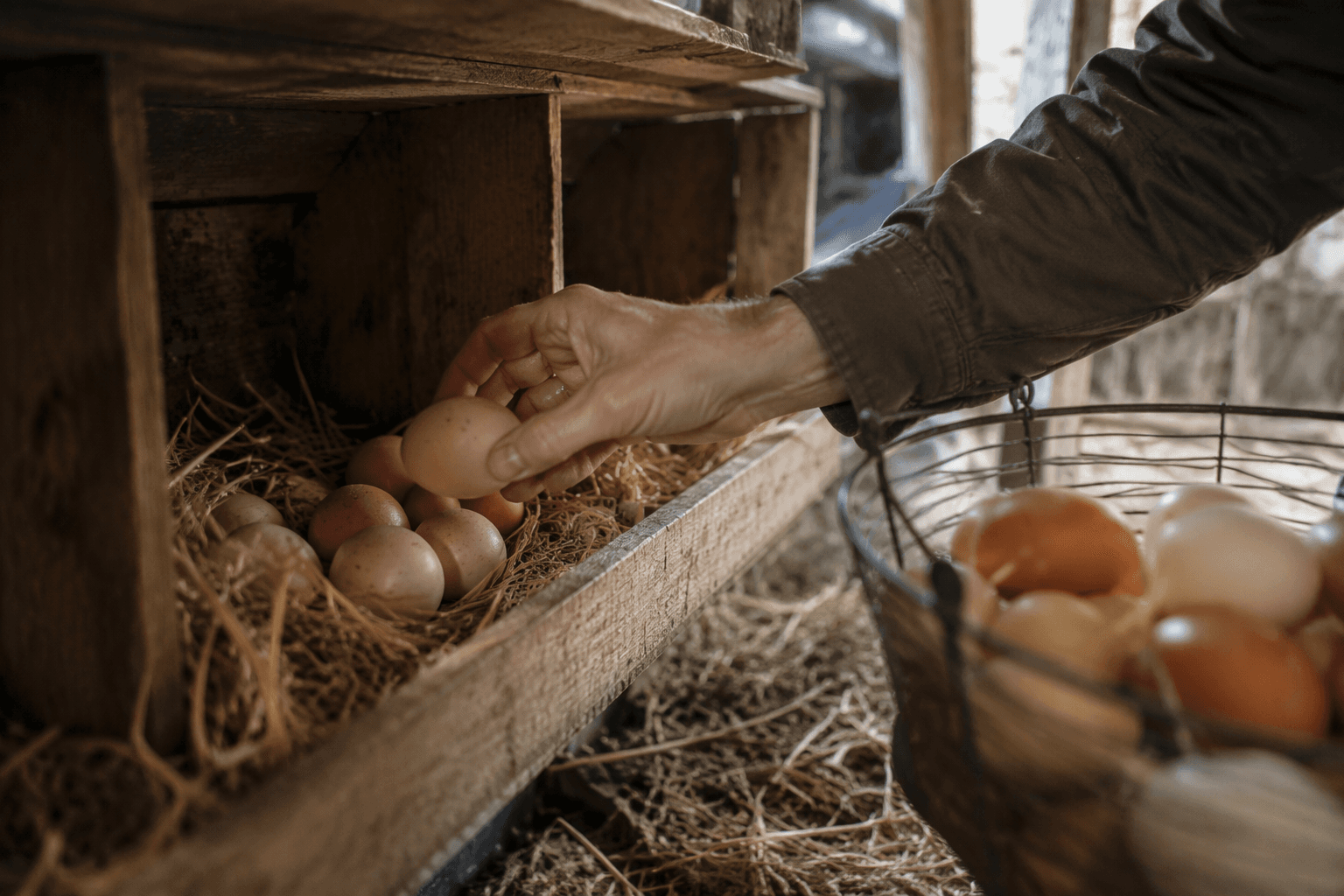
Backyard egg quality starts the minute a hen lays. If you want cleaner kitchen eggs, fewer cracked shells, and a product you can hand to family or customers with confidence, the job is mostly about routine: collect often, keep nests clean, separate damaged eggs right away, and refrigerate promptly.
Start with the nest box
The University of Georgia College of Agricultural and Environmental Sciences puts egg quality in the hands of daily management, not luck or breed. Eggs that sit in dirty nesting boxes pick up manure, bedding dust, and moisture before you ever touch them, and that shows up later as stains, weakened shells, and more washing. Clean nesting material is the simplest fix, and frequent collection keeps eggs from baking in heat or getting rubbed around by a restless flock.
What to change this week
• Pull eggs several times a day if your birds lay in warm weather or in boxes that stay busy. • Replace soiled nesting material before it becomes damp or packed down. • Treat cracked eggs as a separate category the moment you collect them.
That last point matters because cracked shells do not protect the contents well. Keep them out of the pile you plan to store, gift, or sell, even if they still look usable for immediate cooking.
Wash with care, not force
Cleaning is where a lot of backyard keepers accidentally create the problem they are trying to solve. The University of Nebraska-Lincoln’s backyard egg publication focuses on washing eggs for eating, not hatching, and it specifically addresses washing temperatures and the sale of eggs. That is the right frame for small flocks: washing is not cosmetic work, it is a food-safety step that has to be done correctly.
Texas A&M AgriLife’s July 16, 2020 backyard-egg tips also center cleaning and storage as linked jobs, not separate chores. If you wash, use proper water temperature and handle the shell gently so you do not drive contamination inward or damage the protective layer. Rough scrubbing, cold water mistakes, and sloppy drying can turn a dirty shell into a weaker one.
For backyard keepers, the practical rule is simple: clean shells are good, but overhandling is not. If an egg only needs a dry wipe or light cleaning, do that instead of soaking or hard scrubbing it. Save the heaviest cleaning for shells that are clearly dirty and likely to be used quickly.
Refrigerate quickly and keep the temperature steady
USDA Food Safety and Inspection Service guidance is blunt on this point: shell eggs are potentially hazardous foods, and they need time and temperature control for safety. FSIS materials say shell eggs should be refrigerated, and one agency page says eggs should not be kept out of the refrigerator more than 2 hours. That is a short window, but it is exactly why eggs from a small flock can lose quality fast when they sit on the counter, in the coop, or in the truck.
The temperature target is not a guess. In USDA’s risk assessment on Salmonella Enteritidis in shell eggs, storing eggs at 45°F, or 7.2°C, within 36 hours of lay reduced estimated human illnesses from 130,000 to 89,000. That is a big enough drop to shape how you handle even a few dozen eggs a week. Cool, stable storage is not just about taste and texture; it is part of the safety system.
Keep eggs away from strong odors, moisture, and rough handling once they are collected. A crowded fridge door, a warm utility room, or a basket on the counter all work against the shell. If you are giving eggs to neighbors or storing them for family meals, refrigeration is the line that protects both freshness and trust.
Know the selling rules before you hand out cartons
If your eggs ever leave your property, labeling and sales rules matter as much as washing and storage. Jacquie Jacob of the University of Kentucky notes that all eggs sold in the United States must carry safe-handling instructions. That is the baseline, even for small, local sales.
State rules can vary a lot. Colorado’s Department of Agriculture says small flock egg producers selling fewer than 250 dozen eggs per month from their own flock’s eggs in certain direct-to-consumer settings, including on-farm sales, farmers markets, or through a community-supported agricultural organization, may be exempt from licensing. That kind of threshold shows why small producers need to check their own state rules before treating backyard eggs like a casual side hustle.

Extension programs have kept repeating the same message because it is the one that holds up in real kitchens and real markets. Michigan State University Extension’s February 23, 2023 article on commercial and farm-fresh eggs, plus guidance from Penn State Extension, North Carolina State Extension, Cornell Cooperative Extension, the University of Arizona Cooperative Extension, Iowa State University Center for Food Security and Public Health, and others, all frame egg handling as standard poultry management, not an optional extra. If you are selling even a small amount, consistency is the product.
Why these habits are worth the effort
The cautionary example that still hangs over egg handling is the 2010 Wright County egg outbreak, which led to a nationwide recall of more than 380 million shell eggs. FSIS materials and egg-safety advocates continue to point to that recall because it shows how quickly handling failures can spread beyond one flock or one farm. A backyard setup may be smaller, but the same chain of risk still applies: dirty shells, delayed collection, poor washing, and warm storage all push the odds in the wrong direction.
The good news is that the fix is not complicated. Clean nests, frequent gathering, careful sorting, and prompt refrigeration are enough to raise the odds in your favor. If you are storing eggs for your own kitchen, handing them to family, or selling a few dozen at a time, the safest eggs are usually the ones that were handled right from the moment they were laid.
This article was produced by Prism’s automated news system from verified source data, official records, and press releases, then run through automated quality and moderation checks before publishing. The system is built and supervised by the people who set the standards it runs under. Read our full AI policy.
Did this article answer your question?