How long duck eggs take to hatch, timing matters for incubators
Duck eggs usually need 28 days, not 21, so incubator timing, humidity, and the last turn all have to be set for ducks, not chickens.
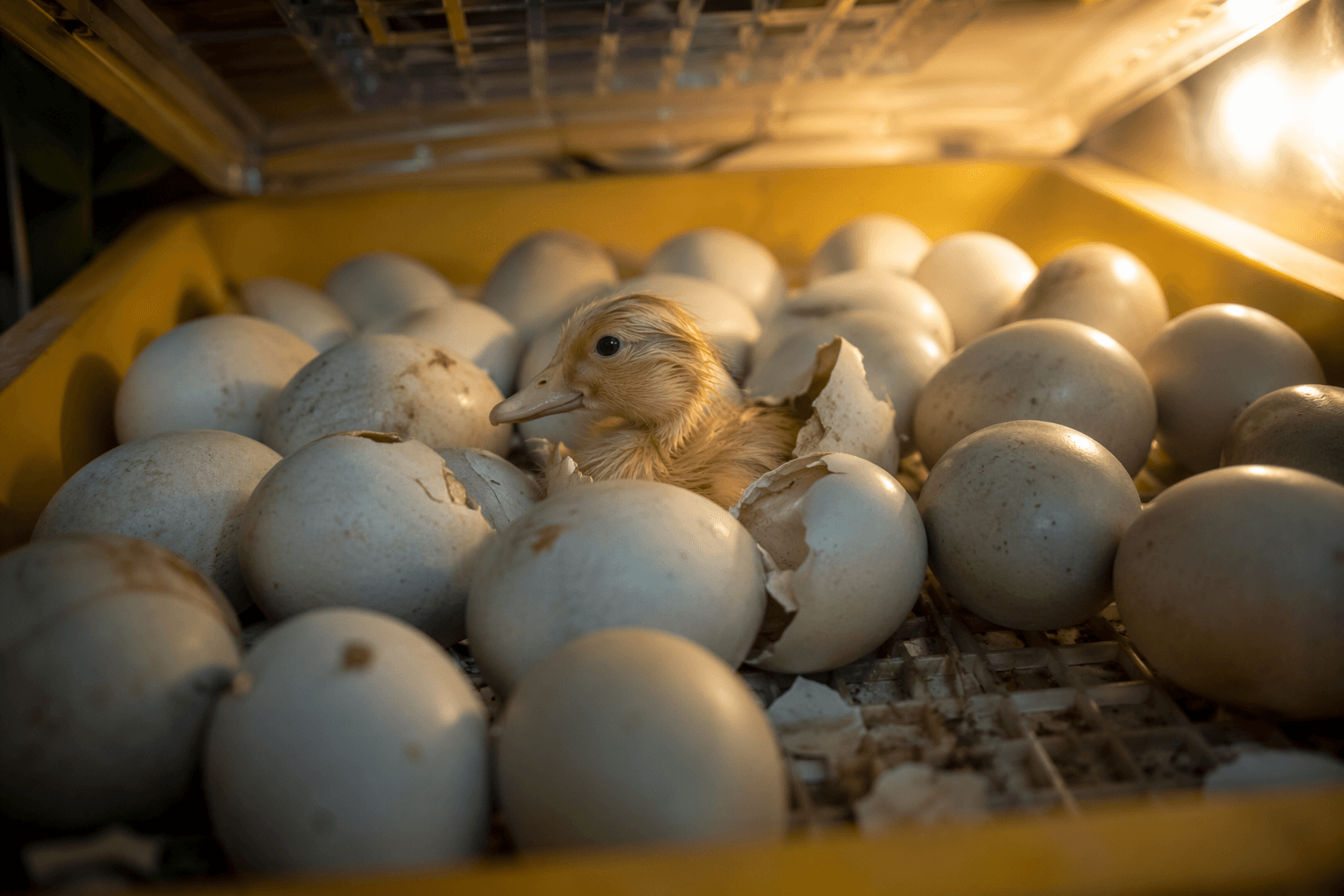
Duck eggs ask for a little more patience than chicken eggs, and that extra week changes the whole hatch plan. For most common ducks, including Pekins, the incubation window is about 28 days, not the 21 days chicken keepers are used to. That difference matters in the incubator, in the hatcher, and in the way you manage the final stretch before ducklings pip.
The 28-day clock is the first thing to plan around
If you are coming from chickens, the simplest rule to hold onto is this: duck eggs run longer. Cornell University College of Veterinary Medicine says Pekin duck eggs generally hatch in 28 days, while Muscovy ducks take about 35 days. The Merck Veterinary Manual matches that split, listing duck eggs at 28 days and Muscovy duck eggs at 35 days.
That longer hatch window is not a small detail. It affects when you set eggs, when you stop turning them, and when you shift from incubation conditions to hatching conditions. It also means a duck hatch is not something to rush through on chicken timing. If you plan your incubator around 21 days, you are likely to interfere too early, and that can throw off a hatch that was otherwise on track.
Why the extra week changes incubator planning
The practical difference starts before the eggs ever go into the machine. Kansas State University Extension notes that storage time matters too: for each day eggs are held over four days, hatchability can drop by 3 to 4 percent and hatching time can be delayed by about 30 minutes. In other words, timing is part of the hatch from the moment you collect the eggs, not just from the day you set them.
Cornell’s duck guidance gives a useful roadmap for Pekins: keep the eggs in a setter for 25 days, then move them to a hatcher until day 28. That handoff is the kind of detail backyard keepers need when they are trying to coordinate multiple species or multiple batches. If you are used to chicken eggs hatching at day 21, the duck schedule demands more space in the incubator calendar and more discipline about when to stop making changes.
It also means you should build your brooder plan around duck timing, not chicken timing. Ducklings do not care that your last hatch was on a three-week clock. If the incubator is full, the hatcher is not ready, or the brooder setup is still incomplete, the longer duck schedule will expose that gap fast.
Humidity, turning, and the final three days matter more than ever
The last stretch is where many first-time duck keepers get nervous, and that is exactly when it helps to stay steady. The University of California Agriculture and Natural Resources gives a sample duck incubation schedule of 99.5°F and 86 percent humidity for days 1 through 25, then 98.5°F and 94 percent humidity for days 26 through 28. That shift marks the change from incubation mode to hatch mode, when the ducklings are positioning themselves and preparing to pip.
Kansas State University Extension adds another useful practice point: waterfowl eggs are often sprinkled with lukewarm water up to the 25th day, then the practice is stopped until the eggs start to pip. That final pause matters because too much handling can interfere with the hatch. Once the eggs are close, the instinct to open the incubator and “check progress” can do more harm than good.
For duck eggs, the takeaway is simple. Turn early, then stop on schedule. Keep the humidity where it needs to be. And once the hatch window opens, let the ducklings work.
What to expect when candling and watching for pip
Duck incubation rewards patience because development does not always feel dramatic until the end. Candling can help you confirm that the eggs are progressing, but it should not turn into daily interference once the hatch window approaches. The important marker is not perfect visual drama, but steady progress toward pip and then hatch.
Because the timeline is longer, the final days can feel slow compared with a chicken hatch. That is normal. A duck egg that is still waiting to hatch on day 26 is not automatically behind, because the schedule is built around day 28 for common ducks and day 35 for Muscovies. The mistake is assuming a chicken timeline and acting on it too soon.
Duck eggs are not just chicken eggs on a longer timer
The species comparison is one of the most useful parts of the story. Pennsylvania 4-H lays it out clearly: chicken eggs hatch in 21 days, duck eggs in 28, and goose eggs in 30. Mississippi State University Extension Service gives the same general poultry rule, listing 21 days for chickens and 28 days for ducks and turkeys in its incubation-duration table.
That comparison matters because it keeps hatch planning species-specific. Chicken know-how transfers only so far. Ducks need a different rhythm, and geese have their own pace too. Once you start treating each bird as its own hatch project, you are much less likely to be surprised by a late pip or a hatch that seems to be taking forever.
Cornell adds one more practical detail that is easy to overlook: duck eggs are larger than chicken eggs, so setting trays need to fit that difference. If you are using home incubators or mixed-species equipment, tray size and egg placement are not minor details. They are part of making the hatch work at all.
The best backyard setup is the one that respects the duck schedule
A successful duck hatch is usually less about fancy gear than about timing, humidity, and restraint. If you know the eggs are likely to take 28 days, you can set your setter, plan your hatcher transfer, and line up the brooder before the first pip appears. If you know Muscovy eggs need about 35 days, you can avoid the frustration of expecting a day-28 finish that was never realistic.
That is why the longer wait is actually useful. It gives you a more accurate hatch plan, a better chance of keeping conditions steady, and fewer chances to open the incubator too early. The lesson is straightforward: when ducks are on the calendar, chickens are the wrong clock to follow.
This article was produced by Prism’s automated news system from verified source data, official records, and press releases, then run through automated quality and moderation checks before publishing. The system is built and supervised by the people who set the standards it runs under. Read our full AI policy.
Know something we missed? Have a correction or additional information?
Submit a Tip