How much space chickens need indoors and outdoors
The cheapest coop mistake is building too small. Use space benchmarks for hens, broilers, and runs before you buy lumber or birds.
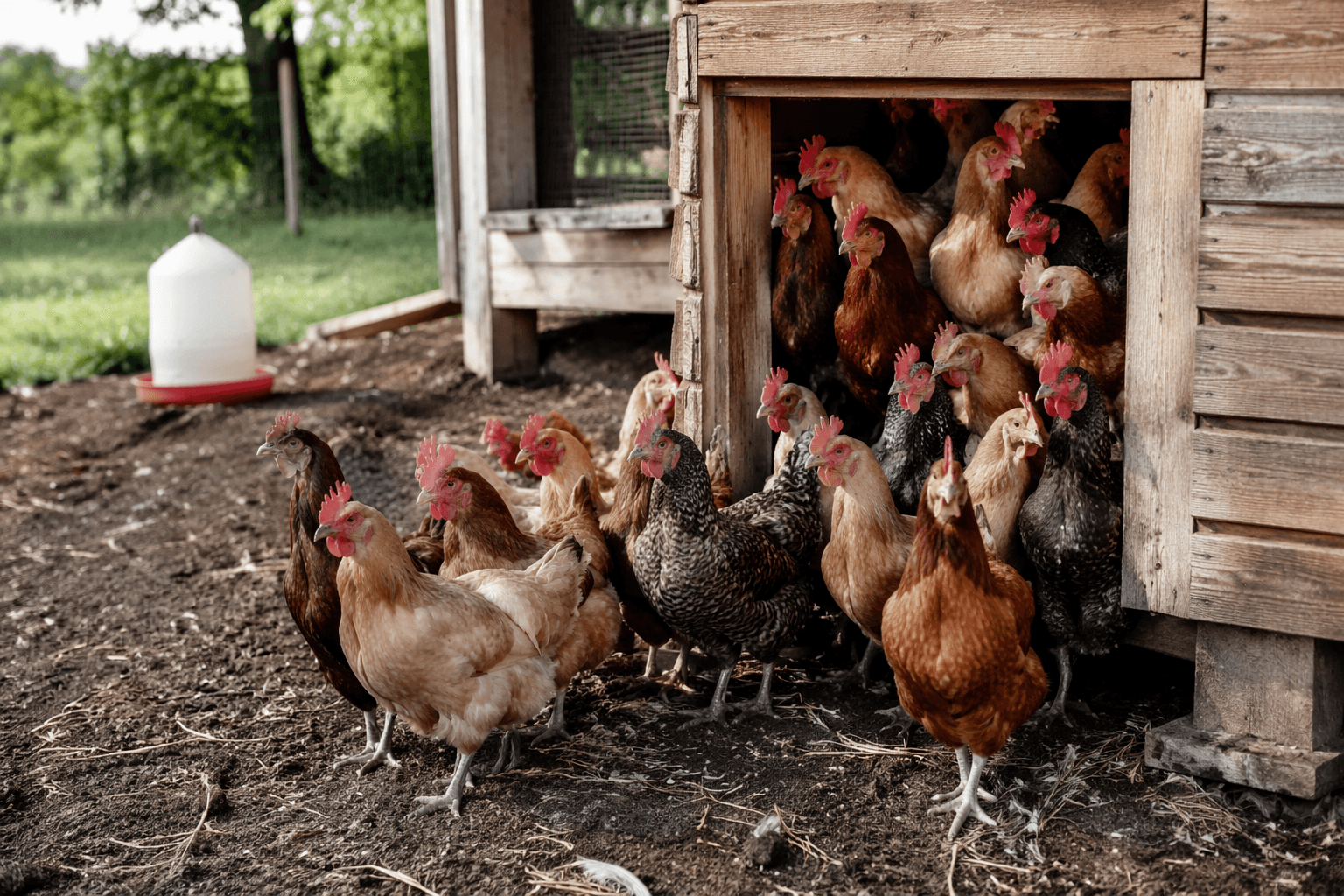
A coop that looks roomy on paper can turn cramped fast once birds, feeders, waterers, perches, and winter bedding are in place. That is why the first sizing decision matters so much: enough room for air to move, not so much dead space that the house turns cold and drafty, and enough outdoor space that the run does not become a mud patch or a pecking ground. Underbuild the system, and the flock feels it first in stress and behavior, then in eggs, cleanliness, and day-to-day chores.
Start with the house, then the run
Backyard chicken space is never just one number, because breed, age, species, and outdoor access all change the equation. Even so, the extension guidance lines up on one big point: crowding is a welfare problem, not just a comfort issue. A house that is too tight can set off feather pecking and, in worse cases, cannibalism, while a coop that is too loose can be harder to keep warm and dry in winter.
That balance is why the best backyard setup is more than a box with a door. It has to be a managed environment, one that protects the flock from rain and wind, stays dry underfoot, and leaves you enough access to clean, feed, and spot problems before they spread.
The numbers that help you size a flock
For laying hens, a practical indoor benchmark is 3 to 4 square feet per bird inside the coop, with about 10 square feet per bird outdoors. Other extension guidance gives a wider range, from 1.5 to 2 square feet per bird inside the house to 3 square feet per bird if birds have access to a run, which is a useful reminder that recommendations vary by system and source.
Those differences do not make the numbers useless. They tell you what happens when the setup changes. A flock with generous outdoor access can tolerate a tighter house than a flock that spends most of its time inside. A flock with no outdoor access needs far more room in the run, with 8 to 10 square feet per bird as a common benchmark when birds are kept without access to a run.
For meat chickens, Poultry Extension recommends 3 to 4 square feet per bird indoors, and notes that outdoor access is not necessary for fast-growing commercial strains because they are less likely to use it. Slower-growing birds are the exception, and they benefit more from outdoor space. That means the right plan depends not just on how many birds you buy, but on what kind of birds they are and how much of the day they will actually spend outside.
Why a small run gets messy fast
A run can absolutely be smaller than the ideal open-yard setup, but the tradeoff is maintenance. Once birds have limited ground to work, the surface can become muddy, bare, and stripped of vegetation quickly. That matters for the birds, because wet, dirty footing raises management headaches, and it matters for you, because a small run can become the dirtiest part of the property in a hurry.
Urban lots make that calculation even harder. When the yard is tiny, the flock has less room to spread out, scratch, and rest away from one another. That is when the difference between “enough” and “bare minimum” starts to show up in the daily routine: more smell, more scraping, more bedding changes, and more cleanup around the coop door.
Ventilation, light, and the winter test
Virginia Tech Extension puts the housing basics plainly: poultry housing should be dry and draft-free, and ventilation should remove ammonia fumes, carbon dioxide, and moisture from the coop. That is not just about comfort. Moist air and ammonia build-up make a house feel worse for birds and harder for the keeper to manage, especially once winter closes the flock in for longer stretches.
Light matters too. Hens need about 14 to 16 hours of light to keep producing eggs at a high rate. A coop that is too dark, or a winter setup that leaves birds without enough light, can translate into a drop in production even when feed and care stay the same. In other words, the right amount of space has to work with the right amount of light and airflow, not against them.
Crowding changes behavior before it changes the egg basket
University of Kentucky Extension warns that feather pecking can damage plumage and skin, and that it can spread quickly through a flock. Overcrowding can trigger it, especially when birds must compete for feed, water, or perch space. Once that dynamic starts, it can be hard to reverse because the birds are not just uncomfortable, they are interacting in a tighter, more competitive system.
That is why space shows up in egg production, not just in behavior. Stress, poor perch access, and constant jostling all take energy away from steady laying. A cramped flock can also become harder to manage because the birds spend more time on top of one another, in one another’s way, and in the mess they all create.
Build for predators before you build for aesthetics
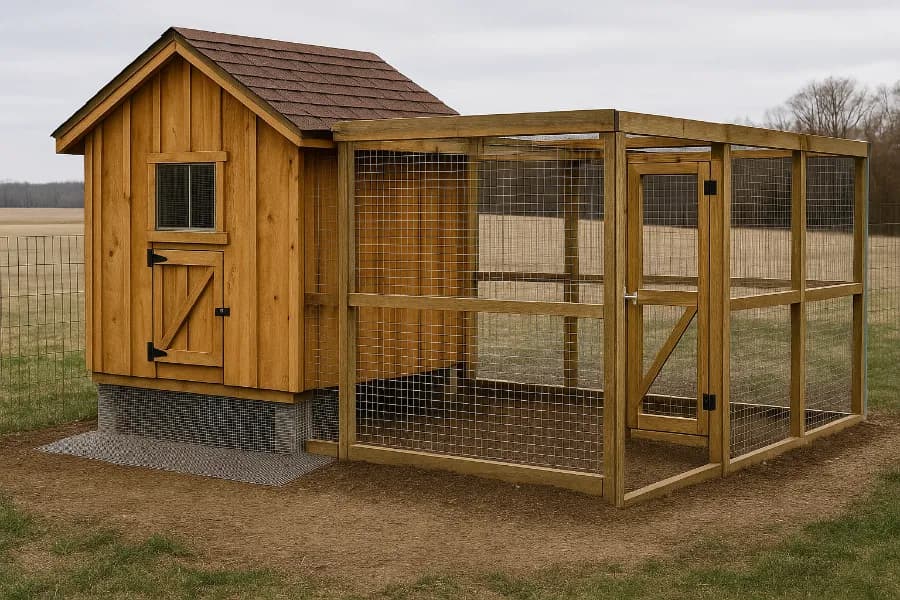
Oregon State University Extension Service pushes the same lesson from a different angle: siting and structure matter because predators are part of the design problem. Coops should close birds in at night, use raised floors where possible, and sit where human activity helps discourage wildlife. Fencing should be buried 6 inches to 1 foot into the ground, and netting or wire should cover the top of the run to reduce access from above.
That advice also helps with neighbor-friendliness. A coop that is high, well-drained, easy to clean, and planned for sanitation is less likely to smell, flood, or become a fly magnet. In a backyard setting, that is part of good flock management too. The best housing protects birds, but it also keeps the rest of the property livable.
Outdoor access, and what organic rules exposed
The long fight over organic poultry standards in the United States showed how much confusion can hide inside the phrase “outdoor access.” In 2017, USDA said the ambiguity in the rules had produced two very different organic egg systems: one relying on porch-based outdoor space, and another with actual pasture access. USDA finalized the Organic Livestock and Poultry Standards on October 25, 2023, after receiving 40,336 written comments and 57,000 petition signatures, with 94% of the responses supporting the rule.
The final standards require poultry to have year-round outdoor access with limited temporary confinement exceptions, and they prohibit porches from counting as outdoor space. USDA later issued a technical correction that moved a broiler compliance date for certain stocking-density and soil-and-vegetation requirements from January 5, 2029 to January 2, 2029. For backyard keepers, the broader lesson is simple: “outdoor access” only works when the space is real, usable, and sized to do the job.
The rookie mistake is thinking coop plans begin with lumber. They begin with square footage, airflow, drainage, and predator protection, because those are the limits that decide whether a flock stays healthy or turns into a daily cleanup project. Get the space right first, and the house starts working the way a good backyard coop should.
This article was produced by Prism’s automated news system from verified source data, official records, and press releases, then run through automated quality and moderation checks before publishing. The system is built and supervised by the people who set the standards it runs under. Read our full AI policy.
Did this article answer your question?