How to choose the right chicken breed for your backyard flock
The best backyard chicken breed is the one that fits your eggs, climate, space, and neighbors. Start with your flock’s job, then match temperament and hardiness.
A good backyard flock starts with one blunt question: what do you want these birds to do for you? The answer changes everything, from egg basket to coop design, because the bird built for fast meat gain is not the bird built for steady eggs, and neither is automatically the calmest choice for a small yard. Breed selection is less a popularity contest than a matching problem, and the smartest first flock is the one that fits your weather, your space, and your tolerance for noise and mess.
Start with the job, not the look
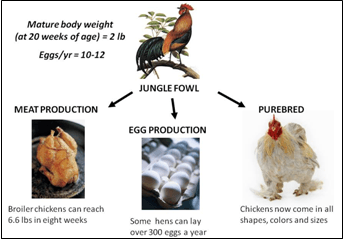
The University of Kentucky Extension lays out the basic reality behind chicken breeds: modern birds descend from the Red Jungle Fowl of Southeast Asia, and selective breeding split them into types specialized for meat, eggs, and exhibition. That long breeding history explains the wide spread in performance. A wild-type Red Jungle Fowl hen lays only about 10 to 12 eggs in a breeding season, while egg-focused breeds can produce more than 300 eggs a year.
That same selective breeding also produced modern meat birds with startling growth rates. Cornish Cross broilers can reach 4 to 5 pounds in six weeks, or 6 to 10 pounds in eight to 12 weeks. They are the standard fast-growth meat bird, but they are poor egg producers and generally do not do well in pasture or free-range systems, which makes them a poor fit if you want a bird that can handle a mixed-purpose backyard setup.
If eggs are the priority
For an egg flock, timing matters as much as breed. University of Minnesota Extension notes that hens usually begin laying at about six months, may keep laying for five to 10 years, and hit their peak production in the first two years. That is the daily rhythm behind most backyard flocks: the first months are about growth and setup, then the laying house becomes part of the household routine.
Minnesota’s extension materials also point to several practical backyard breeds. Rhode Island Reds and Wyandottes weigh about 6.5 pounds and lay brown eggs, which makes them familiar, sturdy choices for keepers who want a dependable layer without chasing novelty. Ameraucanas lay green eggs, are easy to handle, and tolerate all climates, a useful combination if you want a friendly bird with a little color in the basket. If your winter is the biggest constraint, Orpington hens, at about 8 pounds, are ideal for cold weather.
Penn State Extension adds an important reality check: not every chicken has to be a commercial-style egg machine to be useful. Common heritage breeds often lay 50 to 100 eggs a year, while commercial sex-linked hybrids can lay 240 to 280 eggs a year. That gap matters if your priority is maximum egg count, but it also helps explain why many small-flock owners choose birds for temperament and hardiness instead of raw output alone.
If meat, dual purpose, or flexibility matters
If you want a flock that can do more than one job, dual-purpose breeds are the middle ground. Penn State Extension describes heritage breeds as slower growing, often hardier, and generally well adapted to native climates, with most serving a dual purpose of meat and eggs. For a backyard keeper, that usually means a bird that is less specialized, but more forgiving if your goals change.
Heritage status also comes with a standard of its own. The Livestock Conservancy’s heritage-bird definition requires an American Poultry Association standard breed that entered the standard before the mid-20th century, traceable breeding stock, a bird that can live a long productive life outdoors, and a market weight that takes no less than 16 weeks. That slower timeline is part of the tradeoff: you give up the shockingly fast finish of a Cornish Cross, but you get a bird that often fits a more varied backyard system.
Match the bird to your climate
Cold weather can make a good-looking breed miserable if the bird is not built for it. University of Minnesota Extension says heavier standard and dual-purpose breeds handle cold better, and specifically names Plymouth Rock, Wyandotte, Ameraucana, and Orpington as winter-hardy breeds. Smaller breeds with less feathering or large combs and wattles may need extra care, because those exposed parts are more vulnerable when temperatures drop.
Minnesota’s cold-weather guidance gives a useful number to keep in mind: supplemental heat may be needed when coop temperatures fall below 35 degrees Fahrenheit, and most poultry maintain body temperatures best when the environmental temperature is between 60 and 75 degrees Fahrenheit. That is the kind of detail that changes a flock from merely surviving winter to staying productive through it.
Fit the bird to your yard, your neighbors, and your rules
Breed choice is never just about the bird. University of Minnesota Extension notes that backyard chickens may require a city permit, and some cities restrict or prohibit poultry keeping altogether. USDA NIFA adds that local rules may govern flock size, setbacks from property lines, and the type of chicken house allowed. In other words, the best breed on paper is not the best breed if your town only allows a small flock or if your lot leaves little room for coop placement.
Penn State Extension also points out that roosters are not necessary for hens to lay eggs. That detail saves a lot of first-flock frustration, especially in neighborhoods where crowing would be the fastest route to conflict. Backyard poultry raise other everyday concerns too: disease, noise, odor, pests, and waste management are all part of the deal, and they should shape flock size and breed choice just as much as egg color.
Keep health and biosecurity in the frame
The cleanest flock plan still fails if disease moves in. USDA APHIS says biosecurity is essential to keeping disease away from birds, property, and people, and it continues to warn that highly pathogenic avian influenza remains an ongoing outbreak in commercial and backyard poultry flocks in the United States. That makes bird selection part of a larger management system, because even docile hens still need careful handling, clean housing, and a routine that keeps outside contamination off the property.
For most backyard keepers, the practical lesson is straightforward: choose birds you can manage well every day, not just birds that look appealing in a hatchery catalog. A mellow breed that fits your climate, your permit limits, and your coop space will usually serve you better than a flashy bird that pushes your setup past its comfort zone.
The easiest first-flock choice is the one that fits your limits
The strongest backyard flock is rarely built around a single breed that “wins” on paper. It is built around the bird that matches the job, whether that means a dependable layer like a Rhode Island Red, a cold-weather bird like an Orpington, a calm all-climate choice like an Ameraucana, or a dual-purpose heritage breed that trades speed for flexibility. Once you treat breed selection like a real matching problem, the rest of the flock gets easier: better housing, cleaner routines, fewer surprises, and birds that suit the backyard you actually have.
This article was produced by Prism’s automated news system from verified source data, official records, and press releases, then run through automated quality and moderation checks before publishing. The system is built and supervised by the people who set the standards it runs under. Read our full AI policy.
Did this article answer your question?