How to spot and stop backyard chicken parasites before they spread
Tiny mites and lice can tank egg output before you notice them. The fastest fix is to read the signs, hit the coop as hard as the birds, and recheck in days.
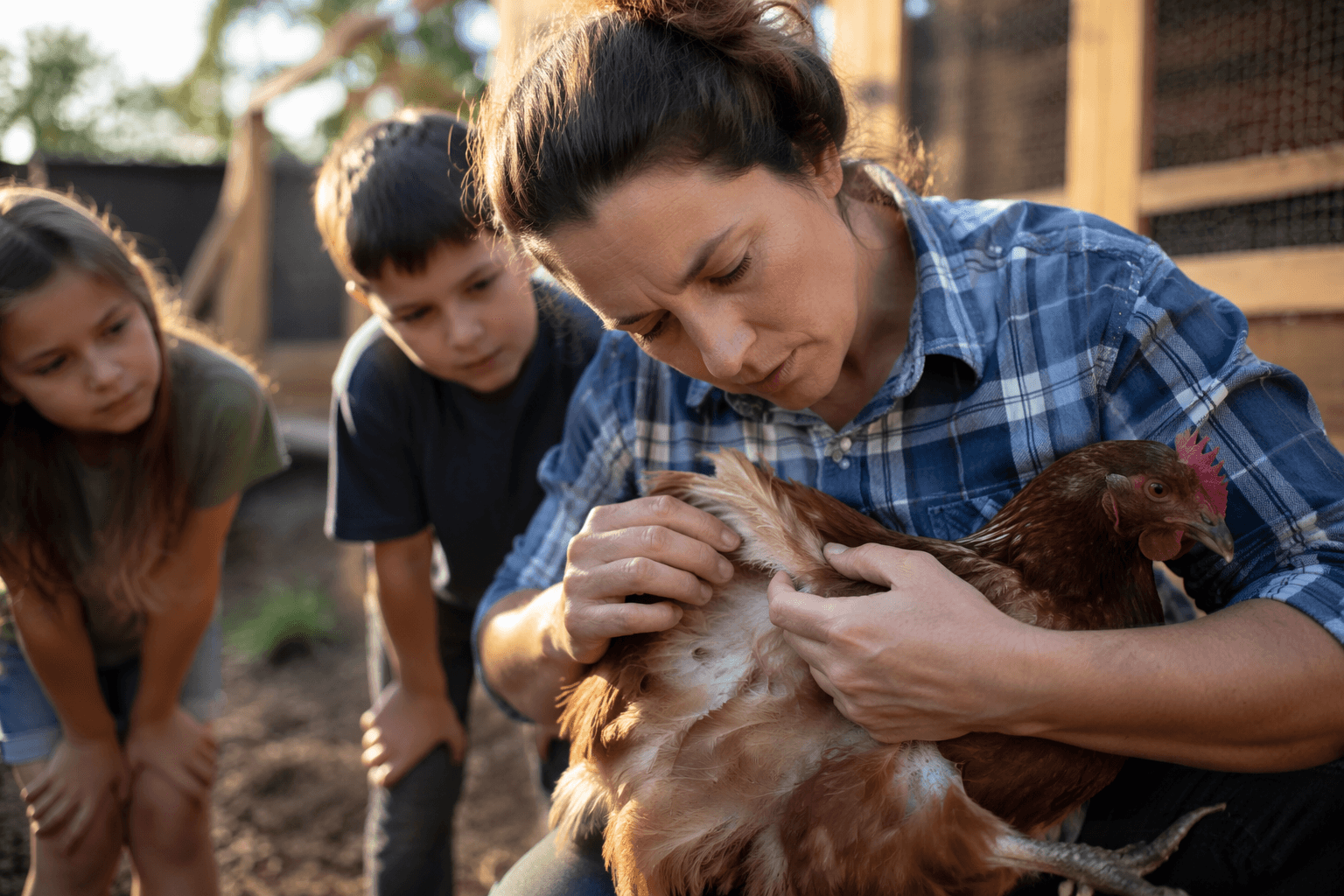
A few itchy feathers, a little less laying, and a hen that seems off for no obvious reason are often the first signs of backyard parasite trouble. By the time you spot the real problem, the population can already be big enough to hit multiple birds. The first job is not treatment but identification. If you can tell mites, lice, and simple debris apart fast, you save yourself the wrong product, the wrong cleanup, and another week of watching the flock slide.
Know what you are looking at
The easiest split is size and behavior. Poultry lice are larger, usually about 2 to 3 millimeters, and are often visible to the naked eye. Mites are much smaller, around 1 millimeter, so you may need close inspection or a magnifying glass just to confirm that what you are seeing is a live pest and not dust or feather debris.
Timing matters too. Northern fowl mites are among the more common external parasites in poultry, especially in cool weather. Chicken mites, also called poultry red mites, tend to show up as warm-weather troublemakers and can live in cracks and crevices in the coop rather than staying on the bird all day. That difference changes your response: lice point you toward the bird itself, while mites should make you think bird plus environment.
Read the bird before you reach for a treatment
The first clues are usually physical. Weight loss, reduced egg production, decreased activity, bald spots, irritated skin, small scabs, ragged feathers, and a generally poor body condition all fit the parasite picture. Heavy mite infestations can go further, causing anemia, pale combs and wattles, stress, and, in severe cases, death. A flock that suddenly looks “off” is often telling you the infestation has already had time to build.
The practical rule is simple: do not stop at one bird if one bird looks bad. Most ectoparasites affecting chickens are blood feeders, and they can bite humans and other animals as well. If the bird seems weak, pale, or unusually quiet, inspect the rest of the flock right away because these pests rarely stay a one-hen problem for long.
Inspect the coop, not just the chickens
Poultry red mites can live off the bird in cracks and crevices such as roosts and nest boxes, feeding at night and waiting out the day in the structure itself. Arizona extension guidance puts survival for some ectoparasites at over a month without birds, which means an “empty” coop is not the same thing as a clean one.
Look hard at the places birds spend the most time resting: roosts, nest boxes, and the seams, joints, and cracks around them. If you find activity there, treat it as a coop problem, not just a chicken problem. That is especially important with mites, because the bird may look better for a day or two while the hidden population keeps cycling in the woodwork.
Why mites come back so fast
Mites are quick breeders. Under favorable conditions, northern fowl mite development from egg to adult can take about 7 to 10 days, which is fast enough to turn a light issue into a flockwide headache before you get comfortable. Some treatments also miss the eggs, so a single application is rarely the end of the story.
University of Kentucky Extension recommends re-treatment every four to seven days because mite eggs are not killed by some products.
What to do when you suspect an infestation
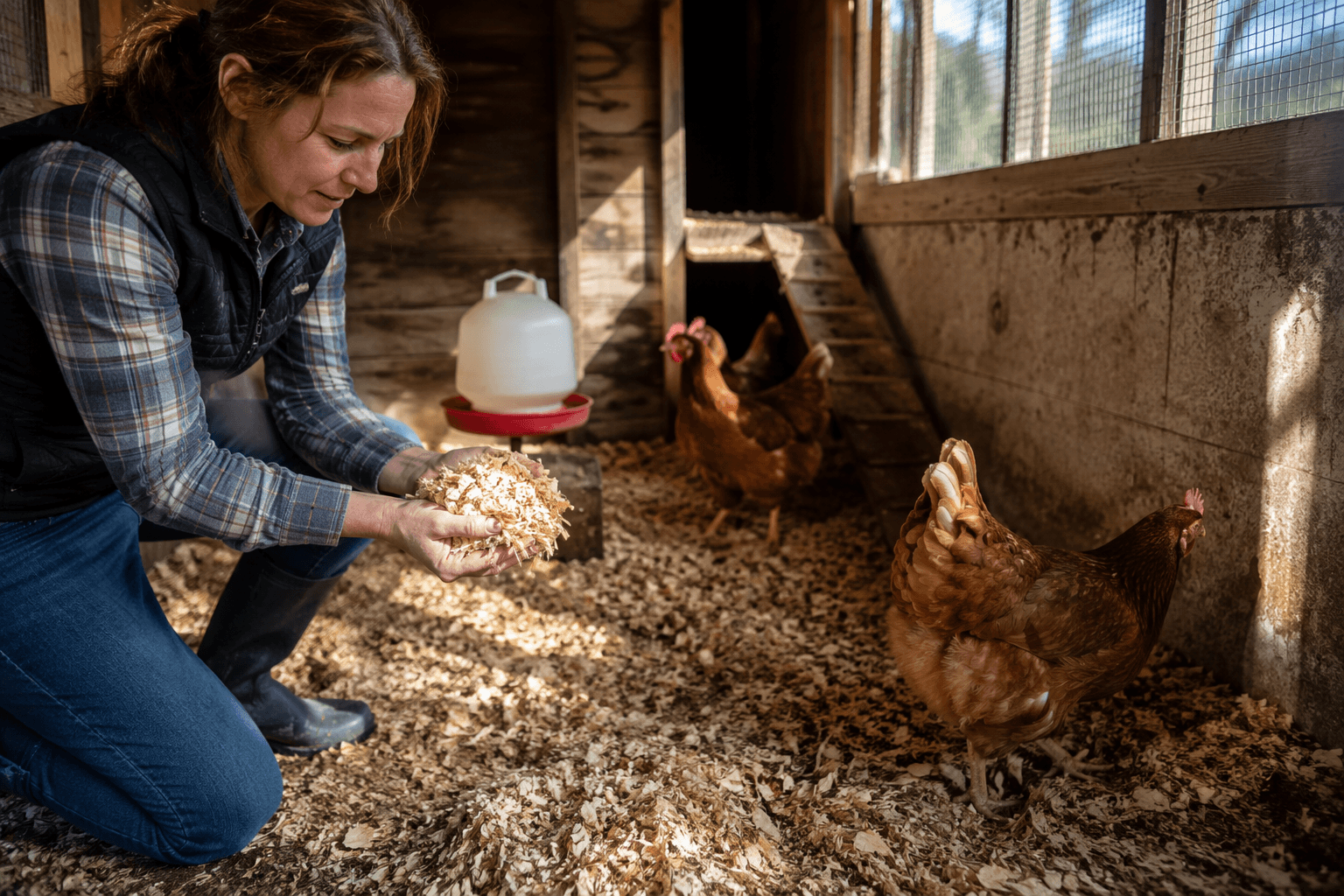
Once the signs line up, move quickly and treat the bird and the coop as one problem. A heavy mite load can spread through the flock, and the longer the environment stays contaminated, the easier it is for birds to get reinfested. A deep-clean of roosts, nest boxes, and other hiding places is the backbone of control because that is where poultry red mites can wait between feedings.
- Lice: spend more time on the bird, since they are large enough to spot directly.
- Mites: inspect the coop hardware, cracks, and resting spots with extra care.
- Warm-weather flare-ups: think chicken mites and poultry red mites.
- Cool-weather flare-ups: think northern fowl mites.
Use the species clues to decide where to focus first:
If you are unsure, a close visual check with a magnifying glass is better than guessing. The wrong read wastes time, and time is what these pests use to multiply.
Prevention that fits a small backyard flock
The best prevention is the boring stuff done consistently. Keep feed secured so pigeons, rats, and mice are not drawn to the coop, birds, or eggs. Limit contact with wildlife and roaming domestic animals, since they can carry and spread ectoparasites into your flock. Regularly check birds and the coop, not just when something looks wrong, because infestations are often missed until they are already established.
Because some ectoparasites can survive for weeks or even over a month without birds, cleaning has to be thorough enough to disrupt the life cycle, not just sweep away visible dirt.
A West Coast survey cited in a veterinary review found that 61% of chickens examined across multiple farms had at least one ectoparasite. Backyard flocks run into mites and lice because chickens live close to the ground, close to each other, and close to the structures these pests love.
This article was produced by Prism’s automated news system from verified source data, official records, and press releases, then run through automated quality and moderation checks before publishing. The system is built and supervised by the people who set the standards it runs under. Read our full AI policy.
Did this article answer your question?