Mississippi State breed chart helps backyard keepers choose the right chickens
Mississippi State’s breed chart turns chicken shopping into a practical fit test, from legal limits to climate, temperament, and egg goals. Ameraucanas and Anconas show why looks should come second.
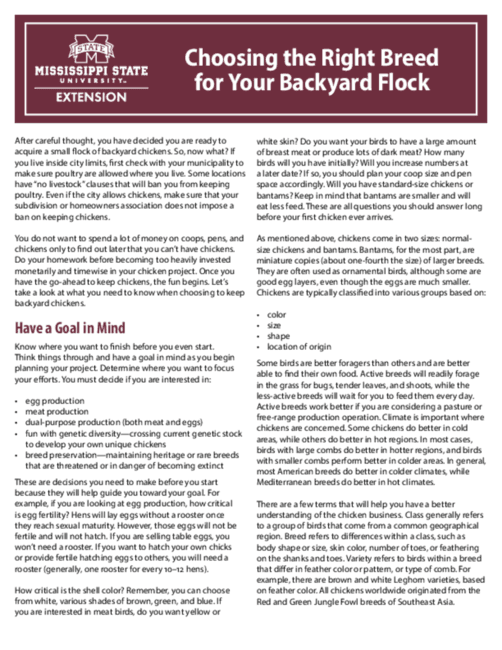
Mississippi State University Extension’s breed chart compares birds on size, egg color and size, cold hardiness, behavior, broodiness, and whether they are better for confinement or free range. If you are shopping for chicks or pullets, the first question is not which bird looks prettiest. It is whether the flock you want can actually work in your yard, in your climate, and under your local rules.
Start with the rule book, not the feed store
Before you fall for feather color or a pretty egg basket, check whether chickens are even allowed where you live. Check municipal rules first, because some places have “no livestock” clauses that ban poultry outright. If you live in a subdivision, you also need to check homeowners association restrictions, since an HOA can shut down a backyard flock even when the city allows hens.
A breed that would be ideal for a roomy country lot can become a headache in a suburban setup with tight ordinances, close neighbors, and limited run space.
Read the chart like a coop-planning tool
The chart forces you to compare birds the way a small backyard keeper actually lives with them. Bird size tells you how much space, feed, and coop room a breed is likely to need. Egg color and egg size help you decide whether you want a standard brown-egg layer, a white-egg layer, or a blue-egg bird that adds variety to the carton.
The other columns are just as important:
- Cold hardiness tells you whether a breed can handle your winters.
- Behavior tells you whether a bird is calm, active, flighty, or nervous in confinement.
- Broodiness tells you whether hens are likely to go broody and sit.
- Confinement versus free range tells you whether a bird will tolerate a smaller yard or really wants room to roam.
A flashy bird with unusual plumage may look perfect in a catalog, but if it is restless in confinement or weak in cold weather, it may not fit a small urban setup at all.
Ameraucana and Ancona show the tradeoffs clearly
The chart’s Ameraucana entry is a good example of a bird that fits many backyard setups. It lists the breed at 4 to 5 pounds, with blue eggs, cold hardiness, and a mostly calm, non-aggressive temperament. The chart also calls it an occasional brooder, which matters if you want steady egg production without a hen constantly disappearing into nesting mode.
Ancona is almost the opposite kind of decision. The chart lists it at 4 to 6 pounds, with white eggs, cold hardiness, and an active, flighty personality. It is better for free range, less comfortable in confinement, and a non-setter, which makes it a stronger match for an owner with room to give the birds movement than for someone trying to keep hens in a tight pen.
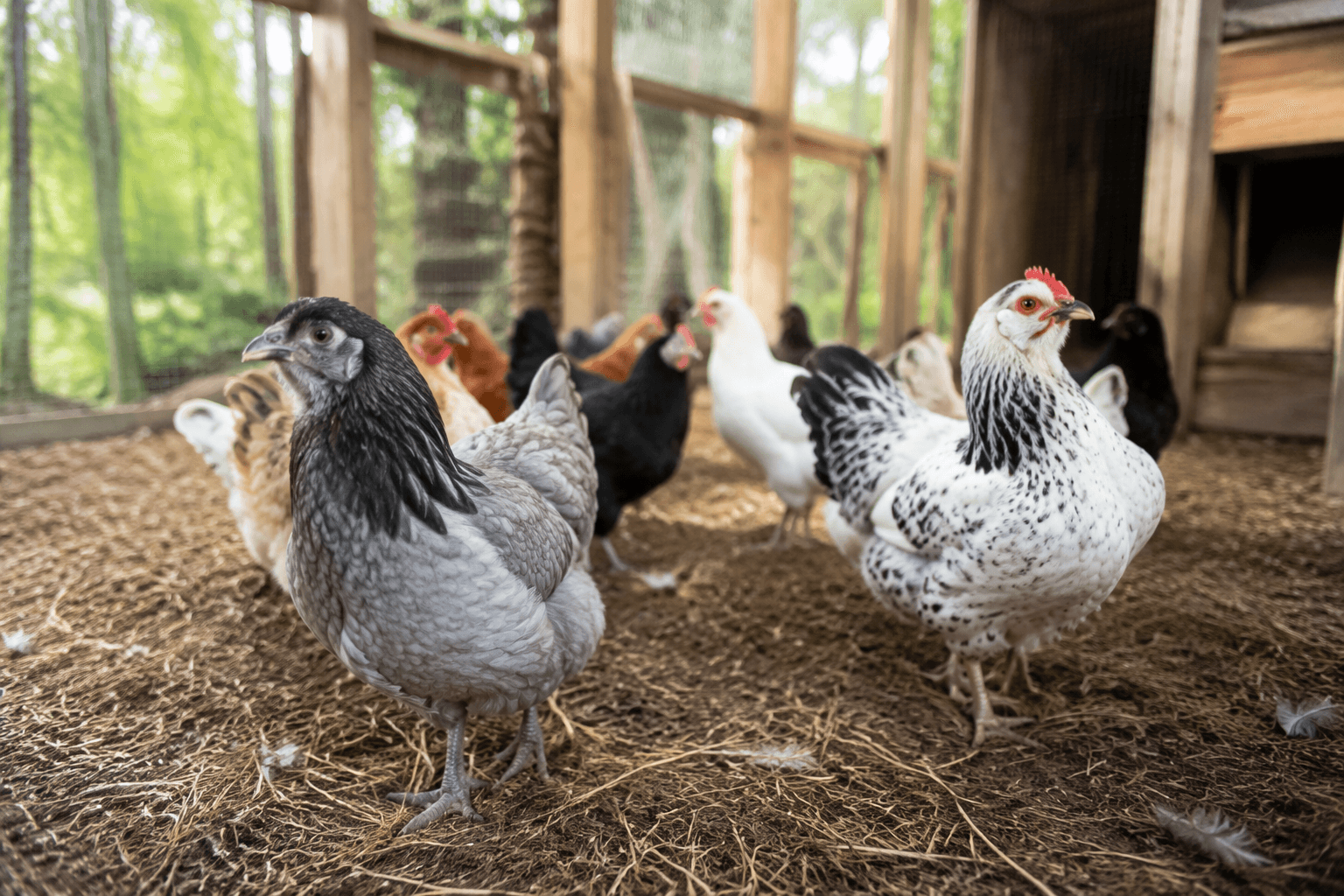
The Livestock Conservancy’s heritage breed chart lists Ancona as Watch status and highly active; it prefers to free range over wide areas.
Turn temperament into a buy or don’t-buy call
If you want hens near children, pets, or a patio, a calm and non-aggressive bird is usually the safer buy. If your setup is tight, a breed that is adaptable to confinement is a better fit than one that is nervous, restless, and likely to test fences.
Use the chart this way:
- Buy for a small suburban coop if the breed is calm, non-aggressive, and adaptable to confinement.
- Buy for a bigger property if the breed is active and happiest free ranging.
- Buy for cold weather if the chart tags the breed as cold hardy.
- Skip a bird that is a poor fit for confinement if your yard is small or your ordinances are strict.
- Prioritize egg color and size only after you know the bird fits your space and handling style.
Biosecurity belongs in the same shopping list
Breed choice is only one part of responsible flock ownership. USDA APHIS’ Defend the Flock program focuses on basic biosecurity, including clean poultry areas and steps that limit disease spread. CDC guidance on avian influenza keeps that same message front and center, because backyard birds are part of a wider human and animal health picture.
The California Department of Food and Agriculture has a backyard biosecurity page and sick-bird hotline, 1-866-922-BIRD (2473).
Why more people are comparing breeds carefully
A Congressional Research Service product updated July 3, 2025 put the U.S. national average retail price of eggs at an all-time high of $6.23 per dozen in March 2025 and tied part of that spike to highly contagious avian influenza that has reduced poultry numbers since 2022. UF/IFAS Extension’s Egg-onomics of Keeping Backyard Chickens ties backyard interest in part to rising egg prices.
A 2014 survey of U.S. backyard flock owners found that 71% kept fewer than 10 chickens and 70% had been keeping chickens for less than five years. A more recent 2024 study found that 48.8% of backyard flocks had one to five birds and that many were kept as pets and or for eggs.
This article was produced by Prism’s automated news system from verified source data, official records, and press releases, then run through automated quality and moderation checks before publishing. The system is built and supervised by the people who set the standards it runs under. Read our full AI policy.
Did this article answer your question?