MSN guide shows beginners how to build an easy chicken coop
MSN’s beginner coop walkthrough lands on the real question: how to build a secure, easy-to-live-with coop without wasting money on extras that don’t matter.
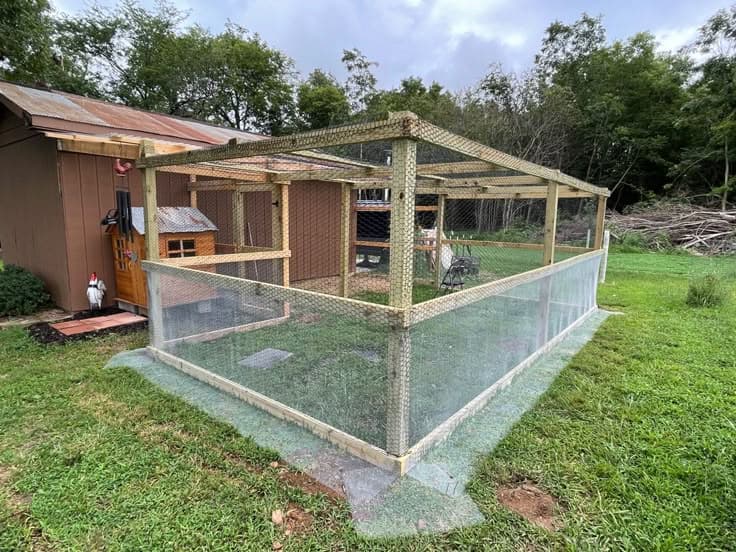
Oregon State University Extension Service recommends raising a coop at least one foot off the ground, burying fencing 6 inches to 1 foot into the soil, and using mesh or netting over runs. A first coop does not need to look custom-built to work well. The smartest beginner setups focus on the basics that keep hens safe and make daily chores easier: predator protection, ventilation, cleanability, nest space, and a size that fits local rules without turning the project into a headache.
Start with the minimum viable coop
The appeal of an easy coop is function, not aesthetics. A practical beginner build lowers the barrier for people who are still deciding whether backyard chickens fit their property, budget, and routine, and it keeps the flock’s needs front and center instead of burying them under decorative details.
A first build should protect chickens from predators, make maintenance easier, and keep the birds comfortable enough to roost and lay well. Cheap shortcuts in the wrong place, like flimsy walls, a weak floor, or a run that is easy to dig under, tend to create bigger costs later when repairs, losses, or constant cleanup become part of the routine.
Predator-proofing is not optional
If there is one place to spend attention before anything else, it is predator protection. Poultry Extension identifies common threats to backyard flocks: dogs, coyotes, bobcats, house cats, foxes, raccoons, weasels, skunks, opossums, snakes, hawks, and owls. The coop has to defend against both digging predators and aerial attacks.
Raised floors, buried fencing, and mesh or netting over runs are exactly the kind of features that separate a coop that holds up from one that gets tested the first time a raccoon noses around or a dog finds the corner of the run.
Virginia Tech Extension’s rule for beginners is simple: if the run is not predator-proof, lock the birds up before dark, because most predation happens at night.
Design for cleaning, airflow, and daily chores
A good coop is easier to live with than a pretty one. Ventilation matters because birds need fresh air, but the layout also has to make litter changes, egg collection, and watering less of a hassle. If you have to crawl into awkward corners or move half the structure to reach the nesting area, the build will start to feel bigger than it needs to be.
Ventilation, maintenance, and roosting poles are core elements in a starter build. Coops can be built from many different materials, including wood, plastic, and concrete, and existing or recycled materials can be adapted. That flexibility is useful for a minimum viable coop: the point is not to buy the fanciest kit, but to choose materials that can be cleaned, secured, and repaired without constant frustration.
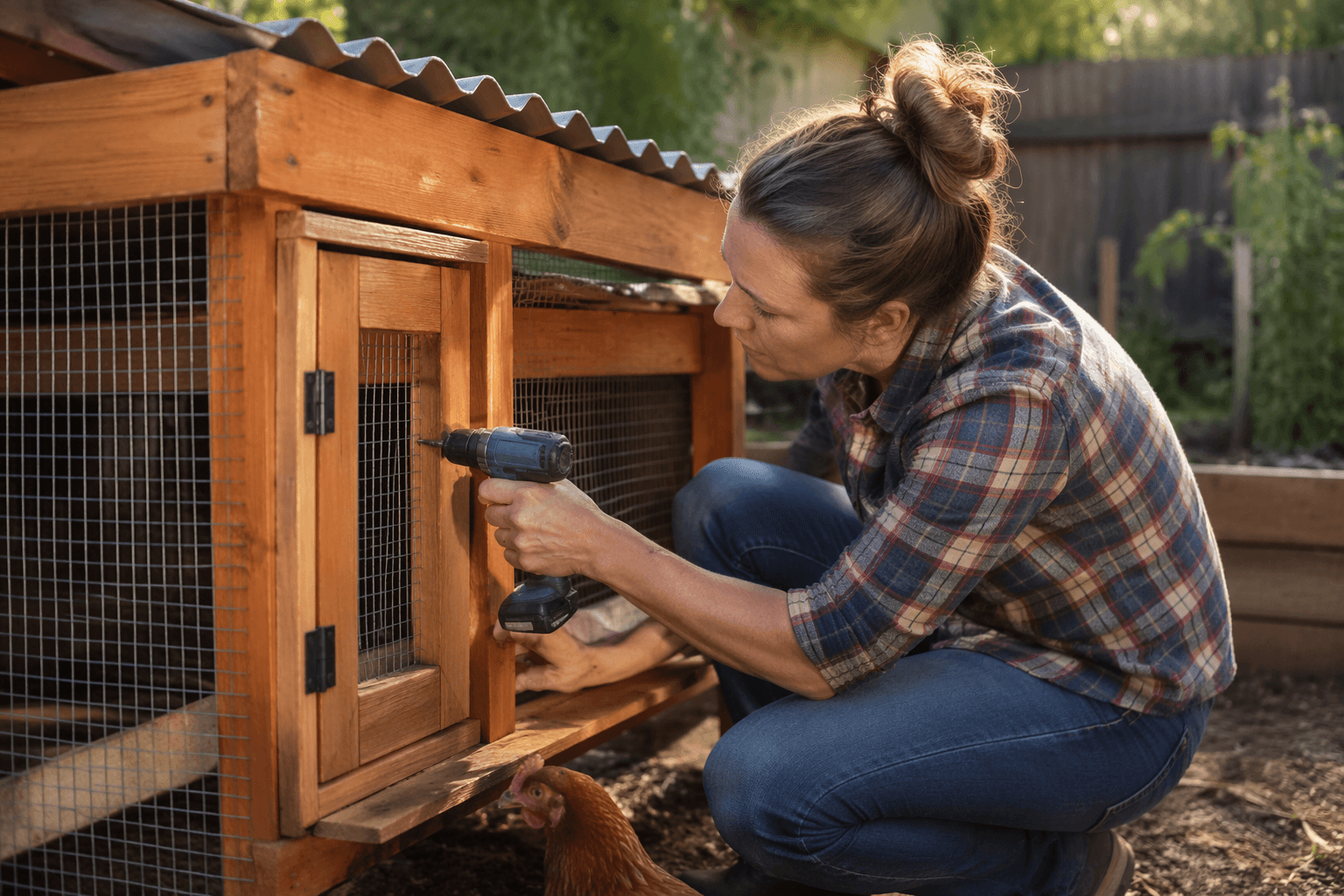
For first-time keepers, the trap is spending on cosmetic extras before solving the basics. Window trim, ornate roofs, and decorative finishes may look nice, but they do nothing if the coop traps moisture, is hard to wash down, or leaves a weak point for predators.
Size the coop to the flock, not to a fantasy
Interior space is where many beginner builds go wrong. Oregon State University Extension recommends about 3 square feet per bird inside the coop, or 8 to 10 square feet per bird if the birds have outdoor access. Those numbers are a useful floor for planning because overcrowding quickly turns into dirtier bedding, more stress, and less comfortable roosting.
Nest boxes are another place where people often overbuild or underbuild. University of Maryland Extension recommends one 10-inch by 10-inch nest box for four to five chickens. That gives you a practical starting point for a small flock without wasting space on boxes the hens do not need.
Roosting space matters too, especially if the coop is supposed to be a comfortable home rather than a storage shed with chickens in it. A good layout puts roosts where droppings management is straightforward and where birds can settle without competing for the same perch every night. The easiest coops are usually the ones that keep movement simple: in, out, up to roost, and into the nest box without crowding.
Check the rules before you build
The best coop plan still fails if the property cannot legally support chickens. University of Arizona Cooperative Extension warns that cities, counties, and homeowner associations may restrict chickens, cap flock size, regulate setbacks and coop design, or prohibit roosters altogether. That means the right first step is not lumber, it is checking the property rules that govern what you can actually keep.
Municipalities use Utah State University Extension’s backyard chicken guidance as a permitting and training reference in dense neighborhoods. The coop has to fit local expectations, not just personal preference, and ordinances can influence everything from placement to flock size.
For beginners, that changes the whole question from “How elaborate can this coop be?” to “What is the simplest structure that meets the rules and keeps the birds healthy?” In many cases, that is exactly where the smartest decision lives: build a modest coop that handles the essentials well, modify a kit if it gets you there faster, or buy only if the design already lines up with your space and local restrictions.
This article was produced by Prism’s automated news system from verified source data, official records, and press releases, then run through automated quality and moderation checks before publishing. The system is built and supervised by the people who set the standards it runs under. Read our full AI policy.
Did this article answer your question?