Clear Bath Bomb Molds Ranked for Hobbyists Seeking Perfect Shapes
Clear acrylic and silicone molds can cut your per-bomb mold cost to under 2 cents per use, but only if you match the material to the failure mode your recipe actually triggers.
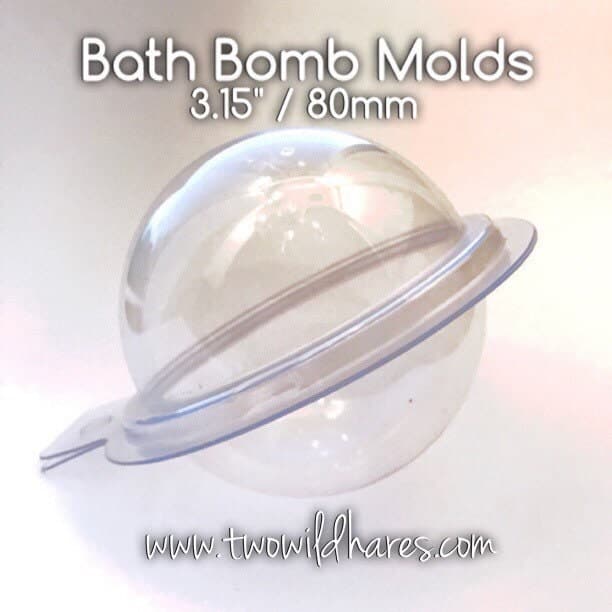
Four ounces of baking soda, two ounces of citric acid, and a clear acrylic shell that lets you watch your embedded lavender buds drift to exactly the wrong side of the bomb before you've even pressed the halves together. That's the real argument for clear molds: visibility. Not aesthetics, not novelty, but the practical ability to see your mixture, your embed placement, and your seam line before the bomb sets. What changed in 2026 is that hobbyists are finally talking about clear molds through the lens that matters: which failure mode does your mold make worse, and what does each bad batch actually cost you?
Here's how the main contenders rank.
1. Silicone resin-style sphere molds
The best performers across every failure mode that ruins a batch. Silicone is inherently non-stick, which means sticking is essentially removed from your list of problems. The material flexes rather than cracks when you demold, so the "least-crack" title belongs here, not to the stiffer options. Multi-cavity silicone sphere molds run $15-25 and can handle 200-plus uses before showing real degradation, which puts your per-bomb mold cost at roughly $0.02 or less. The one tradeoff is warping: stack silicone molds under weight, or store them compressed, and you'll introduce microtears that eventually distort your sphere shape. Store them flat, handle them singly, and they outlast everything else on this list.
2. CalCastle Craft clear acrylic clamshell molds (60mm-130mm)
The most size-flexible clear option for makers who want consistent spheres from small to showpiece scale. CalCastle's range runs from 60mm (roughly golf-ball size) up to 130mm at 5.25 inches, with a 12-pack entry at the 90mm size available from around $9.49. The crystal-clear acrylic is the genuine advantage here: you can see the seam line, spot any gaps in your mixture, and confirm embed placement before the halves close. The dominant failure mode is misaligned halves. Acrylic has no flex to forgive a rushed close, so if your two halves don't seat squarely, the seam ridge on the finished bomb is obvious. Pre-punched eyelets on each half let you hang finished ornament-style bombs, which is useful if you're gifting them. Sticking is low but not zero; a light wipe of witch hazel on the interior surface before packing is standard practice with this material.
3. Super Z Outlet 60mm clear acrylic shell molds (12-pack)
The best cost-per-bomb entry point for makers who primarily embed small toys or figures. The 60mm size is ideal for surprise-reveal bath bombs because it's large enough to hold a small plastic figure or folded foil toy, but not so large that your bomb takes four minutes to dissolve and lose the reveal moment. At roughly $8-10 for a 12-pack, each set of two halves represents about $0.67-0.83 in upfront mold cost. The clarity here does specific work: you can press the two halves together, hold the joined sphere up to a light source, and confirm your toy is centered. An off-center embed on a 60mm bomb will dissolve unevenly and drop the toy early, ruining the reveal. Denting is not a failure mode you'll encounter with this rigid shell, but cracking is: overpacking or closing the halves at a sharp angle will split the acrylic along the seam.
4. Multi-size fillable acrylic ornament ball sets (30mm-70mm)
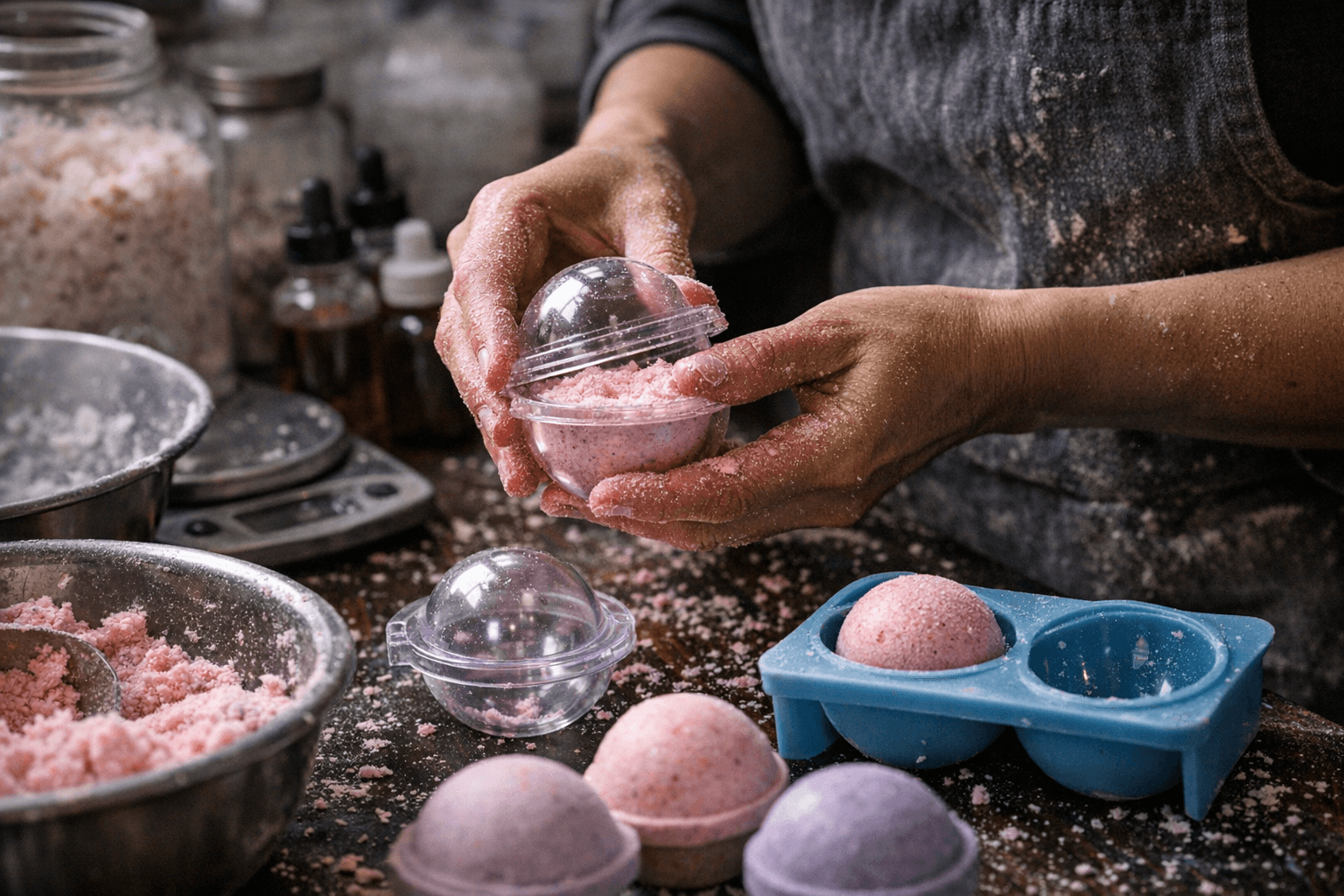
The highest embed-versatility option, and the most misalignment-prone. Sets like the AOMGD 25-set 50-piece pack come in five sizes from 30mm to 70mm, which lets you match bomb size to the specific figure or botanical you're embedding without being locked into one diameter. The downside is that smaller sizes, particularly the 30mm and 40mm shells, have thinner acrylic walls and less surface area for the two halves to register cleanly against each other. At those sizes, even a small angular gap when pressing the halves together creates a visible seam offset. Warping is not a risk with rigid acrylic, but denting isn't either; the failure mode here is cracking at the seam during the close, especially if the mixture inside is too dry and creates resistance. Recipe moisture is as important as mold handling with this format.
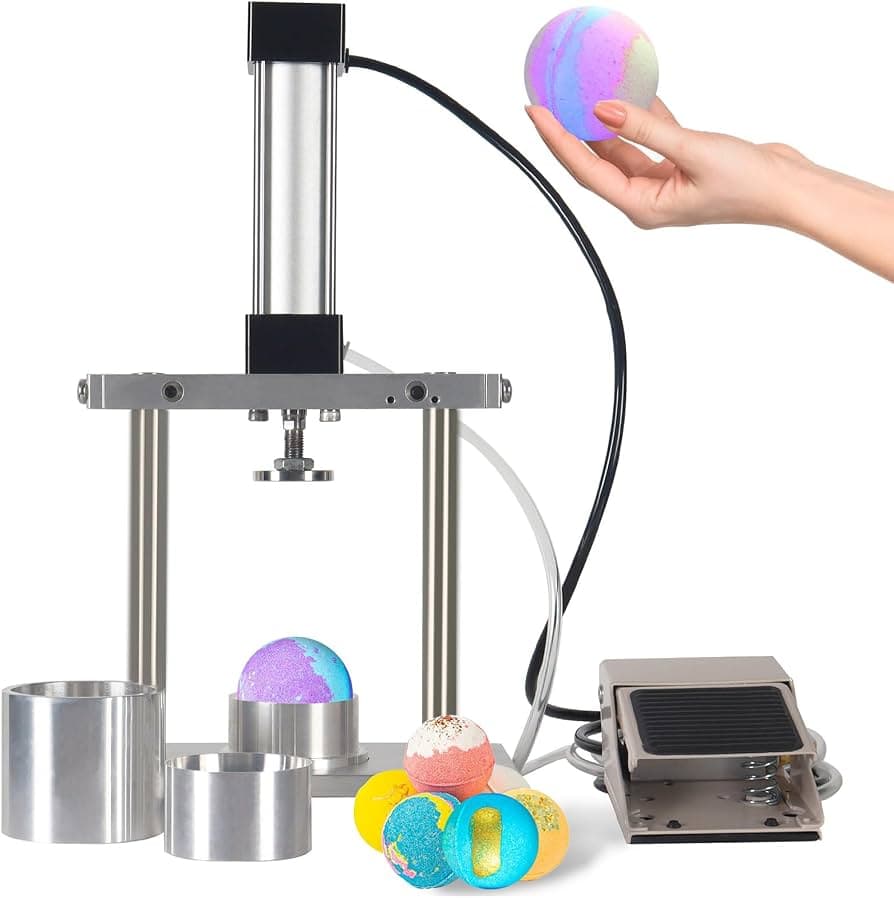
5. Aluminum alloy press molds
The professional compression choice, ranked here not as a "clear" option but as the material benchmark against which the clear alternatives should be measured. Aluminum alloy molds don't crack, don't warp, and don't stick when properly maintained. They produce the most symmetrical hemispheres of any mold type because the rigidity of the two halves means the seam line is mechanically consistent rather than dependent on how much pressure you apply by hand. The tradeoff is that you lose all visibility: you cannot see how your mixture has distributed, where your embed sits, or whether the seam has filled cleanly until you demold. For hobbyists making showpiece bombs where embed placement is a visual feature, that's a genuine limitation. Aluminum alloy molds are the right choice when consistency and durability outrank embed-placement control.
6. Ian's Choice 1.75-inch clear plastic molds (15-set, 30 pieces)
The recommended starting point for first batches, and the most honest entry into understanding what each failure mode feels like in practice. At 1.75 inches (close to golf-ball size), these clear plastic clamshell molds produce small bombs that use roughly 50-60g of mixture each, making them ideal for recipe testing at low ingredient cost. The clear plastic lets you observe your seam quality, your mixture density, and your first attempts at embed placement without committing to larger batch sizes. Sticking and denting are not significant issues at this scale; the dominant failure mode is misalignment, which, at a small diameter, is easy to see and easy to correct before the mixture sets. Once you've identified your recipe's behavior in this format, the lessons scale directly to the larger acrylic and silicone options above.
The bottom line on cost and cracking
A silicone multi-cavity sphere mold lasting 200-plus uses at a $20 purchase price delivers mold cost under $0.02 per bomb. A 12-pack of 60mm acrylic shells at $8.50 delivers roughly $0.71 per bomb on the first use, falling to $0.07 per bomb after ten wash-and-reuse cycles. Aluminum alloy, at $30-40 for a quality mold with effectively unlimited lifespan, reaches $0.04 per bomb after 1,000 uses. The "least-crack" ranking, which is the number most hobbyists don't track but should, runs: silicone first, aluminum alloy second, thick-wall acrylic (90mm and up) third, thin-wall acrylic ornament shells (30-50mm) last. If you're cracking molds, the problem almost always traces to a single batch variable: mixture that's too dry creates resistance when you close the halves, and rigid molds lose that fight every time. The upgrade from acrylic to silicone doesn't fix a dry recipe; it just makes the failure quieter.
This article was produced by Prism’s automated news system from verified source data, official records, and press releases, then run through automated quality and moderation checks before publishing. The system is built and supervised by the people who set the standards it runs under. Read our full AI policy.
Did this article answer your question?