DIY Spinning Bath Bombs Use Layering Tricks for Colorful, Fizzy Motion
Off-center embed placement is the single variable that creates real rotational torque in a bath bomb; one placement tweak can double spin time in the tub.
The chemistry is simple, the results are dramatic, and the margin for error is forgiving once you understand what's actually happening inside the mold. A bath bomb spins in the tub not by magic but by physics: when mass is distributed unevenly and the citric acid-baking soda reaction fires faster on one side than the other, it generates torque. Nail the packing order and embed placement, and you get a bomb that swirls color across the water in a way that makes even veteran makers stop and watch. Get it wrong, and you have a very expensive bath tablet that just sits there.
This is the intermediate craft challenge the bath bomb community has been quietly obsessing over, and it rewards anyone willing to think about internal structure, not just ingredients.
The Foundation: Getting the Recipe Right First
Before worrying about spin, build on a solid base. The recipe that consistently delivers reliable results uses 2 cups baking soda, 1 cup citric acid, 1/2 cup corn starch, and 1/2 cup Epsom salts as the dry foundation. That 2:1 baking soda-to-citric acid ratio is non-negotiable; it's the proportion that drives a full, sustained fizz reaction without leaving a gritty residue. For oils, 3 tablespoons of a carrier oil, sunflower or almond both perform well, hits the sweet spot between skin feel and structural integrity. Add 20-25 drops of essential oil, and your fragrance load is set.
The binder is where many makers trip up. Use isopropyl alcohol or witch hazel in a spray bottle, spritzing 1-2 times at a time and mixing quickly by hand after each spritz. You're aiming for a damp-sand texture: the mixture should hold its shape when squeezed but not feel wet. Witch hazel is the gentler alternative for makers who want to minimize volatile solvent exposure, and it produces nearly identical results. Either way, spritz away from your face and work fast. The moment you overshoot on moisture, your fizz is already starting.
The Physics Behind the Spin
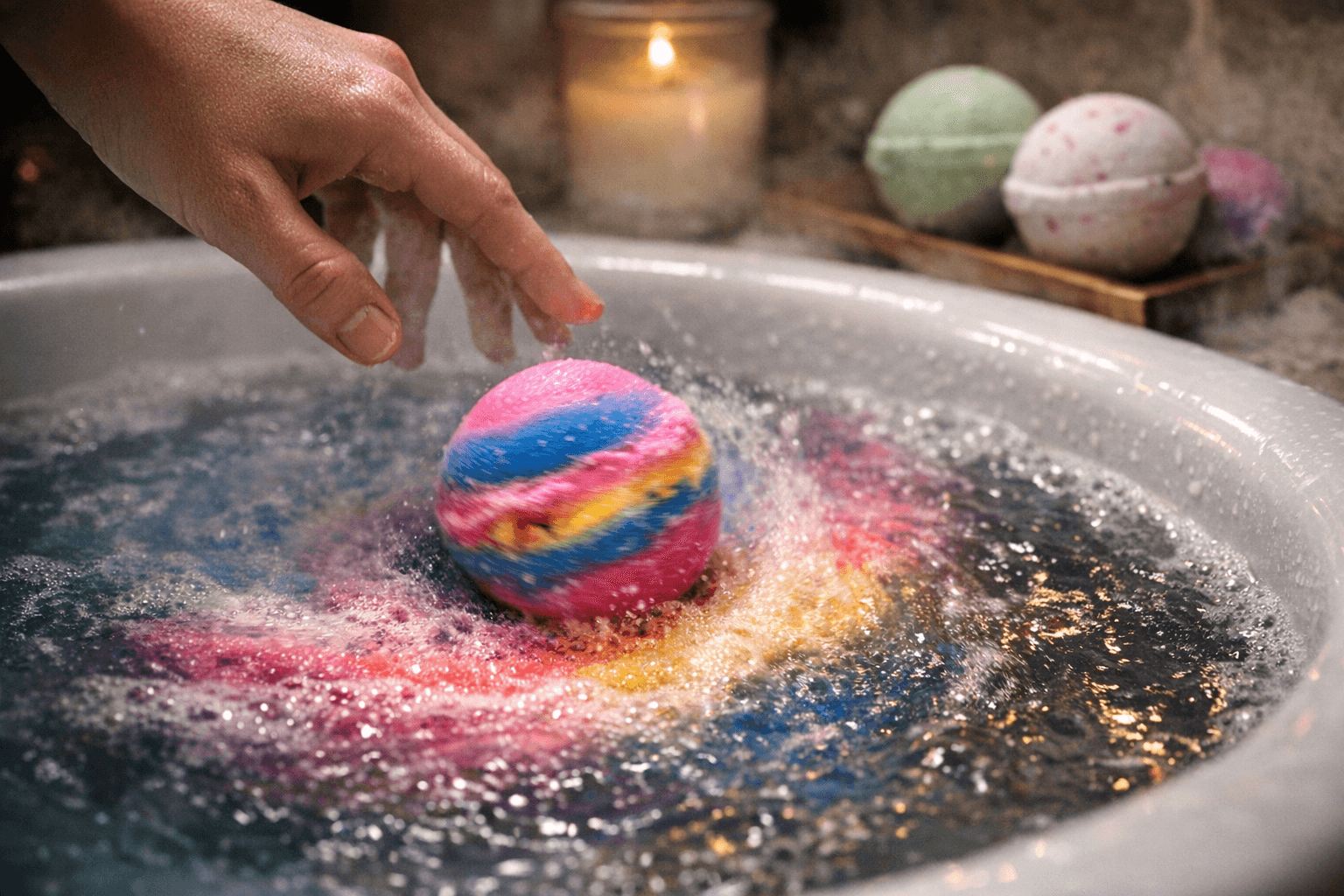
Here's what the tutorial section of most bath bomb guides skips entirely: a bath bomb spins because it is deliberately unbalanced. The reaction between citric acid and baking soda produces carbon dioxide gas. When that gas releases faster on one side of the bomb than the other, because the denser side dissolves more slowly, the pressure differential creates a rotational force. Pair that with an off-center weight, and you have a self-propelling disc of color.
The embed is the key mechanism. A small, separately molded bath bomb, packed tightly and allowed to partially dry, is placed inside the larger bomb during the main mold-packing step. Its placement is everything. Centered embeds do nothing. The embed must sit off to one side of the mold cavity to create the imbalance that initiates rotation. Think of it as the equivalent of a weighted flywheel: the offset mass keeps the spin going as the outer layer dissolves away.
Testing the Variables: A Maker's Lab Report
Treat your first few batches as controlled experiments, changing one variable at a time and noting the results.
Mold Shape
Round sphere molds produce the most consistent spin because they have no flat edges to interrupt rotation once the bomb hits the water. Flat disk molds can spin, but they tend to wobble and stall earlier. If you're starting out, the classic two-piece sphere mold is the most forgiving test environment.
Embed Placement
This is the single variable with the most dramatic effect on spin time. Placing the embed at roughly one-third of the way from the edge, rather than dead center, consistently produces longer, more sustained rotation. In practical terms: lightly pack the base half of the mold with your mixture, set the embed on top of that layer but deliberately off to one side, then fill the rest of the cavity over it. Press the two halves together firmly. That off-center weight is your engine.
Moisture Level
Under-spritzed bombs crumble out of the mold. Over-spritzed bombs expand on the counter before they even dry, losing their shape and density differential. The damp-sand benchmark is precise because the packing pressure you apply changes dramatically based on moisture. A drier mix needs more hand pressure to hold together; a wetter mix compresses with less force but risks premature activation. Test your texture before you commit to packing the mold.
Oil Load
Three tablespoons of carrier oil per batch creates a bomb that holds its shape through the drying period and still dissolves cleanly in the tub. Pushing beyond that, toward 4 tablespoons, softens the outer casing enough that the embed can shift position during drying, which kills the spin effect before the bomb ever hits the water. Keep the oil load at 3 tablespoons if consistent spinning is the goal.
Surfactant Amount
Adding polysorbate 80 to the mix solves two problems at once: it helps colorants fully disperse in the water rather than clinging to the tub walls, and it emulsifies the carrier oil so it doesn't create a slippery film on the surface. A small amount goes a long way. Without it, lake pigments can streak and oils can float, which undermines the visual payoff that makes spinning bombs worth the effort in the first place.
The Packing Method, Step by Step
1. Mix all dry ingredients thoroughly, then blend in your chosen colorant. For a layered two-color effect, divide the dry mixture and color each half separately.
2. Add essential oil, then carrier oil, and mix again by hand (gloves are strongly advised; baking soda will wear on bare skin with repeated batches).
3. Spritz 1-2 times with the alcohol or witch hazel binder, mixing rapidly after each spritz until you reach damp-sand consistency.
4. For the embed: pack a small portion of the second-color mix tightly into mini molds. Let these partially dry before use, just firm enough to hold their shape when handled.
5. Lightly pack the base half of your main sphere mold with the primary-color mixture.
6. Place the embed off-center on top of that base layer, not in the middle.
7. Fill the remaining cavity with more primary-color mixture, mounding slightly above the rim.
8. Press both halves together firmly, clearing any excess from the seam.
9. Leave in the mold for the full recommended drying time. Layered-density bombs crack when unmolded too early because the density difference creates uneven internal stress as the mixture hardens.
Troubleshooting: What Went Wrong
- Won't spin at all: The embed is centered. Re-pack with the embed offset to one side. A bomb needs to be genuinely off-balance to initiate rotation.
- Spins, then stalls within seconds: Oil load is likely too high, softening the outer casing and evening out the density differential before the reaction can sustain torque. Cut back to exactly 3 tablespoons of carrier oil.
- Cracks on unmolding: It came out of the mold too early. The layered internal structure needs full drying time to stabilize. Resist the urge to check it before 24 hours have passed.
- Crumbles in the water instead of spinning: The mixture was under-spritzed and didn't bind properly. The damp-sand test is your checkpoint: if it doesn't hold shape when squeezed in your palm, it needs another careful spritz.
- Colors bleed together in the mold: Moisture in the packing environment is too high. Work in a dry room, and avoid working on humid days without climate control. Even ambient moisture activates the fizz reaction slowly over time.
One Test Before You Ship
Before gifting or selling a batch, drop a single bomb into a test tub. Water temperature matters: a very hot tub accelerates the reaction and may shorten spin time; cooler water produces a slower, steadier rotation. Establish what temperature range your particular recipe performs in, and note it. Makers who skip this step often discover inconsistencies only after a bomb has already gone out the door.
The structural logic that makes spinning bombs work, uneven density plus asymmetric gas release, is the same logic behind staged color release, slow-dissolve effects, and layered fragrance bombs. Master the off-center embed and the damp-sand texture, and the entire range of motion-based bath bomb effects opens up from there.
This article was produced by Prism’s automated news system from verified source data, official records, and press releases, then run through automated quality and moderation checks before publishing. The system is built and supervised by the people who set the standards it runs under. Read our full AI policy.
Did this article answer your question?