Men’s bath bomb market grows as retailers rethink packaging, scents
Retailers are finding that men already buy bath products when the shelf stops feeling feminine-coded and the scent lineup feels familiar.

The men’s bath bomb opportunity is not about inventing new buyers. It is about removing the cues that have made a familiar self-care product feel like it belongs to someone else’s cart. Made Natural’s latest guide argues that men already use bath products for sore muscles, dry winter skin, stressful workdays, and better scent experiences, but too many displays still lean on pink packaging, floral names, and copy that reads like it was written for a completely different shopper.
The real gap is on the shelf
That framing matters because the category is not being held back by lack of demand so much as by merchandising that misses the buyer standing right in front of it. The guide says the men’s personal care market has been growing at 5 to 7 percent annually for several years, while search results for bath bombs aimed at men still turn up only a fraction of the listings found in the broader category. In other words, the sales problem is not novelty fatigue alone. It is a visibility problem, and that makes it a retail problem.
Lead with scent families that already feel like bath and body, not costume goods
The strongest positioning strategy is to make the product feel immediately usable. Made Natural points to ocean breeze, sandalwood, eucalyptus, and citrus as the scent families men are more likely to reach for, which gives retailers a practical starting point: familiar, clean, and easy to describe without slipping into gimmick territory. Those scents signal freshness or function first, which helps the product read as personal care instead of a themed impulse buy.

A useful shelf edit looks like this:
- Ocean breeze and citrus for shoppers who want crisp, fresh, everyday scents.
- Sandalwood for buyers who want something warmer and more grounded without a floral profile.
- Eucalyptus for a cleaner, wellness-forward feel that fits post-workout or end-of-day use.
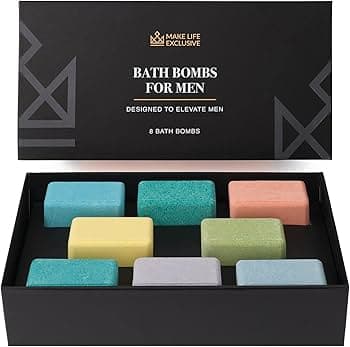
- Neutral naming and packaging that avoids pink-heavy visuals, floral labels, and copy like “pamper yourself, queen,” which the guide says repels the very audience retailers want to reach.
That packaging point is bigger than aesthetics. If the box, label, and shelf talker all suggest one narrow buyer, the product stops being a bath bomb and starts feeling like a novelty gift. The guide’s business case is that more neutral or masculine-leaning positioning can widen the customer pool without turning away existing bath shoppers who simply want a scent that feels comfortable and a display that does not telegraph embarrassment.
Shower steamers can open the door
For stores that are not sure how aggressively to lean into a men’s bath line, shower steamers are the bridge product. Made Natural positions them as a gateway for buyers who may not yet be comfortable walking into a full bath bomb aisle, and that makes sense in practical retail terms because shower steamers already work with shower steam to create aromatherapeutic scents. For shoppers who do not bathe regularly, or who are buying on behalf of someone else, that lower-friction entry point can keep the category from feeling intimidating.
Gift buying is where the category gets easier to sell
The guide also makes a strong gift argument, and that may be where the fastest growth lives. It says “gifts for him” is one of the most-searched gift categories online, and it points to partners, friends, and family members who want something thoughtful for husbands, fathers, brothers, friends, and coworkers. A men’s bath bomb lineup becomes much more credible when it is merchandised as an easy answer for the person who wants a useful gift, not a joke gift.
That is where independent sellers can do the most work without overexpanding the catalog. A small, focused assortment built around familiar scent families, cleaner labels, and gift-ready packaging does more than add SKUs. It solves the problem of how a buyer finds a product that fits his routine, and it makes it easier for the person shopping for him to grab something that feels intentional rather than random.
The larger lesson is simple: growth in men’s bath products will come from better merchandising, not louder novelty. The retailers that stop treating bath bombs like pink shelf candy and start presenting them as a credible personal-care category are the ones most likely to capture the customer base already looking for a fresh scent, a sore-muscle soak, or a gift that does not need explaining.
This article was produced by Prism’s automated news system from verified source data, official records, and press releases, then run through automated quality and moderation checks before publishing. The system is built and supervised by the people who set the standards it runs under. Read our full AI policy.
Know something we missed? Have a correction or additional information?
Submit a Tip