Stonemaier Games identifies the design traits of evergreen board games
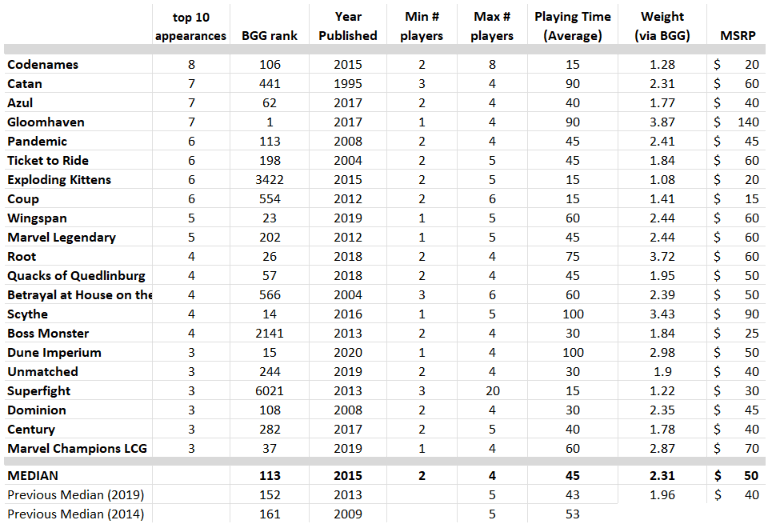
Stonemaier’s framework narrows durable success to controllable choices: 2-4 players, about 45 minutes, medium weight, and a roughly $50 box.
Some games disappear after the first print run, and some keep moving through reprints for years. Jamey Stegmaier treats that difference as a design problem you can actually work on, not a lucky accident, and he keeps landing on the same cluster of traits: approachable player counts, shorter sessions, medium depth, and a price that does not scare people off.
What Stonemaier means by a game that keeps selling
Stegmaier’s definition is more demanding than “people liked it.” In his framing, these are games that are well received not just in ratings, but in actual sales, enough to be reprinted time after time, year after year. That matters because it separates table popularity from catalog durability, which is where most hobby games fall short.
He has been circling this question for more than a decade. In 2014, he called the durable seller “the grail of every designer and publisher,” and pointed to Viticulture, which had 17,500 copies in print at the time, as a real example of the kind of title publishers hope to build. Five years later, he revisited the topic again, and in 2022 he returned to it once more, which tells you this is not a one-off theory but a recurring business and design problem.
The point is not nostalgia or industry romance. It is shelf life. A game that survives by being reprinted over and over has to keep earning the right to sit on store shelves, and that usually means its appeal is broader and less vulnerable to trend swings than a game that only spikes during launch.
The design traits that keep showing up
The 2022 framework points to a very specific sweet spot, and it is useful because it is concrete. The titles most likely to keep selling tend to support 2-4 players, play in about 45 minutes, sit in the medium-weight range, and land around a roughly $50 price point.
That combination is doing a lot of work. Two to four players fits the most common game-night reality, where you do not need a huge crowd or a perfect scheduling window. A 45-minute playtime lowers the social cost of getting a game to the table, while medium weight leaves room for interesting decisions without pushing the teach into slog territory.
The price point matters just as much as the rules load. Around $50 is still a serious hobby purchase, but it is not so expensive that the game becomes a special-occasion box. In practical terms, that makes it easier to recommend, easier to impulse-buy after a demo, and easier to justify to a group that is already juggling a pile of other options.
The pattern does not mean every successful game must fit those numbers. It does mean that when a design drifts much farther out, whether into higher player counts, longer sessions, or a bigger box price, it is asking the market to overcome more friction before it can become a steady catalog seller.
What you can control as a designer
This is where the framework becomes useful instead of inspirational. You cannot design your way around every distribution advantage a publisher might have, and you cannot force the market to love a theme. What you can control is how quickly a game teaches, how cleanly it returns to the table, and how many groups can imagine playing it without a scheduling headache.
That is why the useful traits are all practical ones. Teachability matters because a game that is hard to explain burns goodwill before anyone reaches turn two. Replayable decision space matters because a game needs reasons to come back, not just a one-time puzzle. Broad theme legibility matters because people have to understand what the box is promising in a glance, not after a ten-minute pitch.
The strongest part of Stegmaier’s framing is that it keeps the emphasis on long-tail table appeal instead of one-off hype. A game can be excellent and still be too narrow to become a steady seller. It can also be good enough to spike briefly if marketing pushes it hard, only to fade once the initial attention passes. The difference is not just quality. It is fit.
Why Viticulture keeps coming up
Viticulture remains the cleanest example in Stonemaier’s own catalog. In 2023, Stegmaier said the company was still publishing Viticulture ten years after its 2013 delivery to backers, alongside more than a dozen other games including Wingspan, Scythe, and Red Rising. That kind of run is exactly why the game keeps showing up in this conversation.
There is also a signal of lasting table presence in the way Viticulture is described as a top-30 ranked game on BoardGameGeek. Rankings do not tell the whole story, but they do help explain why a title keeps getting a second, third, and fourth look from players who may already know the publisher’s newer releases. When a game can hold attention that long, it starts to behave less like a product launch and more like part of the hobby’s furniture.
That is the practical lesson hiding inside Stonemaier’s repeated revisits to the topic. The goal is not to chase a buzzword. It is to build a game that is easy to table, easy to recommend, and easy to keep in print long after the launch window has passed.
This article was produced by Prism’s automated news system from verified source data, official records, and press releases, then run through automated quality and moderation checks before publishing. The system is built and supervised by the people who set the standards it runs under. Read our full AI policy.
Did this article answer your question?