April Bonsai Repotting, When It Is Still Safe and Smart
April is not automatically too late. The right answer depends on species, growth stage, and climate, and some trees should still be repotted now while others should be left alone.
April bonsai repotting is a timing test, not a calendar test
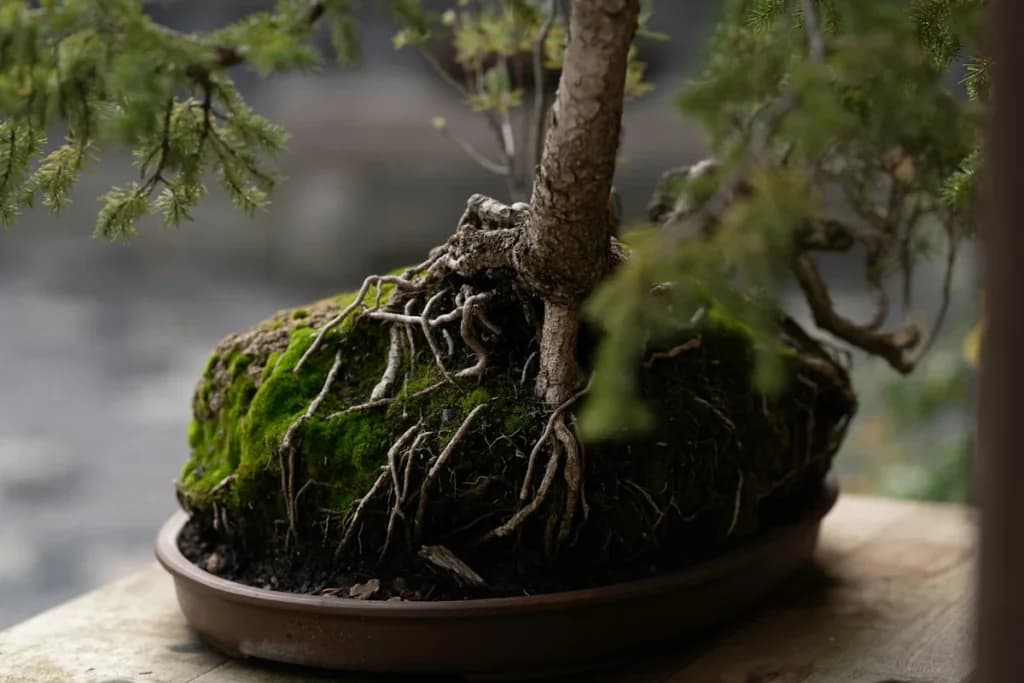
When spring slips and your repotting plans run behind, the real question is not whether it is April, but whether the tree is still close enough to dormancy to handle root work. Bonsai live in containers, so the root system is always under pressure, and repotting exists to give those roots more room, better drainage, and better aeration. The catch is that the same root work that helps a tree long term can stress it badly once growth has already surged.
That is why April can still be safe for some trees and clearly wrong for others. The decision comes down to species, vigor, and how far the tree has moved into active growth. In the right conditions, repotting now is smart. In the wrong ones, it is easier to lose a season than to gain one.
Repot now if the tree is still in the early part of its spring cycle
The clearest repot-now case is a healthy tree that has only just started moving, with buds swelling but not yet fully open. The Arnold Arboretum’s bonsai and penjing care guide puts the ideal window in early spring, mid- to late March, before the plant shows signs of growth. If your tree is only a little behind that stage, April can still fall inside the safe zone.
Deciduous bonsai are the best example. Iowa State University Extension and Outreach says deciduous trees are best transplanted in early spring before growth begins, and that matches the logic of bonsai repotting too. If the tree has not pushed much leaf mass yet, the roots still have a chance to recover before the canopy starts demanding water at full speed.
Some conifers can also stay in the repot-now category a little longer. The April question is species-dependent, and the guide’s key distinction is that some junipers and pines can tolerate later repotting after their first flush hardens off. That makes them more forgiving than many deciduous trees, especially if the tree is strong and the spring push has been measured rather than explosive.
A healthy, vigorous tree on a normal repot cycle is another good candidate. The Royal Horticultural Society says many plants only need repotting every three to five years, while Bonsai Empire notes that fast-growing trees may need repotting every two years or sooner and older, more mature trees often go every three to five years. If your tree is due anyway, and it still looks near the start of its growth cycle, April can still be a reasonable time to act.
Wait if growth is already moving fast
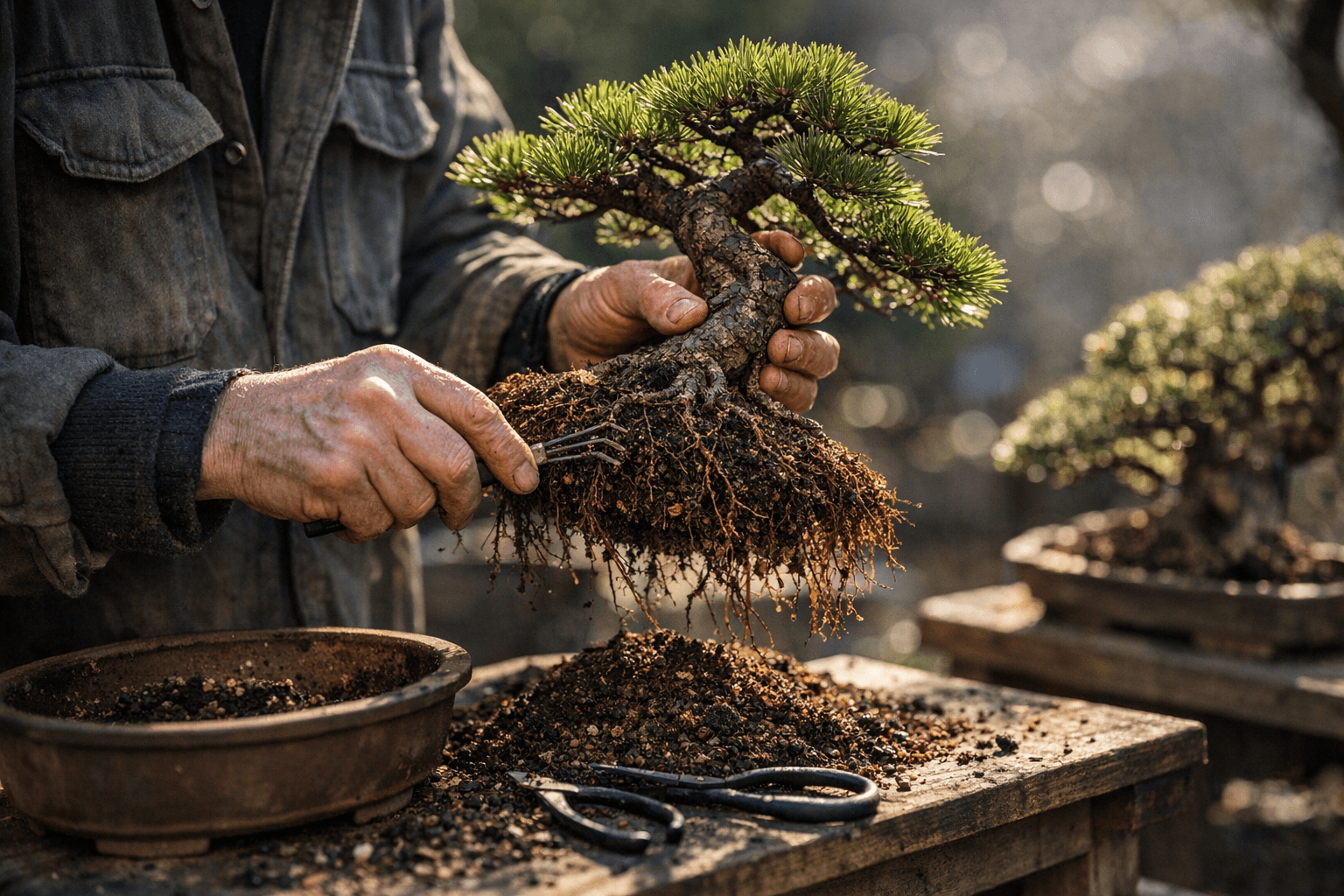
Once the tree is clearly underway, the safer answer is often to wait. That is especially true when leaves are expanding, new shoots are lengthening quickly, or the first flush is already well established. By late spring, leaves are transpiring water and the root system is under heavier demand, so a full root prune can create unnecessary stress.
This is where local climate matters. In a cooler spring, April may still behave like March, which keeps more trees inside the repot window. In a warm region, or in a sheltered spot that heats up quickly, the same date may already be too late for a full repot on a species that prefers earlier work. The date on the calendar matters less than the tree in front of you.
If the roots are tight but the top growth is already too advanced, a slip pot may be the better compromise. That keeps the tree moving into a slightly larger container with less disruption than a full repot and buys time until the next proper window. For an intermediate grower, that can be the difference between preserving momentum and forcing a tree to pay for an overdue decision.
Do not touch if the tree is weak, unless the roots are already in trouble
A tree that is already stressed is the one that can least afford heavy root pruning in late spring. If it has poor vigor, sparse growth, or obvious recovery issues, a repot now can compound the problem. The general rule is simple: the later the season and the heavier the top growth, the more expensive root disturbance becomes.
That said, root health can override timing. The Royal Horticultural Society notes that a congested mass of roots can stop water draining properly and raise the risk of root rot. If drainage has failed, or the soil has compacted so badly that the tree is sitting in a stagnant root ball, repotting outside the ideal season may still be justified. In that case, health is the emergency and timing is secondary.
This is the key distinction that keeps late-spring work from becoming reckless. Do not force a full repot on a tree that is already racing into growth just because the old schedule got missed. But do not ignore a root problem either. Restricted root space can become a drainage problem, and a drainage problem can become root rot.

Why the timing window exists at all
The logic behind spring repotting is not arbitrary. Roots store energy through winter, then activate in spring, and they need time to recover before the tree is carrying a heavy leaf load. That is why early spring works so well, and why the window closes as the canopy develops.
The Royal Horticultural Society says repotting aims to give roots more growing space and a richer, better drained, better aerated environment, while still allowing enough new growth to keep the plant healthy. Bonsai need that balance more than most plants because the container itself keeps the root system compressed. Repotting is not a one-time intervention in bonsai; it is routine maintenance that keeps the whole tree functioning.
That is also why most bonsai are not repotted every year. The usual rhythm is a multi-year cycle, with the exact interval shaped by age, vigor, and species. Fast growers ask for more frequent attention, mature trees less often, but both still depend on the same principle: give the roots room before the canopy asks for more than the pot can support.
The practical April verdict
If the tree is healthy, still near bud swell, and the species tolerates spring repotting well, April can still be a smart time to work. If the top growth is already charging ahead, wait for the next window and consider a slip pot instead of a full reset. If the roots are rotting or the soil has collapsed into a congested mass, intervene carefully even if the timing is imperfect.
That is the real rescue lesson for late spring: the safest repotting decision is the one that matches the tree’s energy, not the date on the tag.
This article was produced by Prism’s automated news system from verified source data, official records, and press releases, then run through automated quality and moderation checks before publishing. The system is built and supervised by the people who set the standards it runs under. Read our full AI policy.
Did this article answer your question?