Greater Louisville Bonsai Society Grows Community Through Patience and Artistry
Louisville’s bonsai club is growing by teaching beginners first, then turning them loose on design, shows, and a wider regional network.
A club built for a wide region
A bonsai club with around 80 members and about 25 people at a typical meeting is doing more than filling a room. In Greater Louisville, that scale has become the engine of growth, with the Greater Louisville Bonsai Society acting as a regional hub for people who want to move from plant care into real tree artistry.
That matters because bonsai spreads best through repeat contact, not one-off inspiration. In Louisville, the club’s mix of monthly meetings, classes, and workshops gives newcomers a place to start, a place to return, and a clear path from the basics of keeping a tree alive to the slow, deliberate work of styling it into something intentional.
What bonsai really asks of you
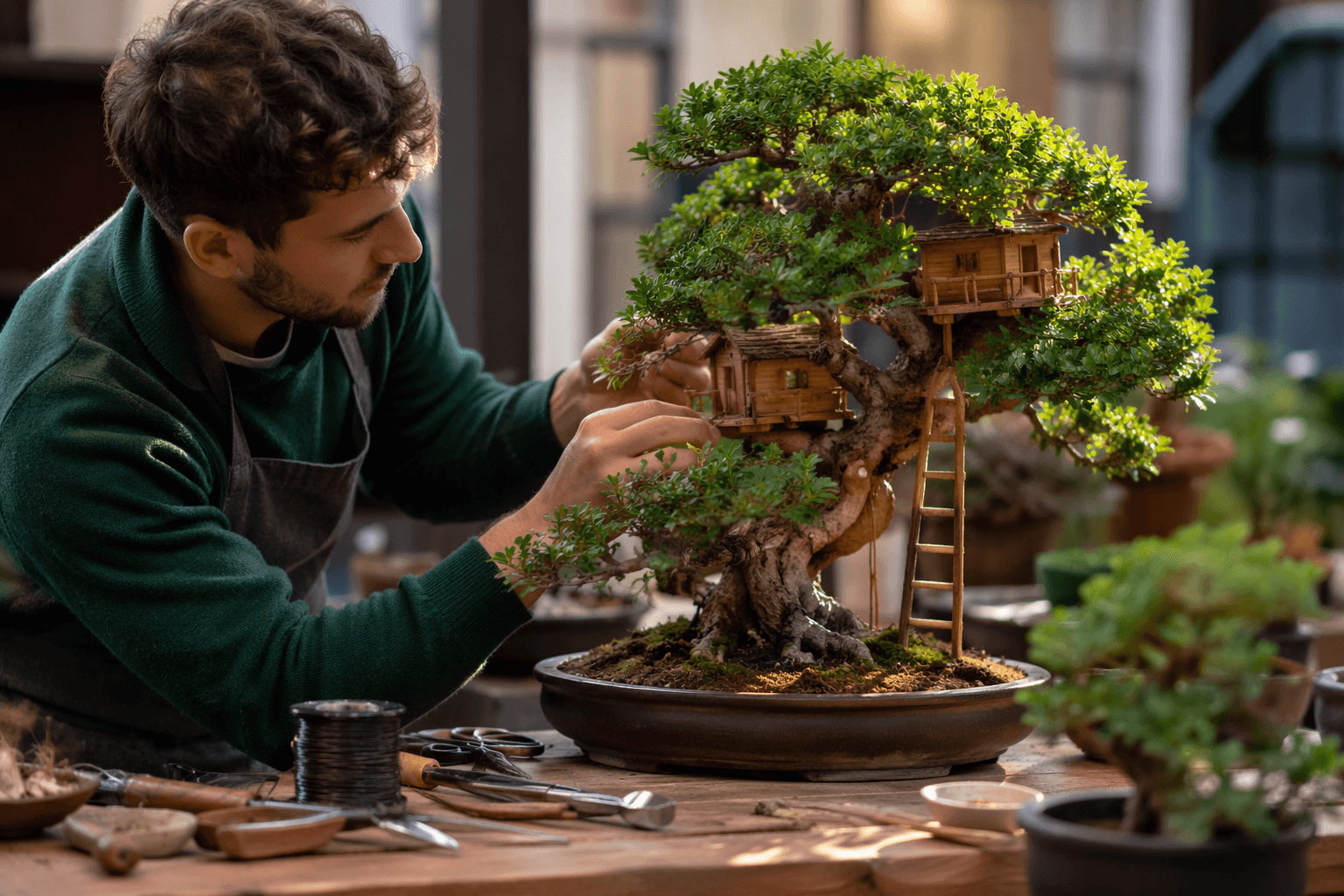
Russ Stevens, the society’s president, is blunt about the biggest misunderstanding around bonsai: it is not simple decoration. It is a long-term horticultural and artistic discipline that depends on patience, styling judgment, and a working knowledge of plant biology.
That framing changes how the hobby looks from the outside. Bonsai begins with care, not aesthetics. Trees have to survive, strengthen, and develop enough structure before design becomes the point, and that means the work often stretches years into the future. The first skill is not wiring a dramatic silhouette, but understanding how a tree grows, responds, and heals.
Stevens also places bonsai in its larger lineage. The art’s container-growing and training traditions traveled through China, were later redefined in Japan after World War II, and then became more widely known in the United States. That history helps explain why Louisville’s club feels local while still belonging to a much larger tradition of practice, display, and instruction.
How the club brings beginners in
The society’s teaching model is straightforward and practical: learn to keep trees alive first, then move into design once the tree has enough structure to work with. That sequence is important because it lowers the barrier to entry. A beginner does not need to arrive knowing taper, branch selection, or display rules; the club is built to teach those things over time.
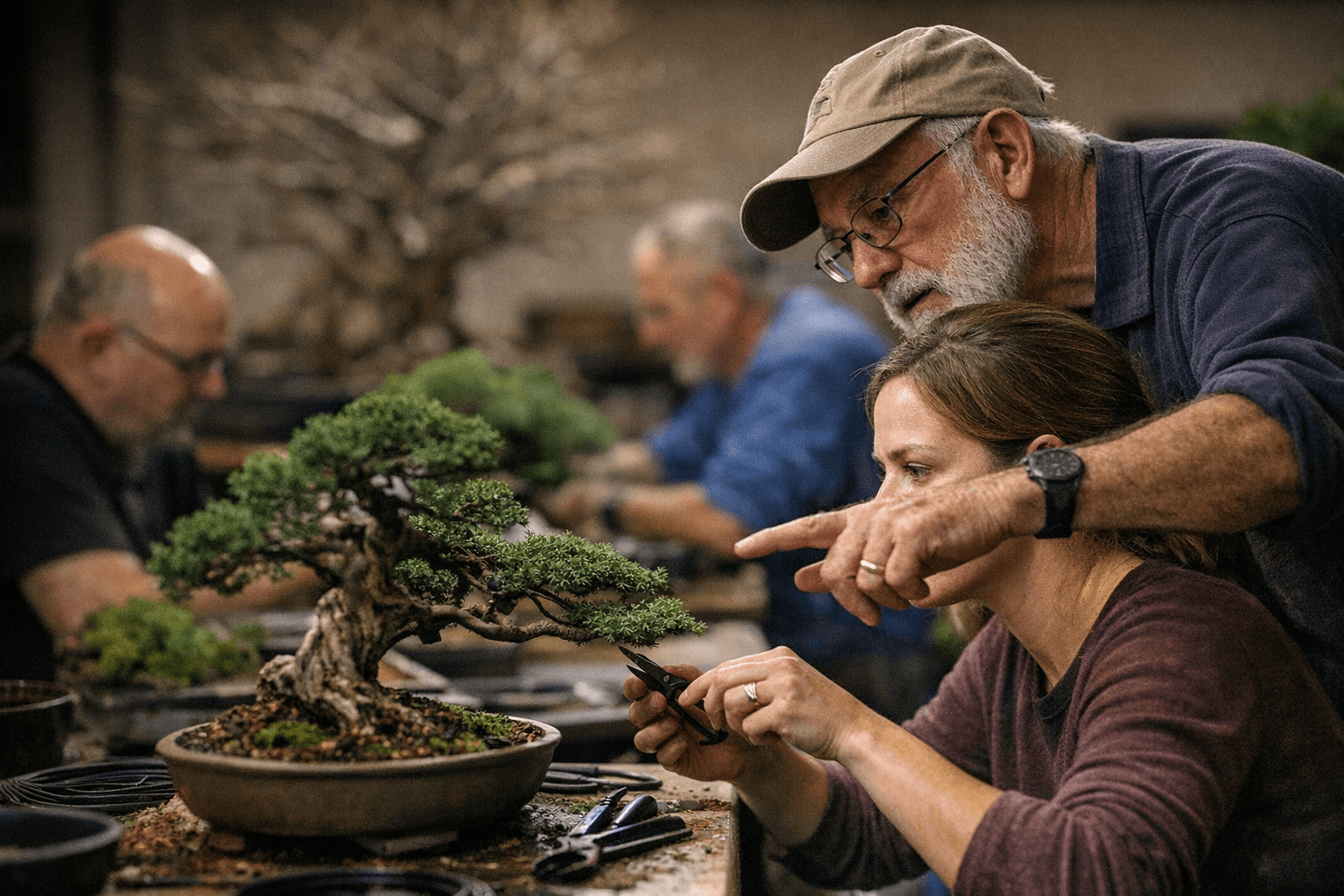
The club’s meetings and workshops create a natural mentorship loop. Newer members can ask questions about specialty soil, outdoor species, tropical species, and the day-to-day decisions that keep a tree healthy. As those trees mature, the same members can begin learning taper, foliage placement, and the editing that turns branches into composition.
That delay is not a flaw in bonsai. It is the point. Styling and design often happen years after a tree has developed enough branches and structure, which is why clubs like this one matter so much. They keep people connected long enough to see the art reveal itself.
Why the numbers matter
The Greater Louisville Bonsai Society’s membership pattern says a lot about how bonsai grows outside the traditional coastal centers. Around 80 members are spread across a broad region, and about 25 typically attend a meeting. That means the club is serving more than one neighborhood or one city block, and it is doing so in a way that can absorb beginners without losing its core.
That broad reach is one reason the club feels replicable. A strong regional bonsai group does not have to be huge to be influential. It needs regular meetings, a dependable teaching rhythm, and members who are willing to share trees, techniques, and timing. In Louisville, that structure is turning casual curiosity into long-term participation.
The club’s public footprint also gives the hobby a wider entry point. People may first encounter bonsai through a garden event, a workshop, or a display, then find their way into the club afterward. That path is especially important in places where bonsai is still building visibility beyond dedicated collectors.
Waterfront Botanical Gardens gives bonsai a public stage
Louisville’s bonsai scene is expanding through a public event platform, not only through club meetings. Waterfront Botanical Gardens is hosting a 4th Annual Bonsai Weekend on May 29 to 31, 2026, and the event page promises vendors, workshops, and judged bonsai displays.
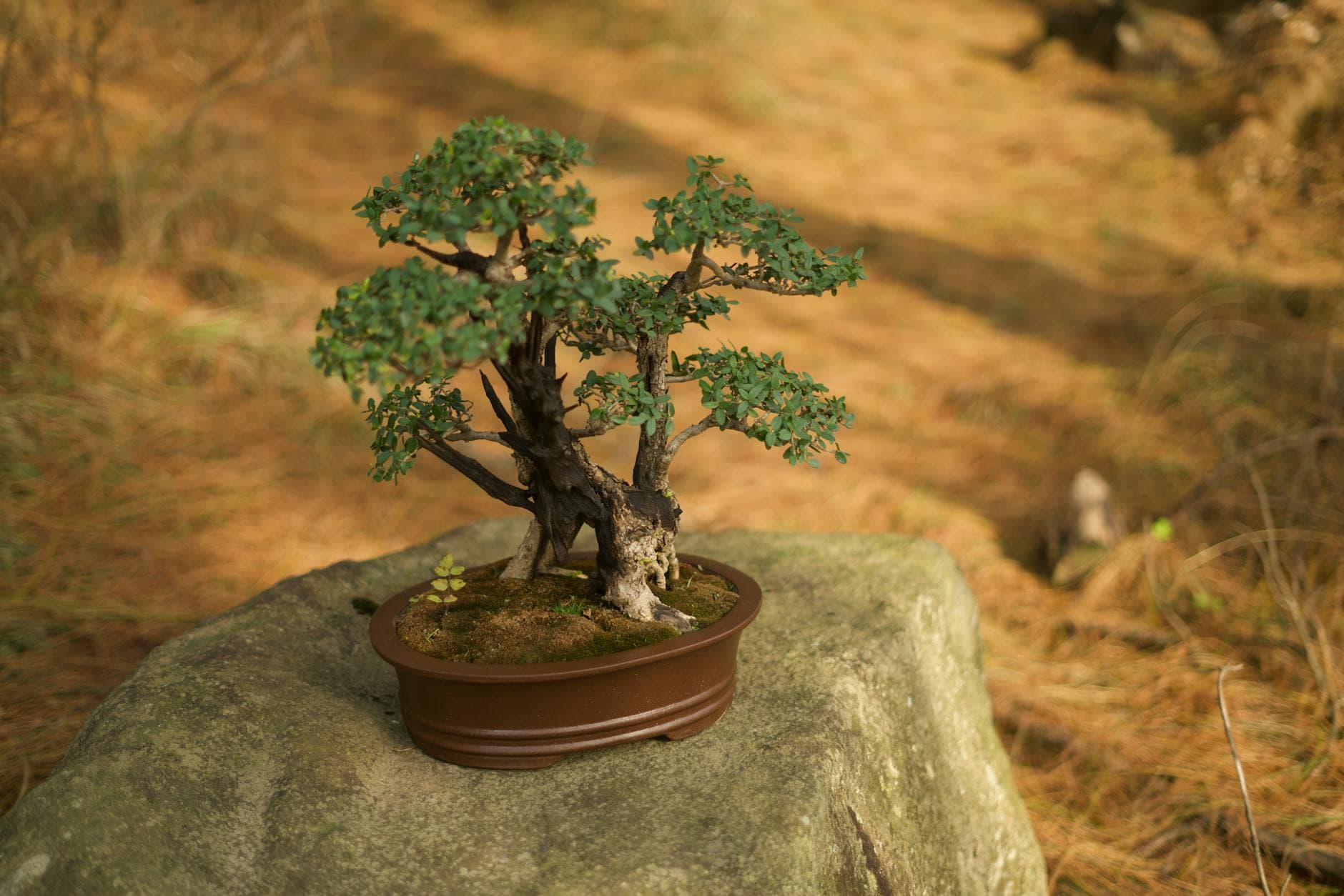
That combination is powerful because it creates both spectacle and instruction. Visitors can see finished trees, talk to vendors, and watch the standards of judging in a setting that feels open rather than exclusive. For a hobby that is often misunderstood as quiet or solitary, a public weekend with displays and workshops makes the learning curve visible.
The gardens’ bonsai plans also suggest longer-term momentum. Local reporting in January 2026 said construction on a bonsai garden there was expected to begin in 2026. That kind of institutional commitment helps turn a club activity into a civic asset, giving bonsai a permanent place in the city’s garden culture.
Names such as Jennifer Price, David Graeser, and Mark Fields are part of that wider Louisville bonsai conversation, a reminder that the hobby’s growth is being carried by people as much as by institutions.
Louisville fits into a larger American bonsai story
The city’s momentum makes even more sense when placed against the national infrastructure around the art. The American Bonsai Society says it was founded in 1967 by motivated people who wanted a North American society that would cater to individual needs. That origin story echoes the same impulse visible in Louisville: build a structure where learning can happen in person, tree by tree.
The National Bonsai Foundation adds another layer. In 1976, in honor of America’s Bicentennial, the people of Japan gave the gift of bonsai to the citizens of the United States. Those trees became the basis for the National Bonsai & Penjing Museum at the U.S. National Arboretum in Washington, D.C., a place dedicated to the education and delight of visitors.
Taken together, those institutions show that bonsai in Louisville is not an isolated hobby scene. It is part of a living network of clubs, gardens, public exhibits, and educational spaces that keeps the art moving outward. In Kentucky, that network is gaining strength the old-fashioned way: through patience, shared technique, and enough people willing to spend years helping a tree become itself.
This article was produced by Prism’s automated news system from verified source data, official records, and press releases, then run through automated quality and moderation checks before publishing. The system is built and supervised by the people who set the standards it runs under. Read our full AI policy.
Did this article answer your question?