Barrington Bonsai grows resilient cork bark dwarf jade in backyard greenhouse
Barrington Bonsai is scaling from a backyard greenhouse into a suburban bonsai gateway, powered by beginner-friendly cork bark dwarf jade and lessons.
A backyard greenhouse that is meeting new demand
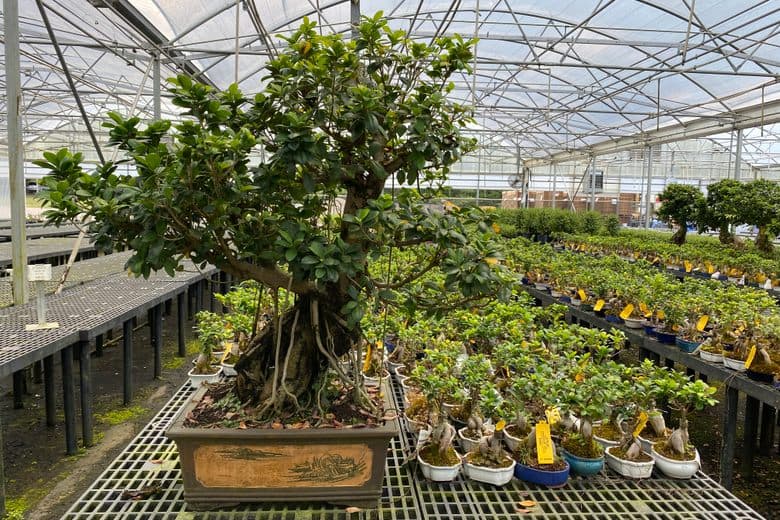
Barrington Bonsai’s quiet greenhouse in Barrington, in Chicago’s northwest suburbs, is growing for a simple reason: more people want a bonsai they can actually keep alive. Owner Ryan Rubel has built his business around cork bark dwarf jade, a resilient, drought-tolerant species that fits the way new buyers are entering the hobby now, through a plant that can handle some inexperience without giving up its bonsai character.
CBS Chicago’s May 25, 2026 profile shows how unusual the setup is and how quickly it has outgrown the idea of a private backyard project. Rubel tends hundreds of trees year-round, and the operation now ships across the United States and Europe. What started as a warm, peaceful greenhouse lined with sculptured miniature trees has become a small business with a wider reach and a clearer purpose: sell trees, teach the craft, and make bonsai feel accessible.
Why cork bark dwarf jade is pulling in beginners
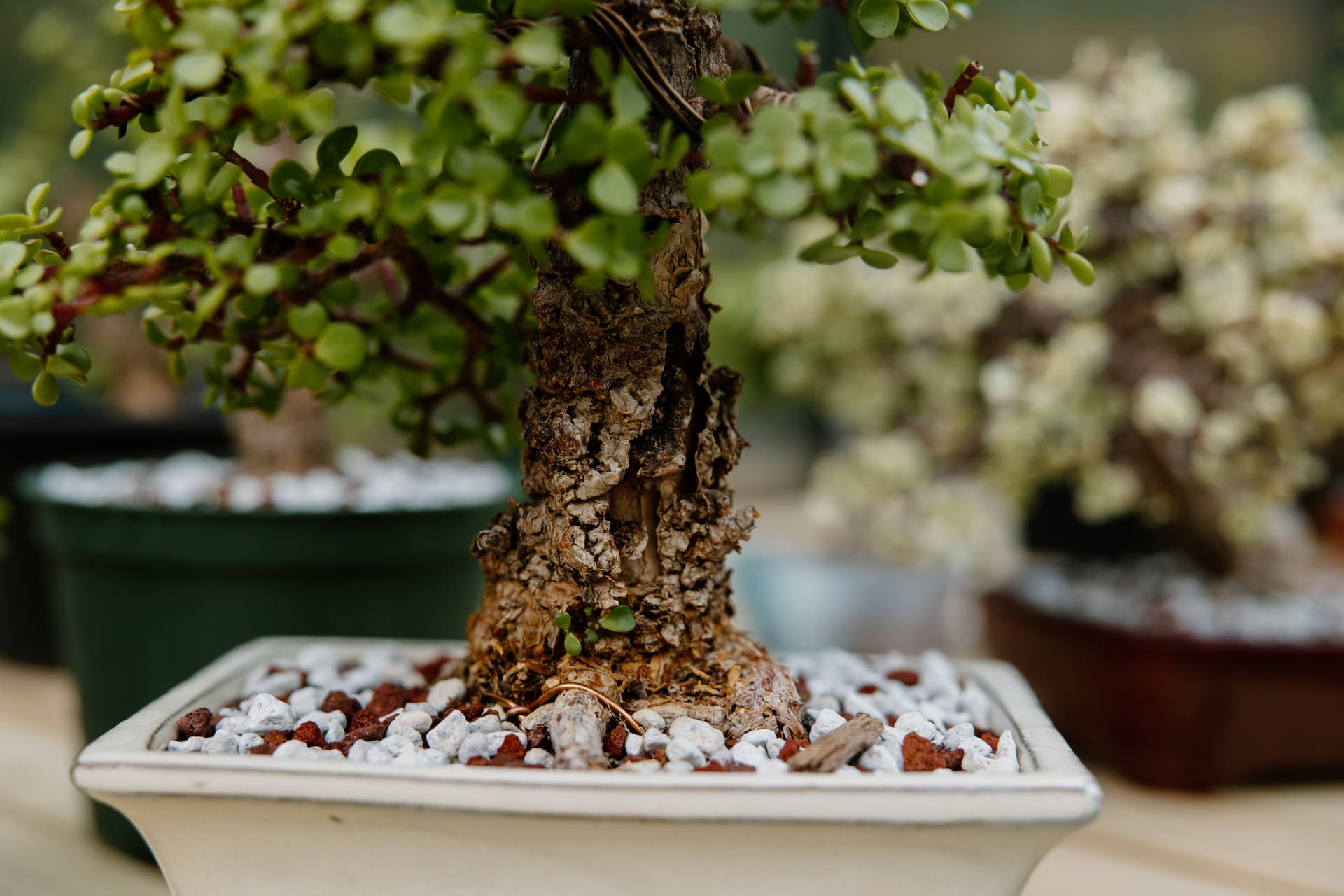
The tree driving the business is not a common mass-market bonsai. Cork bark dwarf jade has the kind of traits that make new growers breathe easier: it is super-resilient, drought-tolerant, evergreen, and can be grown indoors, though it does best outdoors. One grower familiar with the plant points to the features that make it convincing bonsai material in the first place, rough bark, good branch structure, small leaves, and the ability to live in shallow containers.
That combination matters in a hobby where many people first meet bonsai through trees that demand more precision than they expect. Cork bark dwarf jade offers a lower-maintenance tropical option without stripping away the miniature-tree look that gives bonsai its appeal. For Barrington Bonsai, that has turned into a practical business edge, because the plant meets the needs of first-time buyers while still satisfying experienced growers who want a distinctive specimen.
Rubel has said his goal is not only to sell trees but also to get more people learning about bonsai and to spread interest in cork bark dwarf jade. That matters in the Chicago suburbs, where beginners often need an entry point that feels welcoming instead of punishing. A species that tolerates missed waterings and still develops character over time is a much easier first purchase than a fragile tree that fails fast.
From Frank Yee’s garden to Illinois
Part of the draw is the story behind the plant itself. Cork bark dwarf jade traces back to Frank Yee, a Southern California grower who accidentally created the form in the 1970s after applying DDT in his garden. Some surviving plants developed the bark texture that made the cultivar distinctive, and Yee went on to propagate it and teach about it for decades.
Rubel later bought Yee’s collection after Yee died in 2023 and brought it from Los Angeles to Illinois, tying Barrington Bonsai directly to a specific line of U.S. bonsai history. Barrington Bonsai’s own site says Rubel brought home more than 400 rare Cork Bark Jades from Yee’s garden in 2024, describing the move as a way of honoring a legacy while growing the future of bonsai one tree at a time.
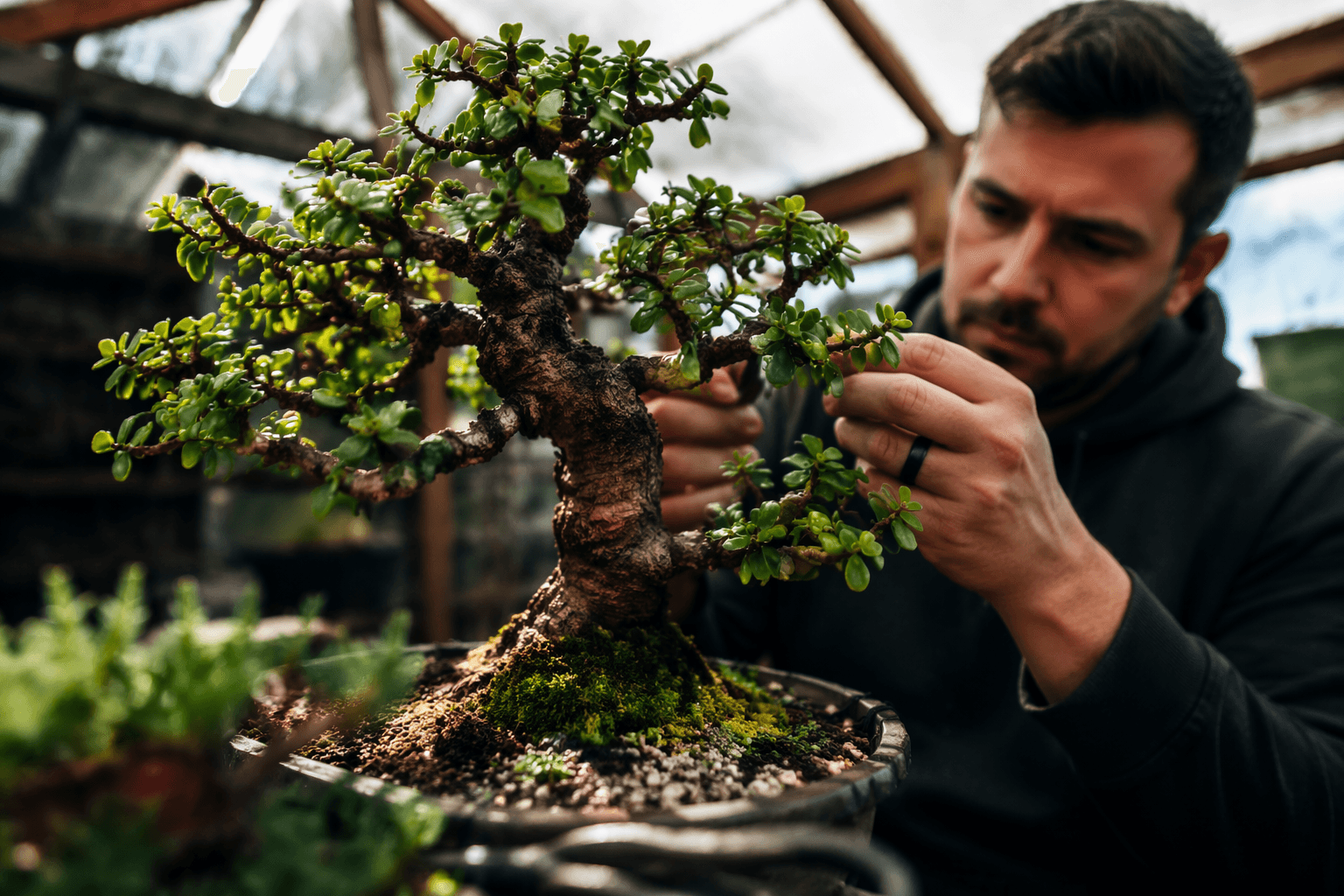
That lineage is part of why the tree resonates beyond a single nursery sale. Some bonsai growers call Yee the Gate Keeper of Cork Bark Jade, and that nickname tells you how closely the community guards its best plant stories. In this case, the story is not just nostalgia. It is a working stock of rare material that Rubel can train, propagate, and send into the hands of new growers.
A business built on trees, lessons, and long timelines
Bonsai is still a patience business, and Barrington Bonsai does not pretend otherwise. Every tree in the greenhouse carries years of shaping, trimming, and training before it is saleable or display-ready. That long timeline is part of the appeal and part of the economics. The trees are not just inventory, they are living assets that move from early training stages to finished pieces over time.
Rubel has turned that reality into a service model as well as a retail one. He now hosts small group lessons, giving the business a second lane beyond shipping trees. For buyers, that means they are not just purchasing a plant, they are buying into a local learning space where the basics of styling and maintenance can be taught around a species that can forgive a few mistakes.
The backyard greenhouse format adds to the story. It is intimate enough to feel personal, but active enough to function like a real production site. Hundreds of trees are being tended all year, which is a far cry from a hobby table in the corner. The scale is still small-business scale, but it is large enough to show how specialty bonsai can become a viable model when the right species, audience, and teaching plan line up.
Barrington’s place in a larger Chicago bonsai scene
Barrington Bonsai is not operating in isolation. The Midwest Bonsai Society, based at the Chicago Botanic Garden in Glencoe, has long promoted public awareness, cultivation, and the living art of bonsai. Its May Exhibit dates back to 2004, and its 2017 Mid-America Bonsai Exhibition registered more than 115 trees and suiseki from across the region.
That matters because it shows there is already a regional structure for people who want to move from casual curiosity to deeper involvement. Rubel’s business is tapping into that broader ecosystem while also widening it. Social-media attention has pushed his backyard operation into a more public role, but the real change is more basic: the tree that most clearly fits beginner demand is now arriving in a suburban greenhouse with a documented lineage, a teaching program, and customers far beyond Illinois.
The scene in Barrington is still quiet, but the signal is loud. A greenhouse lined with cork bark dwarf jade, tended by the hundreds and sent out across continents, says the same thing twice: bonsai is still built on patience, and more newcomers are finally ready to buy into it.
This article was produced by Prism’s automated news system from verified source data, official records, and press releases, then run through automated quality and moderation checks before publishing. The system is built and supervised by the people who set the standards it runs under. Read our full AI policy.
Know something we missed? Have a correction or additional information?
Submit a Tip