The Bonsai Zone moves tropical trees into greenhouse for summer care
Nigel Saunders turns greenhouse move-out day into a tropical bonsai checklist, showing which trees need closer inspection before summer growth takes over.

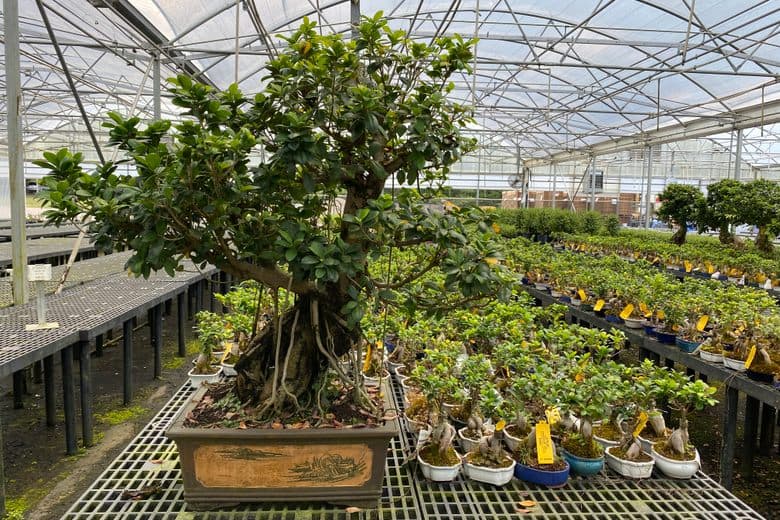
Nigel Saunders is using move-out day for more than a simple shuffle of pots. In The Bonsai Zone’s June 6 episode, he brings tropical bonsai out of winter quarters and into the greenhouse, then stops to inspect each tree as the season turns toward active growth. That makes the episode feel less like a recap and more like a working guide for anyone managing tropical material through the first summer push.
A greenhouse handoff, not a casual move
The June 2026 run is clearly a multipart seasonal project, not a one-off update. Part 2 landed two days before Part 3, and Part 4 followed the next day, which shows Saunders working through a broad tropical collection in stages rather than rushing everything at once. By Part 4, the list had expanded to include Powder Puff tree, Hibiscus bonsai, Ficus benghalensis, Cashew trees, Norfolk Island pine forest, mini Rubber trees, Ficus rumphii, Sabre Leaf Ficus, Copper Spoons succulent bonsai and a Rubber tree clump style.
That pacing matters because tropical bonsai do not all wake up at the same speed. Some trees are ready for stronger light and more water, while others still need a careful eye after winter storage. The greenhouse becomes the middle step, the place where trees can re-enter active care before they are sent fully outdoors.
What to inspect right now
Part 3 is especially useful because Saunders names the trees he is pulling forward one by one: a Vietnamese Blue Bell, a tiny Ficus religiosa, a Red Balloon tree, a Ficus Plain, an Australian Umbrella tree and a Tiger Bark Ficus in a 3D-printed pot. That variety is the point. It reminds you that tropical collections are not a single category of care, even when they all leave winter quarters on the same day.
A practical move-out checklist starts with observation:
- Check how each tree is handling the return to stronger light.
- Look for weak growth, stalled tips, or branches that have not responded to the seasonal shift.
- Watch for pest pressure, especially on trees that sat in sheltered winter conditions.
- Adjust watering slowly rather than treating every tropical the same way.
- Decide whether any tree needs pruning or repotting attention before growth accelerates.
- Make note of containers and stability, especially on unusual setups like the 3D-printed pot.
That last point is part of what makes the episode feel current. The 3D-printed pot shows how bonsai practice keeps absorbing new materials and new approaches, even during a deeply traditional seasonal task. The old work is still there, but the tools and containers can change around it.
Why the greenhouse step matters
The greenhouse is doing important work here because it gives tropical bonsai a controlled transition before they face full outdoor conditions. That is especially valuable when trees are coming out of winter storage and are not yet ready for the full force of summer sun, heat and weather swings. In bonsai, timing is everything, and this is the point where timing protects growth instead of forcing it.
The Royal Horticultural Society describes bonsai as the art of growing dwarf trees and shrubs in containers, relying on careful training, pruning and container restriction. Saunders’s seasonal greenhouse move fits that definition neatly. He is not just keeping plants alive, he is managing the moment when dormant or slow trees start to push again and the season begins to demand decisions.
A mixed tropical collection tells the whole story
The species list in Part 3 and Part 4 also offers a quick tour of tropical bonsai possibilities. The Vietnamese Blue Bell, also known as Desmodium, is especially popular in Vietnam and is known for summer flowers, which makes it a natural fit for this seasonal transition. The Australian Umbrella tree brings in a species native to tropical rainforests in northern and northeastern Queensland, the Northern Territory, New Guinea and Java, while the Tiger Bark Ficus is widely sold as a fast-growing tropical indoor bonsai with attractive bark and aerial roots.
That mix is important because each tree asks something different of the grower once it leaves winter quarters. A flowering tree may be watched for bud development, a ficus may be checked for vigor and extension growth, and a rainforest species may need humidity and space as it wakes up. Seeing them side by side in the greenhouse makes the transition concrete instead of abstract.
A recurring seasonal marker for the channel
This is not the first time The Bonsai Zone has documented the move. A prior April 2022 video also focused on moving tropical trees into the greenhouse, which makes the June 2026 series look like part of an annual rhythm on the channel rather than a novelty. That continuity is part of why the videos resonate with the community: they show a familiar seasonal job being handled in real time, with real trees and real choices.
The audience reach helps explain the interest too. The Walrus reported that Nigel Saunders’s channel had passed 13 million views, which suggests that these seasonal check-ins are landing with a large bonsai audience already tuned in for practical care, not just spectacle. In other words, the greenhouse move is not just content. It is a shared seasonal marker for growers who know exactly what it means when tropicals come back under cover.
By the time the greenhouse door closes behind this group, the important work has already started. The trees are back in the light, the weak spots are easier to spot, and the season can begin in the right order, with inspection first and full outdoor freedom only after the collection has earned it.
This article was produced by Prism’s automated news system from verified source data, official records, and press releases, then run through automated quality and moderation checks before publishing. The system is built and supervised by the people who set the standards it runs under. Read our full AI policy.
Know something we missed? Have a correction or additional information?
Submit a Tip