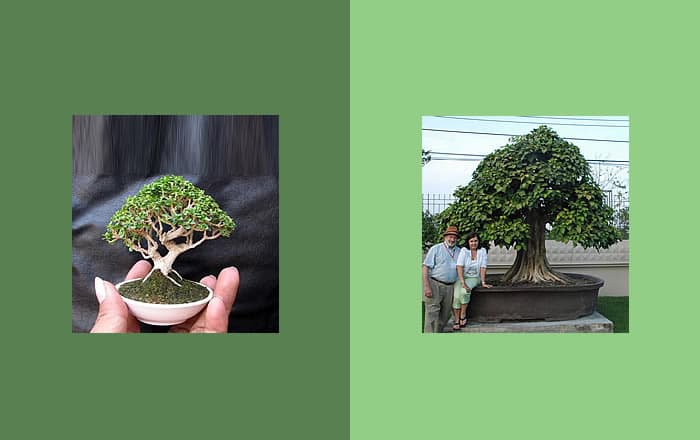
Bonsai began in China and was refined into an art in Japan
Bonsai is not a dwarf species or a genetic trick. It began as a tree-in-a-pot practice in China, then Japan refined it into the discipline you buy and style today.
Bonsai starts making sense the moment you stop treating it like a mystery object and start treating it like a living tree in a pot. Virginia Tech Extension is blunt about it: bonsai is an art form from ancient Asian culture, it originated in China, and the Japanese developed it into the practice most people recognize now. That matters at the bench, because the label is about cultivation and design, not a special plant species or a genetically dwarfed novelty.
What bonsai actually is
Virginia Tech’s line that bonsai literally means “tree in a pot” is the simplest way to strip away the myths. The container is not decoration added at the end, it is part of the horticulture, because root restriction is part of how the tree is kept miniature and healthy. If you forget that, you start judging the tree like a sculpture instead of a plant with seasonal needs, water use, and active growth.
That distinction is the first beginner filter. A tiny nursery plant is not automatically a bonsai, and a bonsai is not automatically a tiny plant that stays small on its own. The art is in the training, the pruning, the wiring, and the container culture that allows a real tree to suggest age and scale without ceasing to be a tree.
China set the template first
The Chinese side of the story is not a footnote. Bonsai Empire traces the Chinese art of pun-sai to about 700 AD, when growers used special techniques to raise dwarf trees in containers. That older tradition matters because it shows the core idea was already there long before Japanese aesthetics sharpened it: keep a tree small, but keep it alive, balanced, and expressive.
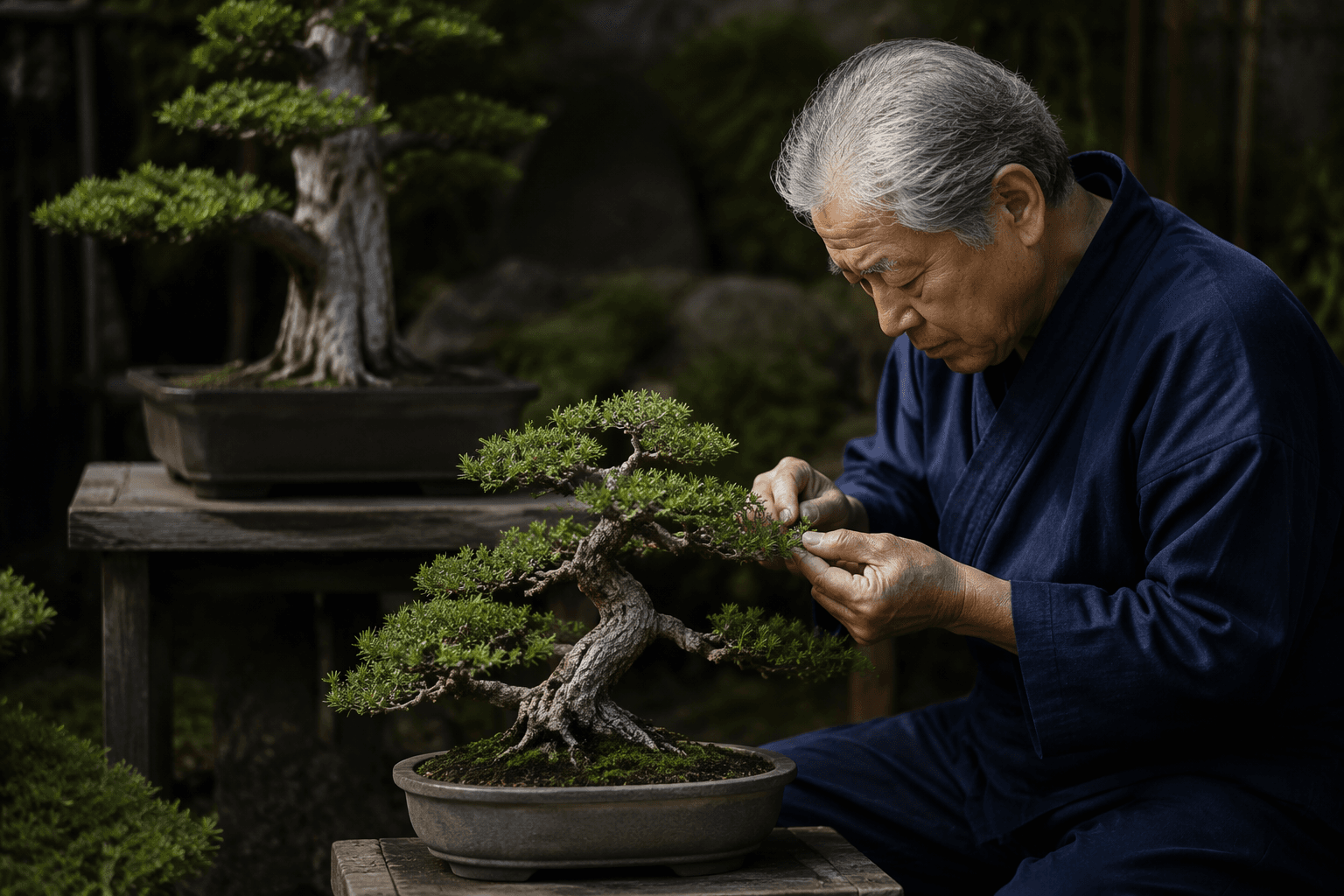
Japan House places the introduction of bonsai to Japan in the Heian period, which ran from the 8th to the 12th centuries. By the 13th century, Virginia Tech says Japanese collectors were potted wild trees that had already been dwarfed by nature, which means the practice was still tied to real landscape forms, not a synthetic look. BONSAI Shouchikuen Tokyo adds that the first written mention appears in Kamakura period records of Kasuga Shrine, with an illustration of bonsai in a picture scroll of the priest Honen from the same era.
That timeline changes how you look at a good tree. Bonsai did not appear fully formed as a style with one fixed recipe; it evolved through centuries of container growing, collecting, and refinement. The Chinese origin and Japanese development together explain why bonsai is both horticulture and design.
Why Japan refined it into an art
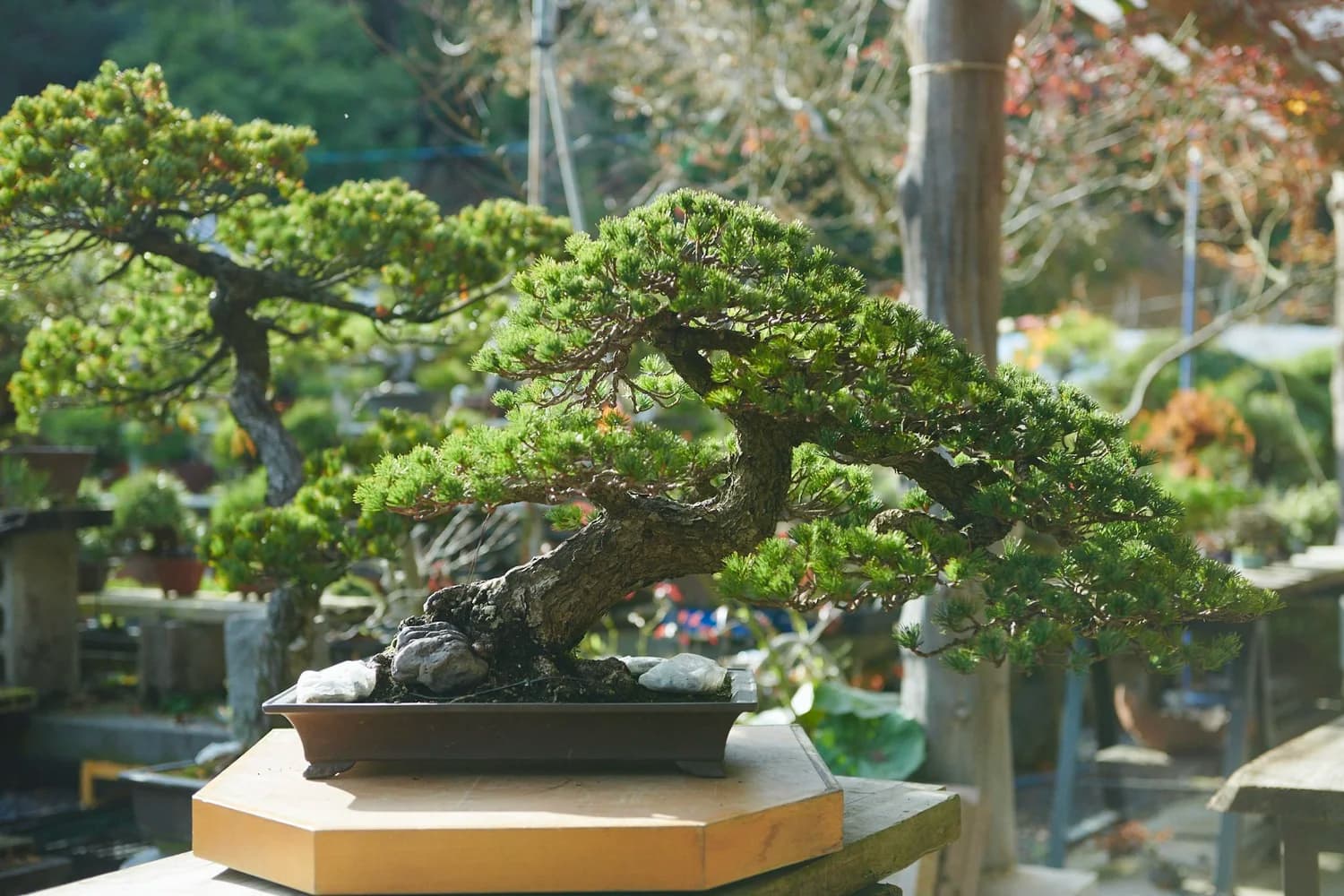
Japan did more than adopt the idea, it disciplined it. Virginia Tech notes that when demand for small trees outgrew the supply of naturally dwarfed material, Japanese gardeners began training bonsai from native trees and shaping them to create the illusion of age. That shift is why mature bonsai often look less like “small trees” and more like believable old trees reduced to scale.
The visual goals are specific: taper, movement, weathering, and a trunk that suggests decades of survival. Twisted trunks, restrained branch pads, and a sense of asymmetry are not random flourishes, they are ways of echoing what real trees look like after wind, shade, and time have worked on them. The best trees do not advertise their miniaturization; they persuade you you’re looking at a full-sized tree from a distance.
This is where beginners get tripped up by the wrong shopping instinct. If you only chase a species name or a plant that is already tiny, you miss the real evaluation: the tree’s trunk line, nebari, branch placement, and whether the material can support the image you want. The history tells you to shop for potential, not for a gimmick.
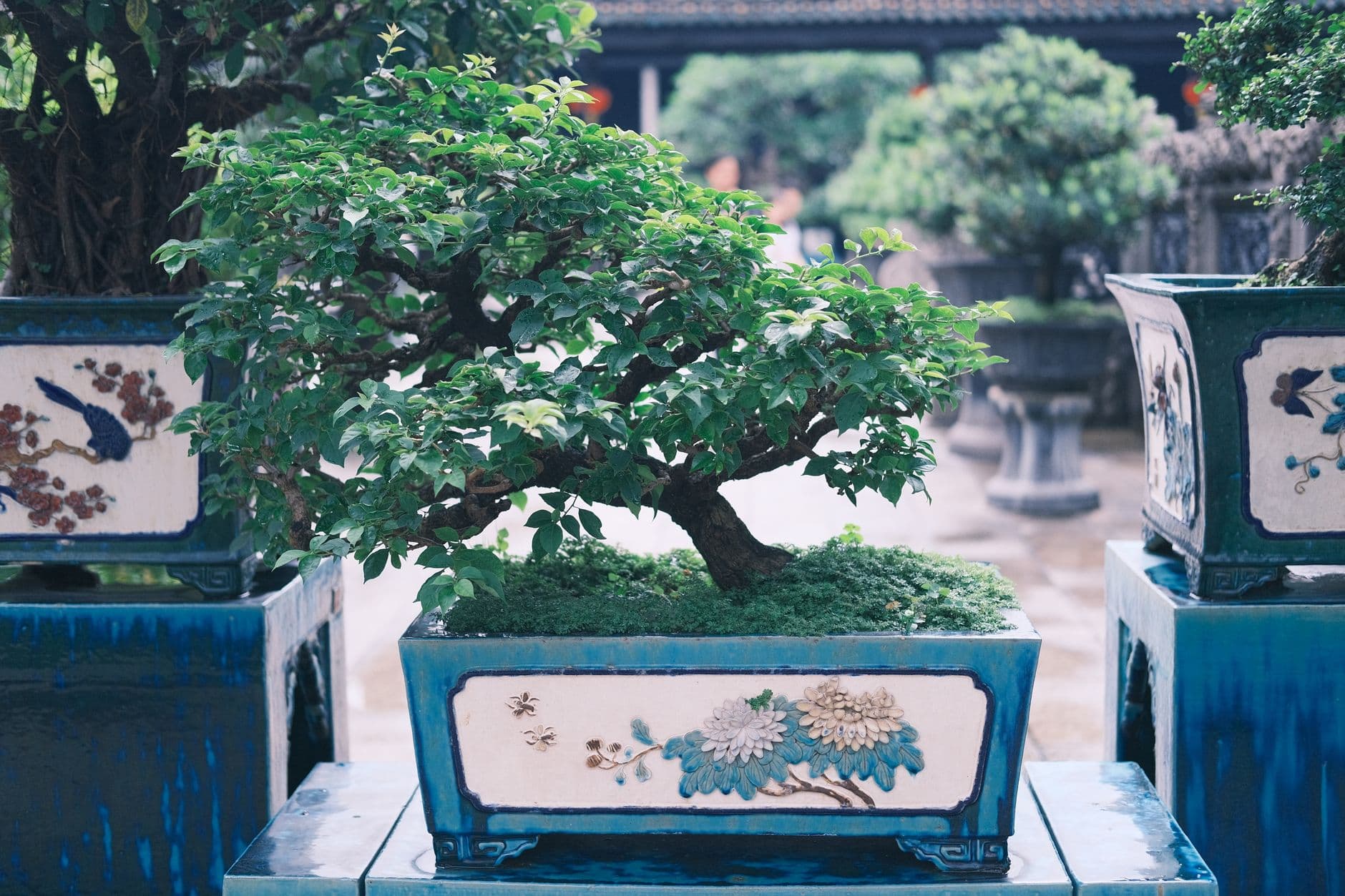
- Look for live, workable material in a pot, not a plant sold as “bonsai” just because it is small.
- Judge the trunk first, then the branch structure, then the container.
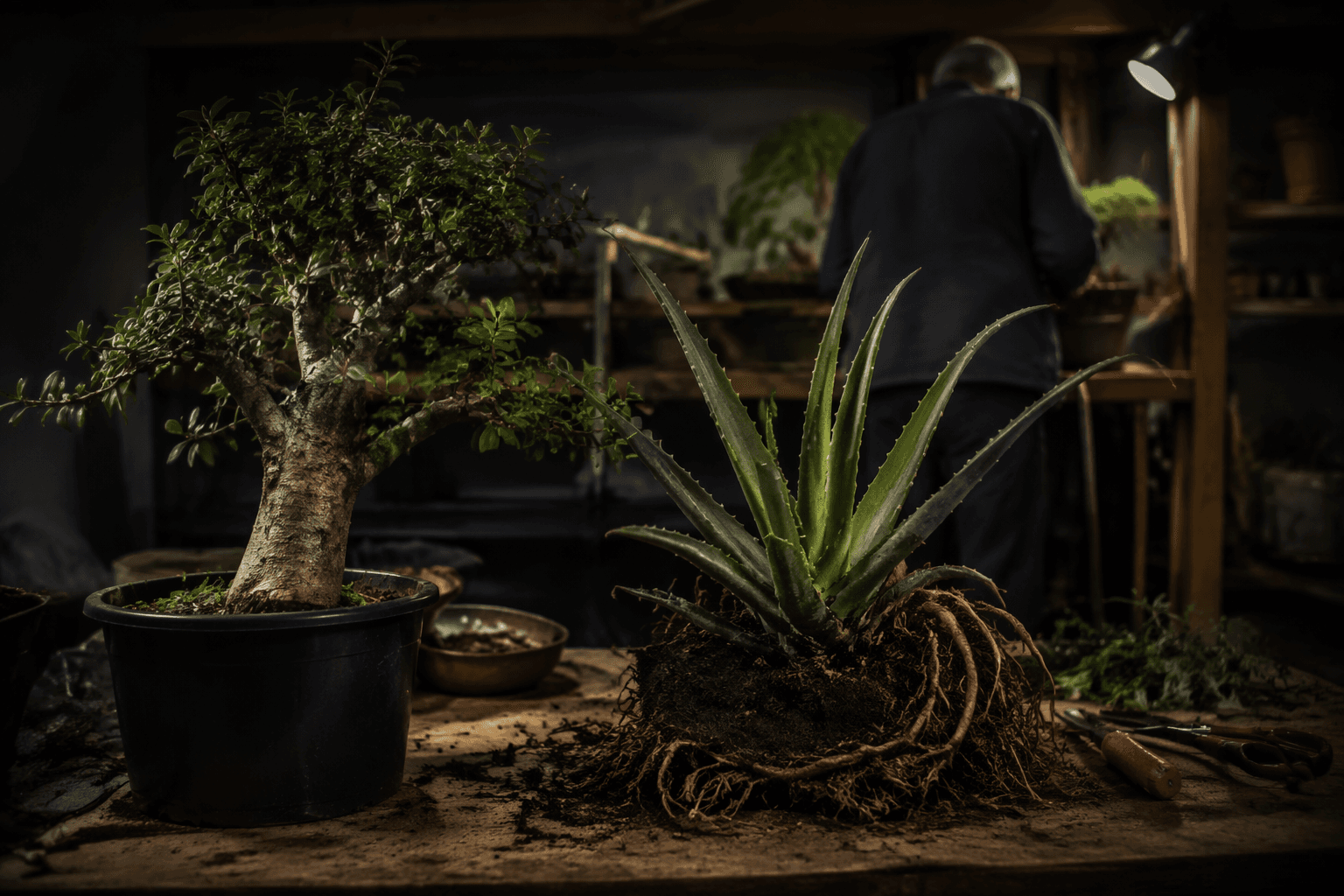
- Treat root health as part of the design, because the pot is not separate from the tree.
- Remember that seedling, cutting, and collected wild material are all valid starting points, depending on the result you want and the species you can keep healthy.
The museum story backs up the lineage
The modern bonsai world still reflects that broader Chinese-Japanese lineage. The National Bonsai Foundation says it was founded in 1982 and works with the U.S. National Arboretum in Washington, D.C. The Arboretum’s National Bonsai & Penjing Museum is devoted to bonsai, penjing, and suiseki, and the Foundation says the museum includes Chinese, Japanese, and North American collections.
That mix is useful because it keeps the term from collapsing into a single national stereotype. Bonsai is deeply associated with Japan because Japanese artists refined the form, but the art’s roots are Chinese, and the living tradition now sits in an international frame. The museum’s three collection streams make that clear in a way a beginner can see immediately: bonsai is a transnational art with shared techniques, not a closed category reserved for one country or one species.
The practical takeaway is simple. If you understand bonsai as a tree in a pot, you stop buying the myth and start buying the material. You learn to judge a trunk, a container, and the promise of the plant in front of you, which is exactly how an ancient Chinese practice became the Japanese art people still train today.
This article was produced by Prism’s automated news system from verified source data, official records, and press releases, then run through automated quality and moderation checks before publishing. The system is built and supervised by the people who set the standards it runs under. Read our full AI policy.
Did this article answer your question?