Bonsai Beginners Urged to Prioritize Tree Health Over Forced Age
Fast age is the quickest way to wreck a young bonsai; the better path is to read the roots, taper, and vigor the tree already has.
Health comes before the illusion of age
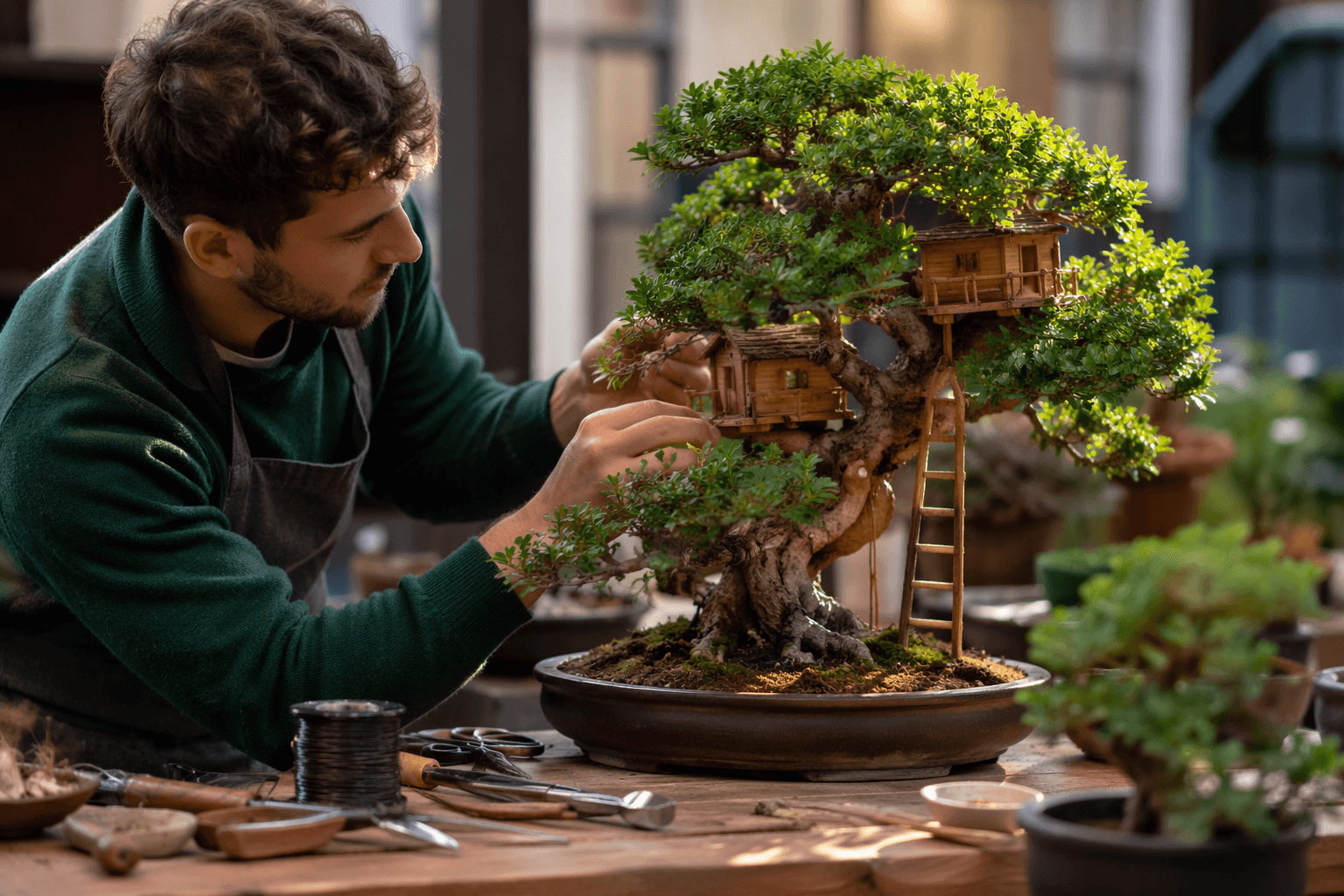
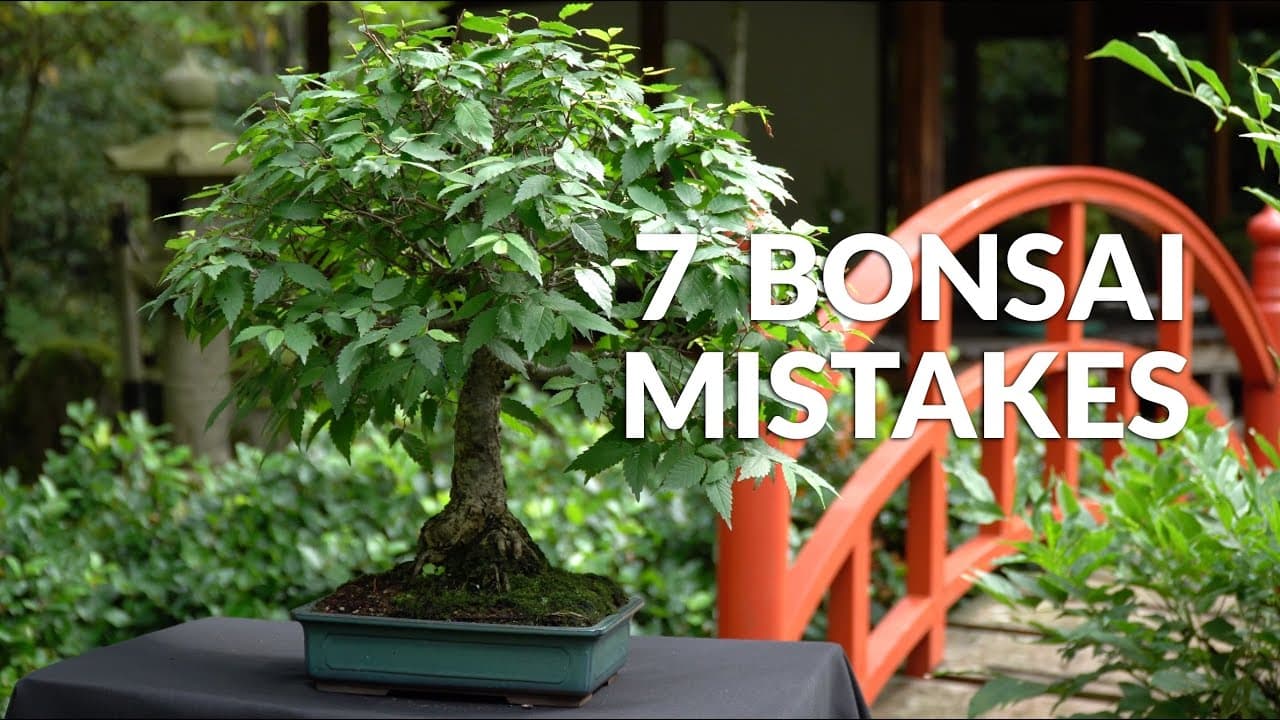
The biggest beginner mistake in bonsai is not lack of ambition. It is trying to make a tree look older, heavier, or more refined before the trunk, roots, and branches can support that story. Aggressive bending, carving, and heavy deadwood work can break branches, stress foliage, and leave the composition looking forced instead of convincing.
That is why bonsai age has to be earned. The Royal Horticultural Society describes bonsai as the art of growing dwarf trees and shrubs from seedlings or rooted cuttings through careful training, pruning, and container restriction, and that word “careful” is doing a lot of work. Bonsai responds best when styling follows health, not the other way around.
Read the tree before you reach for the tools
A young tree can only carry so much design pressure at once. If the trunk is still thin, the roots are weak, or the branches are not vigorous enough to hold movement, trying to fake maturity usually exposes the gap between what you want and what the tree can actually handle. That mismatch is what makes early styling read as artificial.
Harvard’s Arnold Arboretum points to the foundations that create the illusion of age: trunk proportion, taper, and buttress rootage at the base. In other words, a convincing bonsai starts with structure that makes sense biologically, not with dramatic tricks. The Arboretum’s care guidance also shows how much patience the work demands, since large Hinoki cypress bonsai are repotted every 4 to 5 years and smaller plants every 2 to 3 years, with pruning timing varying by species.
Cut for clarity, not quantity
Another common beginner error is assuming more branches automatically make a better bonsai. In practice, crowded trees often lose both clarity and balance, especially when every shoot is allowed to stay just because it is alive. A busy canopy can hide the design rather than strengthen it.
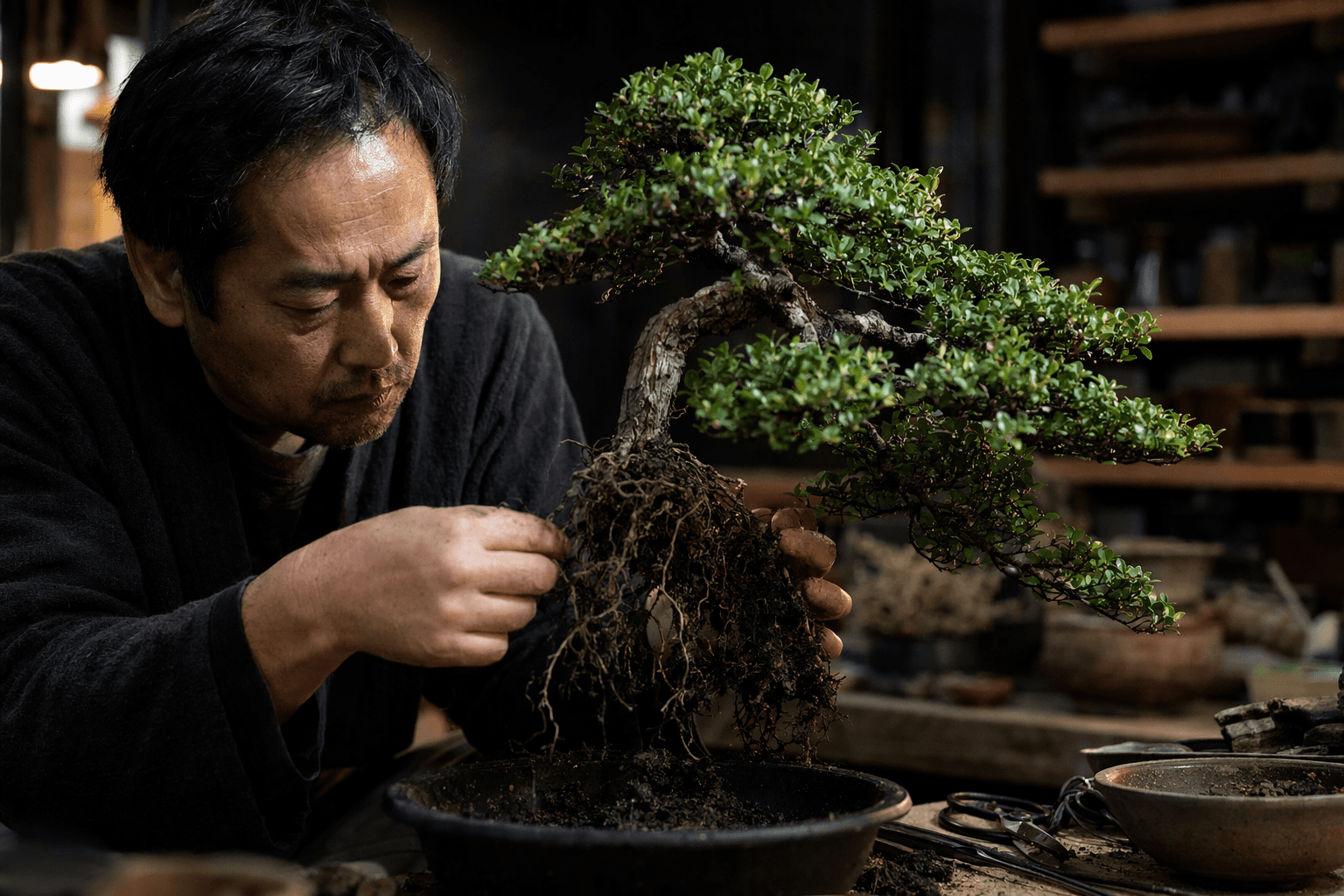
The safer approach is selective removal. Take out branches that cross awkwardly, fight the chosen line, or clutter the silhouette, and let the remaining structure breathe. A clean outline looks intentional, and an intentional outline usually reads as healthier too, because the tree is not wasting energy supporting weak or redundant growth.
Harvard’s collection-care guidance reinforces that pruning is not about leaving everything in place. In its bonsai work, at least 50 percent of new growth is removed at pruning time, which is a clear sign that disciplined reduction is part of serious training. The goal is not to keep every branch, but to keep the right branches.
Do not hide the nebari
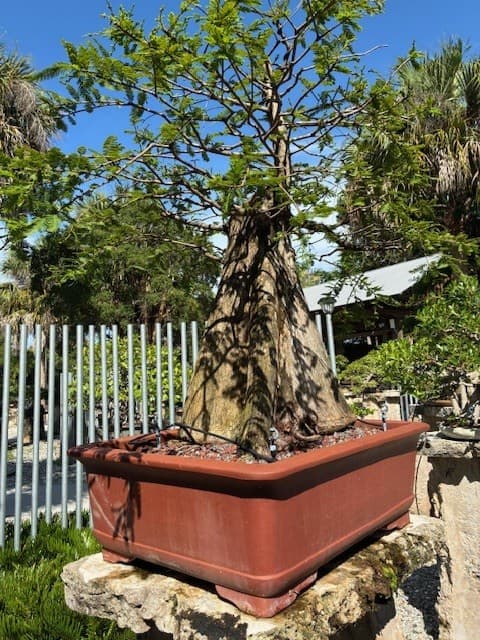
If there is one part of the tree beginners often overlook, it is the root flare, or nebari. Bonsai Empire treats the nebari as a very important visual element because the surface roots provide balance, and ideally they should be visible on all sides of the trunk. When the base is strong and readable, the tree feels anchored.
That matters because the base is part of the illusion of age. Trunk proportion, taper, and buttress rootage all work together to suggest stability over time, while a hidden or weak-looking base can make even a well-styled canopy feel uncertain. If you bury the nebari under soil or ignore it during styling, the whole composition loses some of its authority.
Wire with restraint and keep checking it
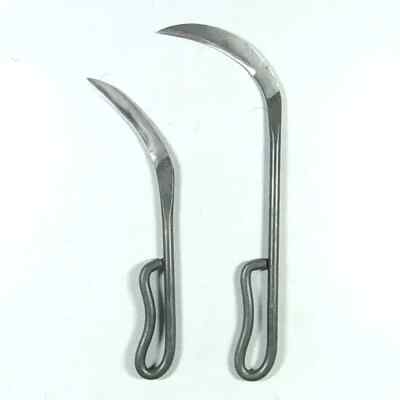
Wiring can be one of the most useful tools in bonsai, but it is also one of the easiest to misuse. Wire that is too tight or left on too long can scar branches or roots and leave marks that may take years to heal. That kind of damage is especially frustrating because it often comes from trying to get results too quickly.
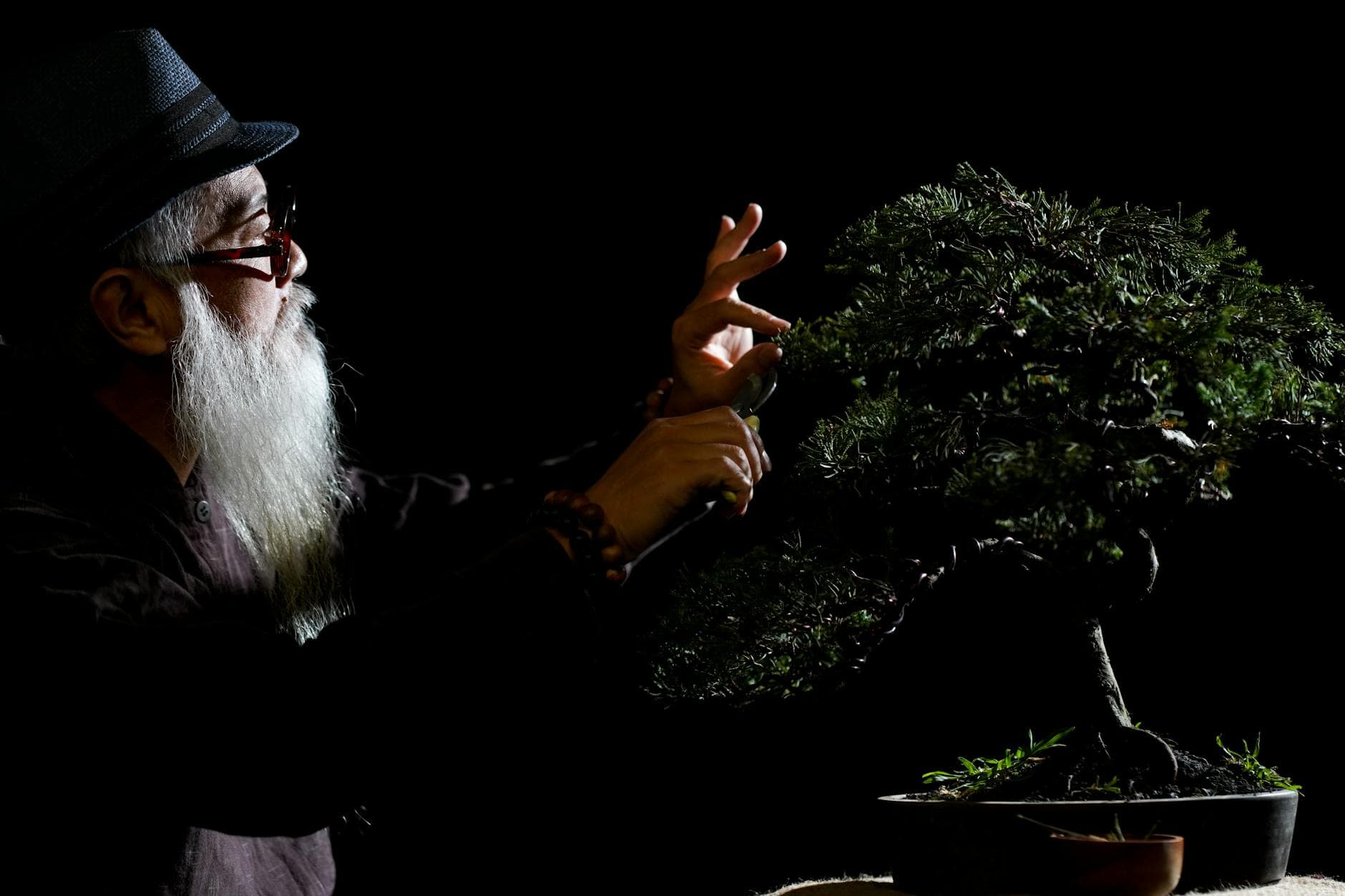
The Arnold Arboretum notes that in young, vigorous bonsai, shaping branches with copper or aluminum wire is an important part of training, and branches are often wired into a horizontal position to create the effect of age. The key is that the tree has to be vigorous enough to respond, and the wire has to be watched closely. If it starts biting in, the lesson is simple: the styling window has passed, and the tree’s health comes first.
Deadwood should not be your shortcut to maturity
Jin and shari can add character, but they are not beginner shortcuts to instant age. Bonsai Empire is clear that creating natural-looking deadwood requires experience and should be practiced on less valuable trees before it is used on valuable material. That advice exists for a reason: deadwood done badly looks theatrical, while deadwood done well looks like weather, time, and survival.
Harvard’s Arboretum also places deadwood work in the broader context of bonsai styling, alongside pruning and wiring, as part of the effort to create natural and realistic results. That is the real standard. Deadwood is not there to prove a point; it is there to support the tree’s story when the rest of the structure can already carry it.
Think in seasons, not sessions
Bonsai is a long-term training art, not a one-day makeover. The Royal Horticultural Society frames it as a process built on careful training, pruning, and container restriction, which is exactly why impatience causes so many early mistakes. A tree that has not built roots, taper, and branch structure cannot be rushed into maturity without showing the strain.
The Arnold Arboretum’s Bonsai & Penjing collection in Boston, Massachusetts underlines that long view in its own history. The collection began in 1937 with the Larz Anderson Collection of Japanese Dwarfed Trees and now comprises 67 curated specimens. That kind of continuity is the real bonsai lesson: refinement arrives through repeated, measured decisions, not through forcing age before the tree is ready to wear it.
This article was produced by Prism’s automated news system from verified source data, official records, and press releases, then run through automated quality and moderation checks before publishing. The system is built and supervised by the people who set the standards it runs under. Read our full AI policy.
Did this article answer your question?