Bonsai Repotting Timing and Root Care Can Make or Break Trees
Repotting is a root job, not a cosmetic one. Get the timing wrong and you can lose months; get it right and you buy your bonsai real momentum.

Timing is the real repotting skill
Repotting is one of the few routine bonsai jobs that can push a tree forward or knock it back hard. The mistake most people make is treating it like maintenance by calendar, when it is really a root-management intervention that changes how the tree takes up water, air, and energy. If you want the tree to respond well, you have to think about species, season, and recovery, not just whether the pot looks crowded.
The safest repotting window for temperate species usually comes when the tree is preparing to move, but has not yet committed fully to foliage production. That is the sweet spot where the roots can recover before the top starts demanding too much. Miss that window and the tree can spend weeks or months digging out of the stress.
Juniper and conifer timing
Junipers and many other conifers want especially careful handling. The practical rule is to work them when they are active, but not during a stressed hot-weather phase that can punish fresh root cuts. That is the difference between a tree that resumes growth cleanly and one that sulks, weakens, or drops back in vigor for the season.
With junipers, patience matters more than bravado. If the tree is already feeling heat, drought, or other pressure, repotting becomes a much bigger gamble than it looks from the bench. A cautious window, paired with restrained root work, is usually the better call than forcing the job because the pot is crowded.
Ficus and tropicals need a different test
Ficus and other tropicals give you more flexibility, but not a free pass. Repotting can happen during the warm growing season, yet the tree has to be vigorous enough to take the hit from root disturbance. A tropical that is already stressed, weak, or sluggish is not a good candidate just because temperatures are favorable.
That makes the decision framework straightforward: with a ficus, warm weather is necessary, but vigor is the real green light. If the tree is pushing growth strongly and the root ball clearly needs attention, the timing can be right. If it is coasting, stalled, or showing weakness, wait until it has more energy in reserve.
Repot for a reason, not out of habit
The best repotting jobs solve a problem. Poor drainage, a compacted root ball, soil that has broken down, or a tree that has clearly outgrown its container are all valid reasons to act. If none of those problems are present, leaving the tree alone is often the smarter choice.
This is where a lot of losses start: people repot because the season says so, not because the tree needs it. Bonsai roots are the engine under the hood, and if the substrate is still functioning, the tree may be better served by staying put for another cycle. The job should answer a specific issue, not satisfy a schedule.
Match the root work to the tree’s condition
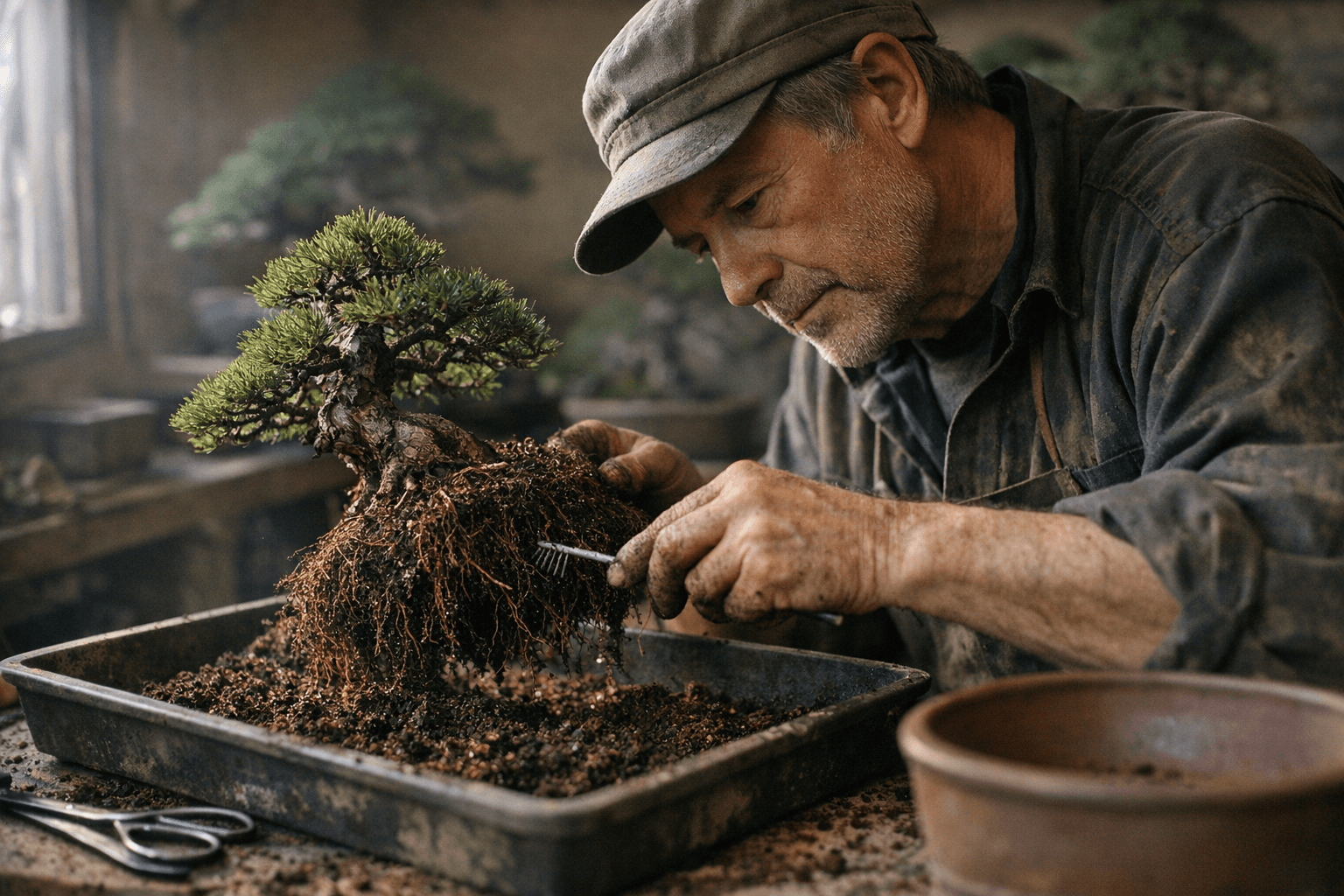
The amount of root work you do should track the strength of the tree in front of you. Healthy trees can usually tolerate more aggressive root combing and root pruning, while weaker trees need a lighter touch, more original soil retained, and a smaller shift in pot size. That is not a sign of hesitation; it is good triage.
If the tree is strong, you can clean out more of the old root mass and correct the structure more decisively. If it is weak, the goal is not a perfect root system on day one, it is survival and recovery. Keeping more of the old soil in place can help bridge the transition and reduce shock.
The first weeks after repotting decide the outcome
Aftercare is where a repot either succeeds or quietly fails. Freshly repotted bonsai generally need shelter from extreme sun, strong wind, and hard frost. Those are the conditions that can turn a routine operation into a setback, because the tree is trying to replace roots while also keeping the top alive.
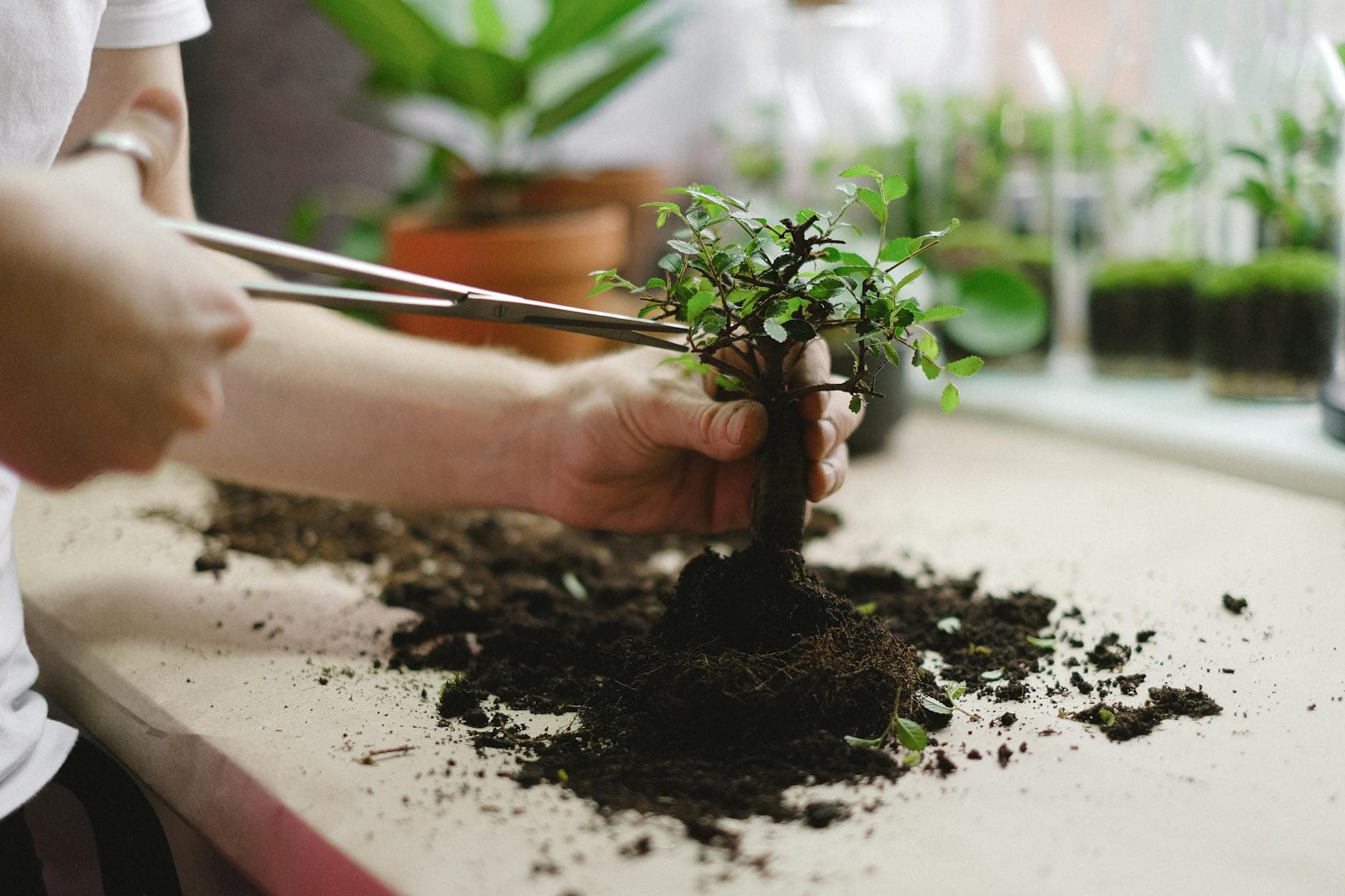
Watering should be attentive but not excessive. You want the new substrate to stay appropriately moist, not saturated, and you want the tree to recover without being pushed too hard too soon. Fertilizing usually waits until the tree shows clear signs of recovery, because feeding a stressed root system before it is ready can add more pressure instead of helping.
Do not stack stress on the same tree
Repotting does not live in isolation. If you are also styling, wiring, or pruning, the order matters, because each operation pulls on the same energy budget. Many growers repot first, let the tree regain strength, and only then move on to heavier styling work.
That sequence makes sense because roots, foliage, and design all affect one another. You can split jobs across seasons to avoid stacking stress, and that usually buys you better recovery and more predictable results. A tree that has just been repotted has earned a recovery period before you ask for major cosmetic changes.
Why this knowledge pays off later
The biggest payoff from good repotting is flexibility. Once the roots are healthy and the substrate is doing its job, you have more room to style the tree later without constantly worrying that every structural choice will be paid for in lost vigor. That is how bonsai stops feeling like a series of emergency fixes and starts feeling like a long-term development plan.
Beginners often focus on what is visible above the rim, but the real growth engine sits underground. If you get the timing right, respect the species, and treat aftercare as seriously as the repot itself, you protect the tree’s future instead of just changing its pot. In bonsai, that difference is the whole game.
This article was produced by Prism’s automated news system from verified source data, official records, and press releases, then run through automated quality and moderation checks before publishing. The system is built and supervised by the people who set the standards it runs under. Read our full AI policy.
Did this article answer your question?