Bonsai theft in Guatemala city sparks concern over rising cases
A motorcycle pair stole Connie, a nearly 50-year-old jaboticaba bonsai worth more than Q25,000 from a Guatemala City nursery, exposing how hard mature trees are to protect.
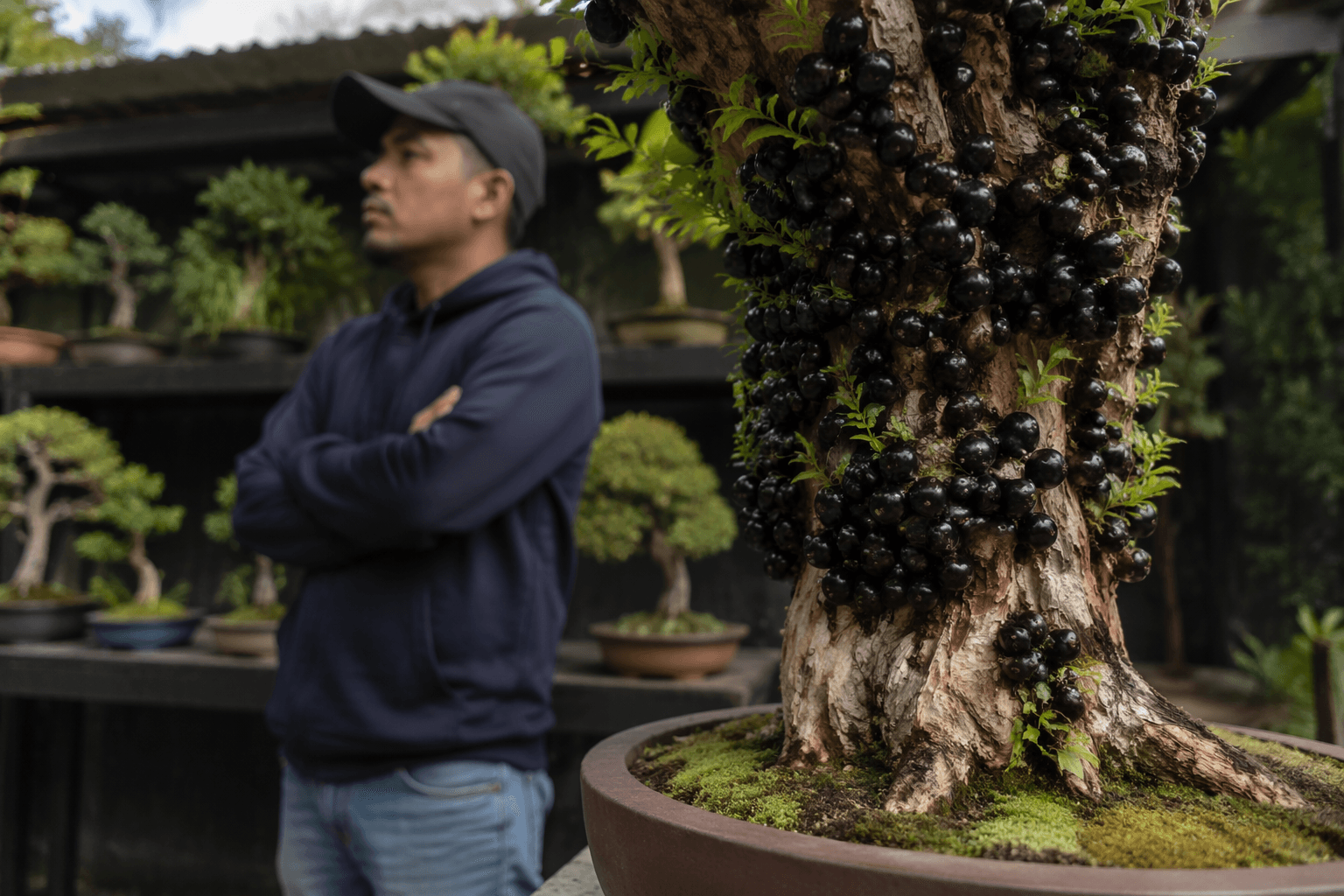
A motorcycle pair pulled off a fast, targeted theft at Estavios Bonsái Guatemala in zone 13, taking a jaboticaba bonsai known as Connie, a tree valued at more than Q25,000, or roughly $3,000 to $3,500. For collectors, the loss cuts deeper than the price tag: this was a nearly 50-year-old tree shaped over years of work, the kind of bonsai that cannot simply be replaced by buying another specimen.
The theft happened at the nursery on Avenida Las Américas 6-78, where surveillance footage showed one man arriving with an accomplice on a motorcycle, entering the property, breaking the pot and fleeing with the tree while the other waited nearby. Municipal cameras later helped trace the escape route through 20 calle in zone 10, and security staff said facial-recognition tools from the city monitoring system helped identify the motorcycle driver.
Estavios Bonsái Guatemala said Connie had been under six years of expert care, with three strategic transplants, constant training pruning, advanced bio-stimulation and monthly fertilization. The business said the tree had originally been found as a much older nursery plant and was estimated at about 40 years old when it was rescued, then developed into the bonsai stolen this month. That history is exactly what makes mature bonsai such tempting targets: the visible age, the refined structure and the years of root work are difficult to replicate and easy to resell.
Gustavo Ramírez, the owner, asked the public to share information and help prevent the tree from being sold on. Prensa Libre reported that Connie had sentimental value to the family, and media coverage noted the tree had been exposed to the sun since March as growers hoped it would flower and bear fruit.
The case has also sharpened attention on security practices inside bonsai circles. Visible cameras, clear lines of sight to displays, tighter control over how trees are moved in and out of a property, and well-documented proof of ownership now look less like optional precautions and more like basic protection for mature stock. In a region where a single tree can vanish in seconds, the trail left behind by the thieves may matter almost as much as the tree itself.
This article was produced by Prism’s automated news system from verified source data, official records, and press releases, then run through automated quality and moderation checks before publishing. The system is built and supervised by the people who set the standards it runs under. Read our full AI policy.
Know something we missed? Have a correction or additional information?
Submit a Tip