Chicago Botanic Garden showcases one of America’s largest bonsai collections
A refreshed collection page turns Chicago’s bonsai trove into a living field guide, with nearly 300 trees, rare age claims, and tools for studying styles on site.
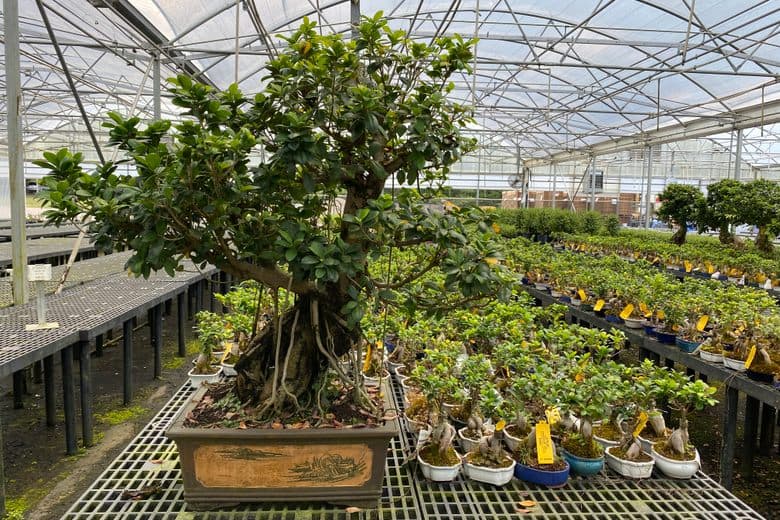
The Chicago Botanic Garden’s refreshed bonsai collection page does more than advertise a display. It opens a practical route into nearly 300 trees, 160 taxa, and one of the country’s deepest living archives, spread across two courtyards and shown from mid-April through October.
A collection built for close study
This is not a side exhibit tucked into a corner of the grounds. The garden presents bonsai as one of its signature specialties, and the scale makes that clear: nearly 300 trees, representing 160 different taxa, with a collection broad enough to reward repeat visits. The two-courtyard layout matters too, because it gives the display room to breathe and makes it possible to read the trees as a body of work rather than as a handful of isolated specimens.
The refreshed page also helps shift the experience from passive viewing to active learning. With GardenGuide app support and virtual tour tools, the collection becomes more accessible to first-time visitors and returning students alike. If you are trying to sharpen your eye, this is the kind of setup that lets you compare silhouettes, pots, trunk movement, and species choices without feeling rushed.
How the display grew into a permanent program
The collection’s roots go back to 1978, when bonsai first appeared on a bench structure in the east courtyard of the Education Center. That early display did not survive untouched. It was removed during a 1994 courtyard redesign, then brought back in 1995 after the garden’s Botanic Garden Committee approved the east courtyard as a bonsai display area again.
The real expansion came in 2006, when both courtyards were renovated and the display moved onto both sides. That change turned the bonsai program into a larger public commitment and helped explain why the collection now feels established rather than experimental. In 2018, the garden described the collection as having around 285 bonsai, with about 90 ready to be displayed publicly, which shows how much material sits behind the visible exhibition.
Styles, species, and provenance that widen the definition of bonsai
One of the most useful things about this collection is that it does not confine bonsai to a single visual tradition. Yes, the garden includes formally composed Japanese trees, but it also highlights naturalistic bonsai using North American species and containers made by North American potters. That mix matters because it shows how the art can honor its roots while adapting to local material and local sensibilities.
Provenance adds another layer. Many of the trees were donated, including 19 that were imported from Japan and gifted by bonsai master Susumu Nakamura. For a visitor, that means the collection is not just diverse in species and styling, but also in lineage. You are looking at trees that carry different histories, different hands, and different ideas about what bonsai can be in an American public collection.
The trees that stop you in your tracks
A few specimens give the collection its headline power. The page points to a limber pine estimated to be 600 to 1,000 years old, and a Japanese white pine that has reportedly been trained for at least 100 years. Those age claims change the way you read the display. These are not simply small trees in pots. They are long-lived organisms shaped into cultural objects, with time itself as part of the design.
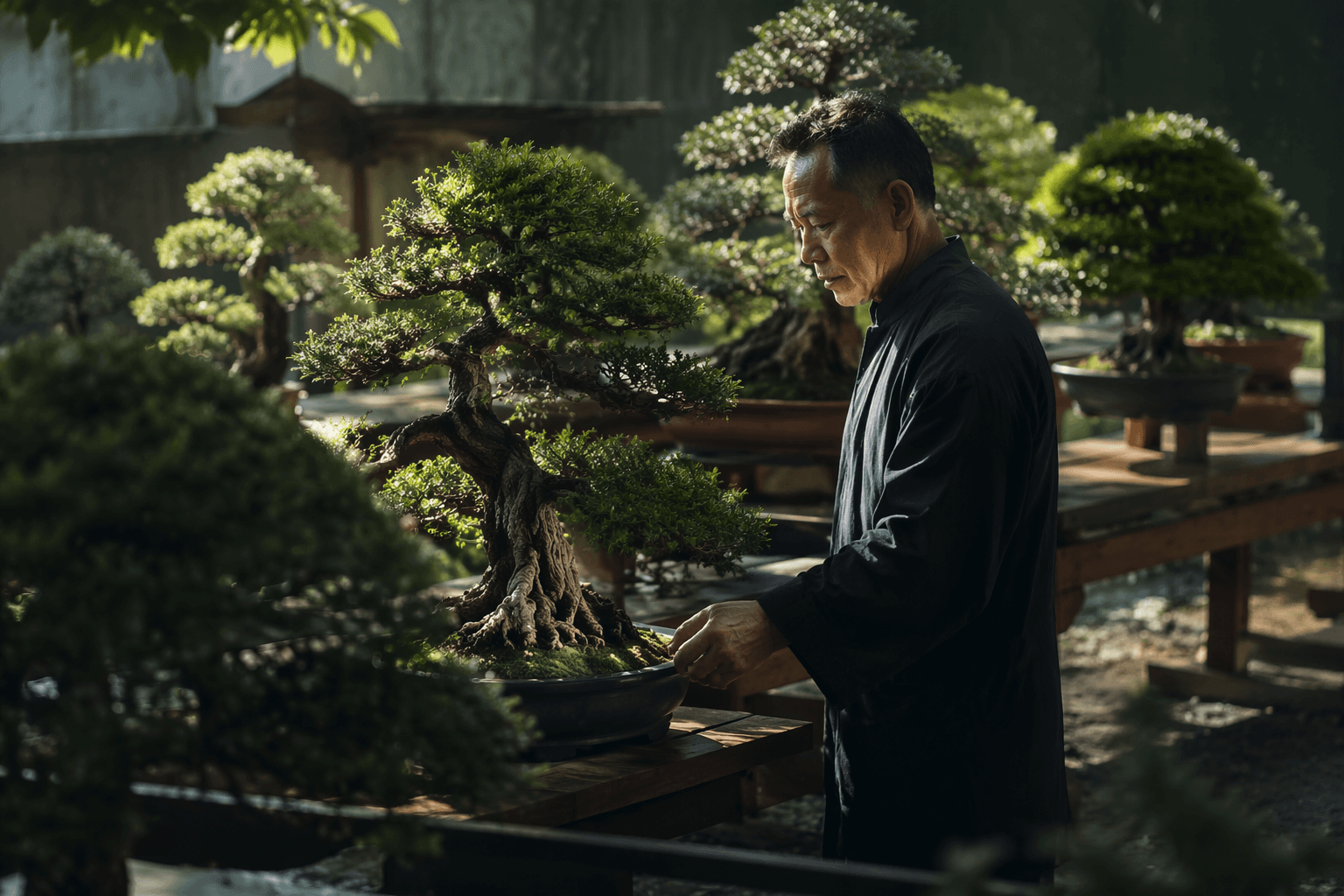
That is where Chris Baker’s framing becomes useful. He has described bonsai as storytelling, saying the artist is telling “the imagined life of the tree.” In a collection with trees that old, that idea lands with unusual force. The display is not just about technique or refinement. It is about condensing a life into something you can stand in front of and study from inches away.
Who is shaping the collection now
Baker has been studying and working on bonsai for more than 16 years, and his path into the field includes a chance encounter with bonsai curator Jack Sustic at the U.S. National Arboretum in 2010. A 2025 visit noted that Baker is the garden’s first full-time bonsai curator, which helps explain the increasing polish of the program and the stronger emphasis on public interpretation.
His training also reaches beyond Chicago. After volunteering at the U.S. National Arboretum, he studied with Toru Suzuki at Daiju-en in Japan. The collection is supported by multiple greenhouses used to overwinter trees at different temperatures, which is the kind of behind-the-scenes detail that often gets overlooked but makes a major public display possible in a Midwest climate.
How the broader bonsai calendar connects to the collection
The Chicago Botanic Garden is also a hub for the Midwest Bonsai Society, which centers its shows around the permanent collection. The society says its August exhibition is entering its 48th year in 2026, making it one of the longest-running regional bonsai events in the nation. Its May show is built as an educational event, with vendors, workshops, and trees ranging from training stock to expert-level specimens.
That connection matters because it reinforces the garden’s role as more than a venue. It is part exhibition site, part classroom, and part gathering place for the regional bonsai community. If the refreshed collection page is the front door, the rest of the program gives visitors a reason to stay, compare, and keep coming back as the season changes.
The biggest takeaway from the refreshed page is simple: this collection is built to be read. The scale, the age, the provenance, and the digital tools all point to the same thing, a public bonsai archive that rewards attention long after the first look at those courtyard benches.
This article was produced by Prism’s automated news system from verified source data, official records, and press releases, then run through automated quality and moderation checks before publishing. The system is built and supervised by the people who set the standards it runs under. Read our full AI policy.
Know something we missed? Have a correction or additional information?
Submit a Tip