Gresham Japanese Garden workshop teaches kusamono with evergreen huckleberry
Evergreen huckleberry turns this Gresham class into a low-barrier entry point: you leave with a kusamono, not just notes.
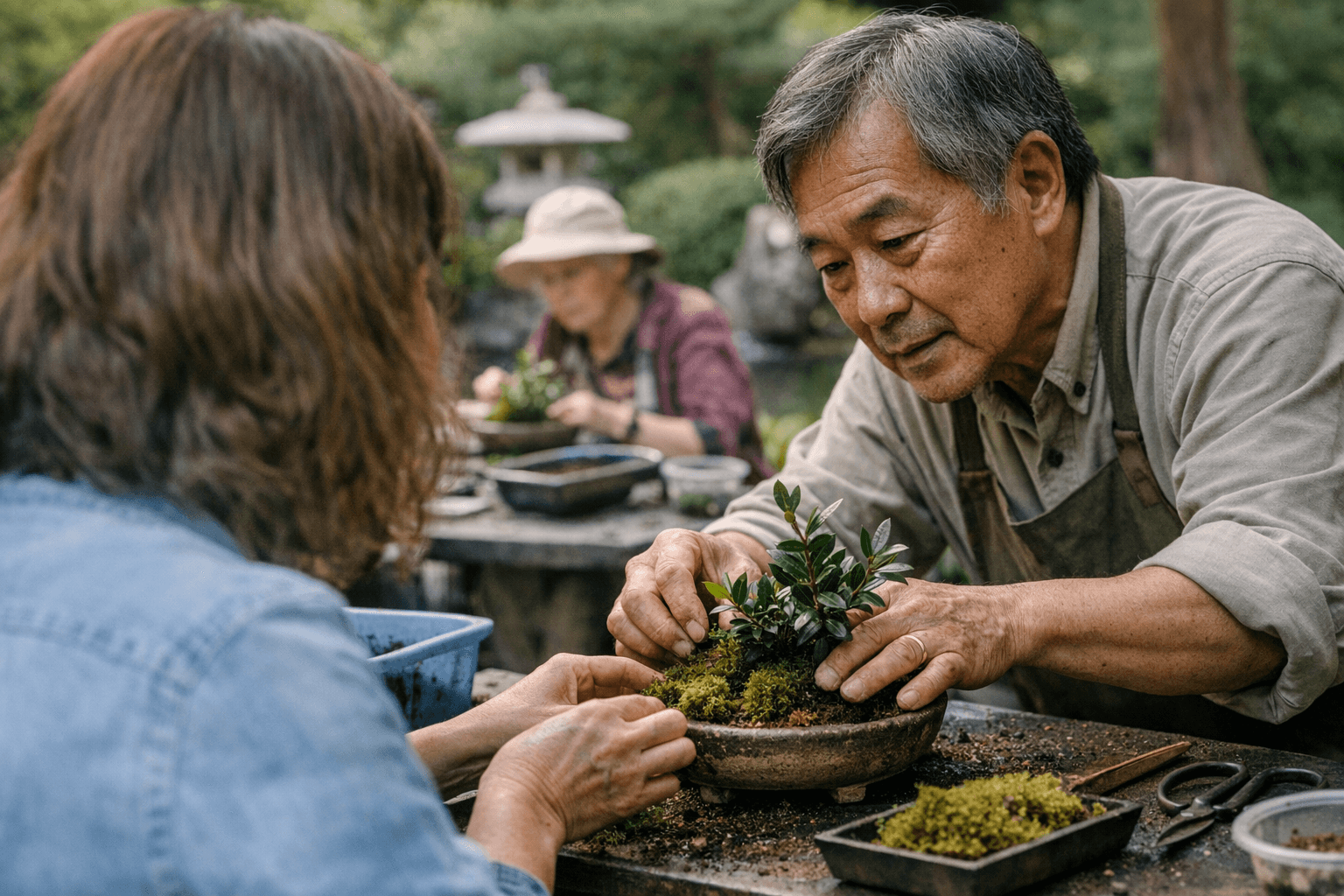
A two-hour workshop, a take-home project, and a native Pacific Northwest understory shrub make this Gresham Japanese Garden class an unusually welcoming doorway into bonsai-adjacent design. Instead of asking you to arrive with an established tree and a full styling plan, the April session centers on making a kusamono with evergreen huckleberry, a format that teaches composition from the ground up.
Why kusamono matters
Kusamono is not a side note in a display. In bonsai practice, the companion planting helps set season, mood, and scale, giving the main tree a sense of place without stealing the scene. That is what makes this workshop such a smart entry point: you get to work with the design logic of Japanese garden art before you ever need a mature bonsai.
The featured plant, Vaccinium ovatum, or evergreen huckleberry, fits that lesson neatly. Its compact habit and fine branching make it a natural choice for small containers, and its woodland character gives the arrangement softness and seasonal depth. For anyone trying to understand how accent plants shape a display, this is a hands-on way to see how a companion plant can make a composition feel complete.
What the April 16 class includes
The kusamono workshop takes place April 16 from 6 to 8 p.m. at the Kyoudou Center in Gresham, Oregon. The event is part of Gresham Japanese Garden’s 2026 Art of Bonsai series, and the garden says all tools, soil, and materials are provided, which lowers the barrier for anyone who wants a guided project rather than a bring-your-own setup.
The fee is listed as $40 plus $15 for trees, container, and other supplies. That pricing tells you something important about the format: this is not an open-ended lecture or a passive demo. It is built to be practical, with the cost covering the materials you need and the instruction to use them well. The garden also says the class size is kept smaller so participants can get more individualized guidance, which is exactly the kind of support a first kusamono project benefits from.
You also walk away with a finished piece. The garden describes its bonsai classes as two-hour sessions in which each class completes a project to take home, and that structure is part of the appeal. You are not just watching technique, you are learning by making.
The 2026 bonsai series around it
The April kusamono session sits inside a broader Thursday workshop series that runs from January through July. That line-up makes the garden’s bonsai programming feel less like a one-off class and more like a skill path, with each month focusing on a different part of the practice.
- January 15, Deadwood Creation
- February 19, Repotting Deciduous Trees
- March 19, Repotting Conifers
- April 16, Making a Kusamono
- May 21, Spring Pine Work
- June 18, Buxus Forest Planting, Yose-ue
- July 16, Bonsai Styling, Prunus emarginata
The garden’s Happenings page also describes The Art of Bonsai as a recurring monthly program held on Third Thursday from 6 to 8 p.m. and Third Saturday from 1 to 3 p.m. Each class is a different project, and that matters for newcomers. Instead of committing to a long, intimidating curriculum, you can step into a single session, learn one clear technique, and leave with something finished.
Why evergreen huckleberry works here
The choice of evergreen huckleberry is not just practical, it is local. Oregon State University Extension identifies Vaccinium ovatum as a native shrub commonly found as an understory plant in western Oregon. That gives the workshop a quiet regional logic: the plant already belongs to the landscape around Gresham, so it carries the feel of a real woodland edge into a container composition.
That ecological fit helps explain why kusamono is such a useful format for bonsai curiosity. You do not need a towering specimen tree to start understanding balance, proportion, and seasonal atmosphere. A companion planting can show all of that in miniature, and it can do it with a plant that feels familiar to the region rather than imported from an abstract idea of Japanese style.
For display work, the lesson is simple and useful: accent plants are chosen to match season, style, and mood. In practice, that means kusamono can sharpen the whole composition, acting as the atmospheric note that tells the viewer where the tree lives and what time of year it suggests.
The garden setting behind the class
The class also sits inside a larger community story. Tsuru Island, which Gresham Japanese Garden describes as the Japanese garden within Main City Park, is free and open to the public from sunrise to sunset. The garden says Tsuru Island and related spaces are maintained as part of a broader Japanese-garden program that includes Ebetsu Plaza, the Pollinator Garden, Ambleside Annex, and the Hiroshima Peace Garden.
That setting matters because the workshop is not happening in isolation. Gresham Japanese Garden says Tsuru Island was created in the early 1970s by local farmers and members of the Japanese American Citizens League, Gresham-Troutdale chapter, with peace, tranquility, and longevity as its theme. A kusamono class in that context feels less like a hobby add-on and more like a practical introduction to the garden’s design language, one that connects technique, place, and community memory.
For anyone looking for a lower-barrier way into Japanese garden art, that is the real value here. You get a contained project, direct instruction, supplied materials, and a plant that teaches composition while staying rooted in the Pacific Northwest. That combination makes the workshop an accessible on-ramp and a strong example of how bonsai-adjacent classes can grow the hobby one finished piece at a time.
This article was produced by Prism’s automated news system from verified source data, official records, and press releases, then run through automated quality and moderation checks before publishing. The system is built and supervised by the people who set the standards it runs under. Read our full AI policy.
Did this article answer your question?