Huntington's Annual Bonsai Celebration Brings Expert Talks, Auction to San Marino
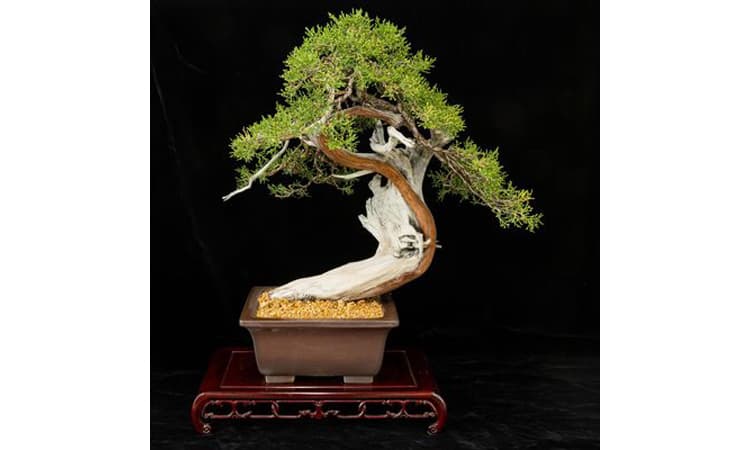
A 1,500-year-old California juniper collected from the Mojave Desert headlined the Huntington's annual Bonsai Celebration in San Marino last weekend.
The Huntington Library, Art Museum, and Botanical Gardens wrapped up its annual Bonsai Celebration on March 1, drawing visitors to San Marino for two days of expert talks, a live auction, a bonsai marketplace, and a California Bonsai Society exhibition, all free with general admission.
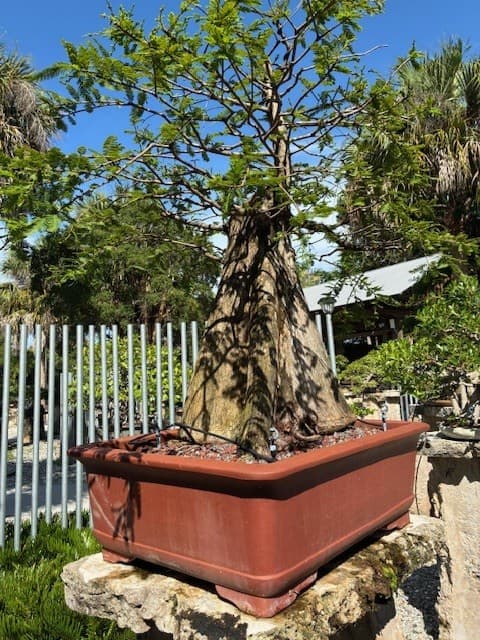
The event put a spotlight on one of the more serious institutional bonsai collections in the country. The Huntington's holdings run to about 500 plants, including roughly 75 in the penjing collection, with the entire display spread across two courtyards where trees are set on pedestals against handcrafted fence treatments. The Zillgitt Bonsai Court houses the shohin, trees under 8 inches tall, positioned in front of a water feature. The two courtyards connect through the Harry Hirao Suiseki Court, which features American suiseki, viewing stones valued for their distinctive shape, color, and texture.
The collection's flagship piece tells a story that puts most garden specimens to shame. A California juniper (Juniperus californica) styled in the han-kengai, or semi-cascade, form holds original plant material estimated at 1,500 to 1,800 years old. It was collected from Jawbone Canyon in the Mojave Desert, then shaped and donated by Shig Miya, and is displayed in a pot thrown by Sara Rayner. A separate California juniper in the collection was styled from material approximately 500 years old, which barely registers as remarkable by comparison.
The Huntington also holds the Golden State Bonsai Federation collection as part of its overall holdings. Day-to-day care falls to a staff of three, supplemented by more than 100 volunteers, with a core group of 30 to 40 regulars providing consistent hands-on work. Daniel Deephouse, the assistant curator of bonsai, told LAist that those volunteers represent the highlight of his role: "the 100 or so volunteers who regularly care for the trees."
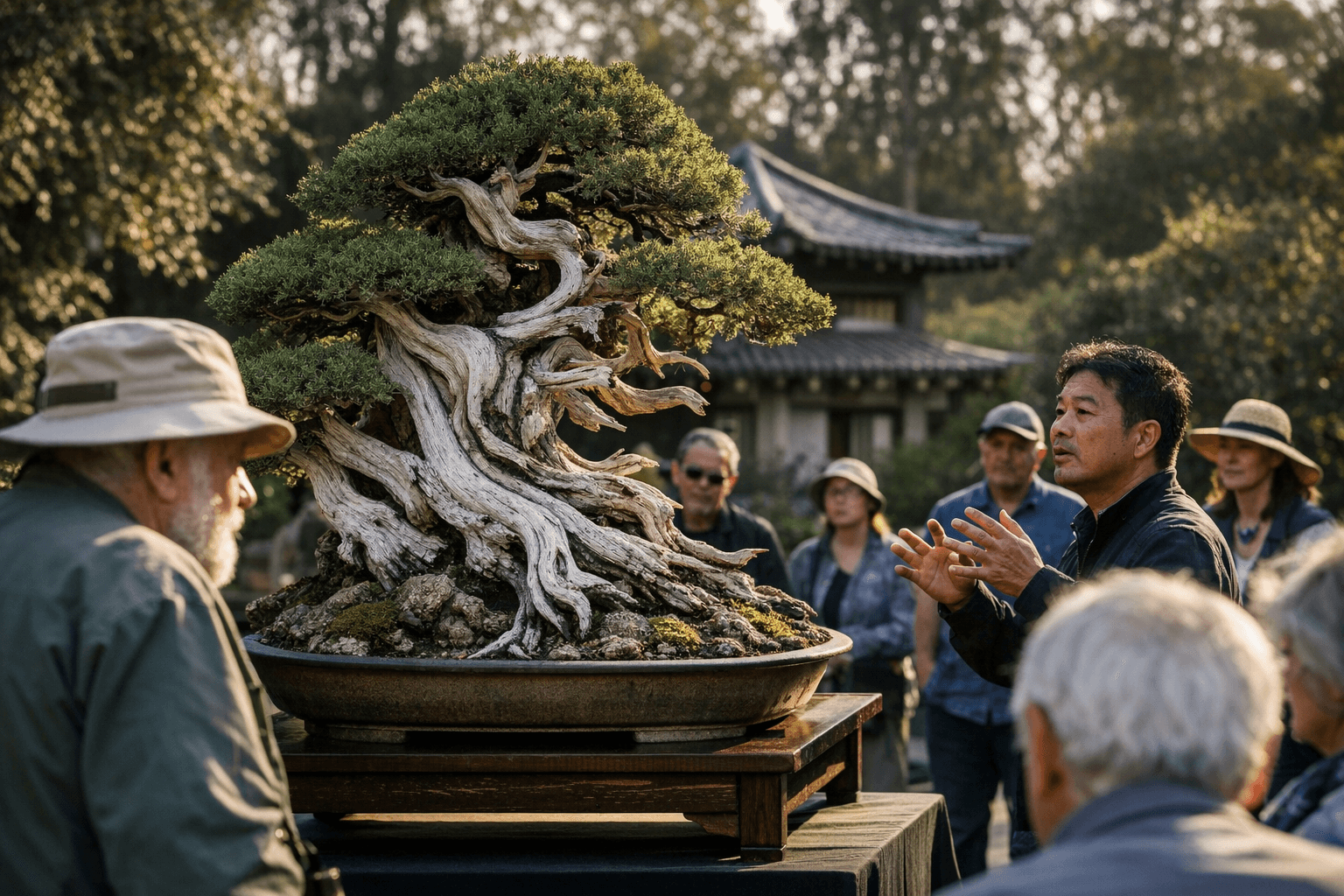
Deephouse led a guided walk through the collection on Sunday and spoke frankly about where bonsai enthusiasm stands right now. "Right now it's on fire," he said. "I think since COVID a lot of people have gotten back into plants... which I think is coming at a really great time because we're having less and less time, and less and less space." He noted dozens of bonsai clubs currently active throughout California, and described bonsai as "magical" trees well suited to the constraints of modern life.
For anyone curious about where these trees originate, the Huntington's collection practices offer useful context. California junipers and oaks are often collected from the wild, which requires U.S. Forest Service or Bureau of Land Management permits on public lands. The Huntington notes those permits are not prohibitively expensive, and bonsai groups frequently organize group collecting trips. On private land, landowner permission is required. Other material comes from urban landscapes, pomegranates being one example cited, as well as commercial nurseries. Much of what's on display at The Huntington arrived through donations or acquisitions from private hobbyists, primarily from Southern California.
The celebration ran February 28 through March 1, 10 a.m. to 5 p.m. each day, at the Huntington Botanical Gardens in San Marino.
This article was produced by Prism’s automated news system from verified source data, official records, and press releases, then run through automated quality and moderation checks before publishing. The system is built and supervised by the people who set the standards it runs under. Read our full AI policy.
Did this article answer your question?