Japan Marks America's 250th Birthday With Bonsai Gift to National Arboretum
Japan's Nippon Bonsai Association marked America's 250th with a new bonsai gift to Washington, home to a 400-year-old Hiroshima-surviving pine.
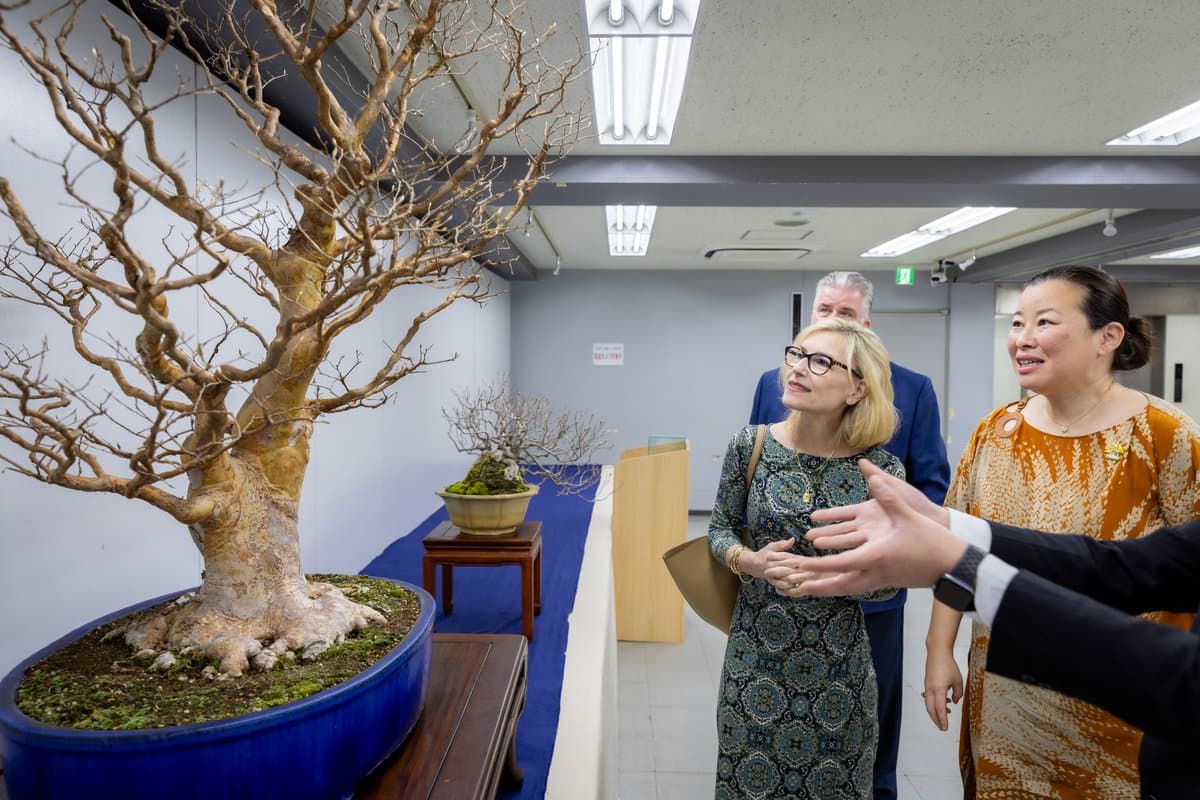
Half a century after Japan sent 53 bonsai to Washington as a Bicentennial gift, the Nippon Bonsai Association and Nippon Suiseki Association donated another collection of miniature bonsai trees to the US National Bonsai & Penjing Museum at the National Arboretum, marking both the 250th anniversary of American independence and the museum's own 50th year. US Ambassador Mary Glass framed the exchange in language that bonsai practitioners will recognize immediately: patience, respect, and stewardship.
The original 1976 gift, timed to America's 200th birthday, set the foundation for what is now the greatest collection of bonsai outside Japan. Those 53 trees, raised by top practitioners of Japan's centuries-old bonsai tradition and accompanied by six viewing stones, were dedicated on July 9, 1976, in a ceremony that drew US Secretary of State Henry Kissinger, Japan's Prime Minister Nobusuke Kishi, and Ambassador Hodgson to the Arboretum. A Marine band played before Dr. John Creech delivered opening remarks; the Washington Toho Koto Society performed at the after-party. Kissinger told the assembled dignitaries the gift represented the "care, thought, attention and long life we expect our two peoples to have."
No tree in the collection carries more weight than the Yamaki Pine, a Japanese white pine germinated in 1625 that Masaru Yamaki donated as part of that Bicentennial gift. His family had tended it for five generations at their commercial bonsai nursery in Hiroshima before giving it to the American people. What the museum did not know at the time was that the tree had survived the 1945 atomic bombing. That history stayed largely outside Japan until March 8, 2001, when Yamaki's grandsons, Shigeru (21) and Akira (20), flew into Dulles International Airport and went straight to the museum to reveal what their grandfather had never publicly disclosed. "It is the tree in this national collection that has been cared for as a bonsai for the longest amount of time, been in a pot, cared for, taken care of by people for 400 years," said Aaron Stratten, former president of the Potomac Bonsai Association. Museum curator Michael James calls it a "symbol of peace, reconciliation and friendship."
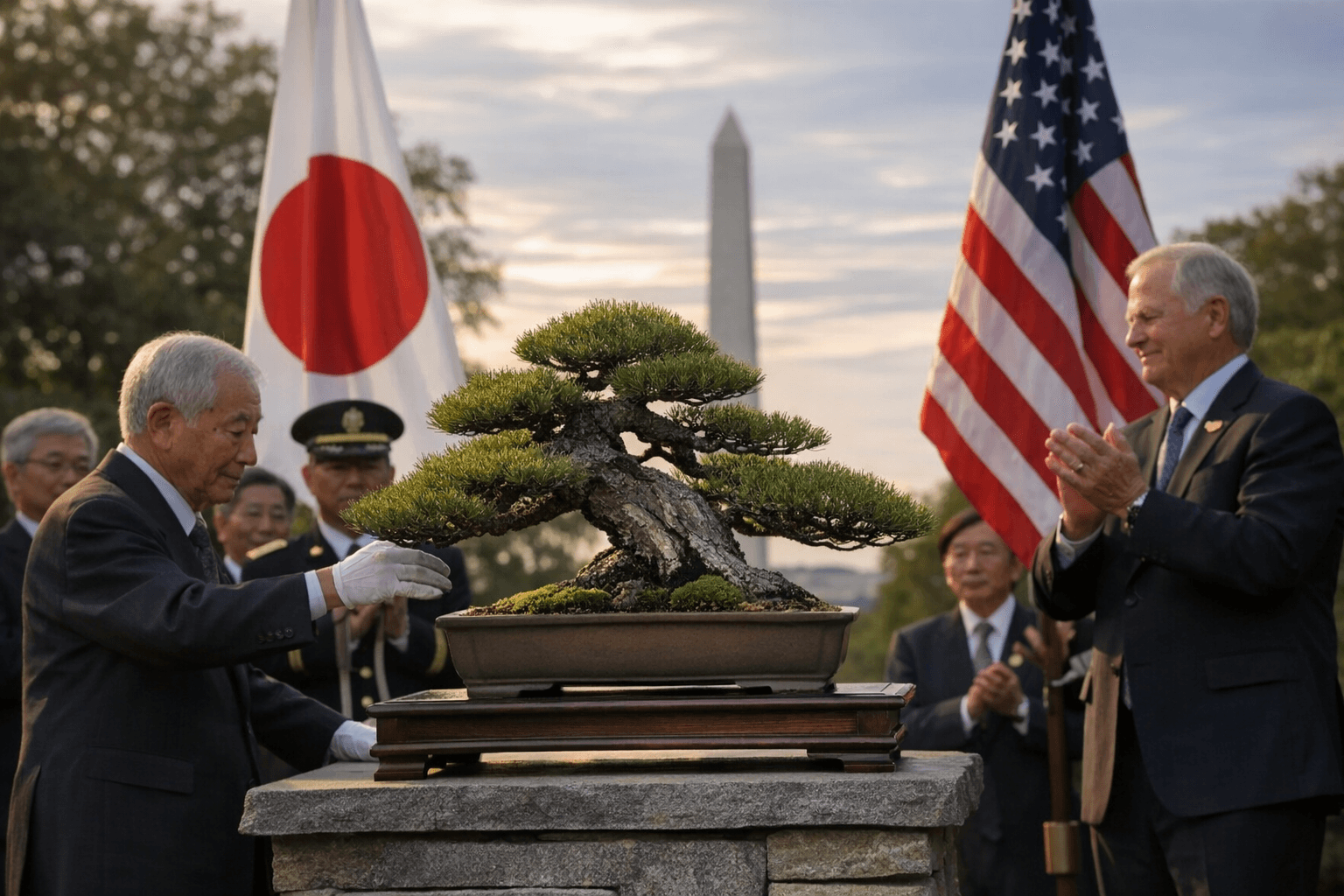
The collection that 1976 gift started has grown considerably. The museum now houses 300 bonsai and penjing that rotate on and off exhibit, including a Hinoki cypress in training since 1875 donated by Shuhei Nagai, a Miyasama dwarf trident maple that museum staff has kept in training since 1976, and a Japanese white pine donated by Daizo Iwasaki whose training age remains unknown. In the 1980s, Yee-sun Wu of Hong Kong expanded the Chinese penjing holdings, and an American Bonsai Pavilion was added in 1990.
On World Bonsai Day, May 11, 2025, visitors crowded around the Yamaki Pine while vendors from the Potomac Bonsai Association offered pre-bonsai, pots, and supplies on the Arboretum grounds. The new donation from the Nippon Bonsai Association and Nippon Suiseki Association arrives into that same living tradition. The museum, free and open to the public in Northeast Washington, has now been the beneficiary of Japanese arboreal diplomacy across three separate American milestone anniversaries. The new gift extends a thread that Kissinger put into words at the 1976 dedication, one these trees have been quietly proving true for centuries.
This article was produced by Prism’s automated news system from verified source data, official records, and press releases, then run through automated quality and moderation checks before publishing. The system is built and supervised by the people who set the standards it runs under. Read our full AI policy.
Did this article answer your question?