Kaneshin Debuts New Bud-Cutting Scissors and Restocks Popular Bonsai Tools
A 48-hour server outage at Kaneshin coincided with the debut of three new shinogi bud scissors, No.95C to No.95H, during peak spring styling season.

The moment Kaneshin's servers went down on April 3, clubs waiting to finalize spring workshop orders lost their window. That's not melodrama; it's the logistical reality of sourcing from heritage Japanese toolmakers, where restocks appear without warning and inventory on sought-after models can clear in days. When the site came back online April 4, it carried an apology and something considerably more useful: three new bud-cutting scissors and a wave of restocked catalog lines.
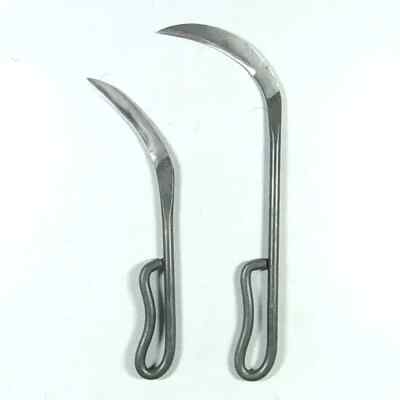
Kaneshin's new additions center on double-edge bud-cutting scissors with shinogi, offered in three lengths: No.95C at 180mm, No.95D at 200mm, and No.95H at 230mm. The shinogi, a ridge ground into the blade, matters for precision work because it controls how the edge enters soft growth without crushing the tissue. For spring pruning on deciduous species, that distinction separates a cut that heals cleanly from one that invites die-back. The 180mm is the practical reach for shohin and mame work; the 230mm earns its place on larger material where your hand cannot get close to the node.
The restocked catalog also includes concave cutters, trimming scissors, folding grafting knives, and wire-cutting tools. Of these, the concave cutter is the one line worth every yen of Kaneshin's premium pricing. The concave profile creates a wound that heals flush, and cheaper knock-offs ground to approximate the shape but not the geometry frequently leave a convex scar. Wire cutters and grafting knives are a different conversation: technique matters more than steel at the beginner level, and several Japanese makers offer serviceable options at lower price points. Crean mate, a cleaning eraser for blade maintenance, also returned to stock. It is inexpensive, unglamorous, and the kind of supply that disappears silently; restocking a spare while it's available makes sense.
Kaneshin's explanation of the two-day service gap was direct: "From April 3rd to 4th, our website was inaccessible due to a server malfunction. Emails were also not being delivered. However, the service has now been restored. We sincerely apologize for any inconvenience caused." Anyone who attempted an order or sent an inquiry during that window should verify receipt through the restored site before assuming anything went through.
For overseas buyers, Kaneshin's pricing structure is its own variable to master. The site lists prices in yen with approximate USD conversions, but shipping from Japan adds a fixed cost that reshapes the per-item calculus. The efficient move is to consolidate: order the right bud scissor length alongside restocked staples rather than placing multiple small orders as inventory appears. On counterfeits, which circulate regularly on third-party marketplaces at prices that should trigger skepticism, the product codes are the fastest verification tool. No.95C, No.95D, and No.95H are specific model designations; cross-referencing those against the maker's own catalog confirms you are buying genuine stock, not a copy machined to rough tolerances.
Spring is the narrowest window for bud-cutting work, and Kaneshin's three new length variants arrived precisely when they are most relevant.
This article was produced by Prism’s automated news system from verified source data, official records, and press releases, then run through automated quality and moderation checks before publishing. The system is built and supervised by the people who set the standards it runs under. Read our full AI policy.
Did this article answer your question?