Meadowlark Bonsai Pavilion grows through years of volunteer care
Meadowlark’s bonsai pavilion looks serene, but it survives on daily volunteer work. Dr. William Orsinger’s 2010 gift only became a public collection because NVBS kept caring, teaching, and rebuilding around it.

A pavilion built on stewardship, not stillness
Meadowlark’s Bonsai Pavilion is one of those places that looks effortless until you know who has to touch every tree behind the scenes. The collection exists because Dr. William Orsinger donated his bonsai to Meadowlark Botanical Gardens in 2010, then because the Northern Virginia Bonsai Society stepped in to keep the trees alive, visible, and well presented for the public.
That handoff matters. NVBS began caring for the trees in 2017 and partnered with Meadowlark in 2018 to place, design, and construct the pavilion. The result is not a decorative corner of the garden, but a working horticultural partnership built over years. Donations from Eric Yoshihashi and Rae Nuppenau helped fund the pavilion itself, giving the project the kind of practical backing that collections like this always need.
Who keeps the collection alive
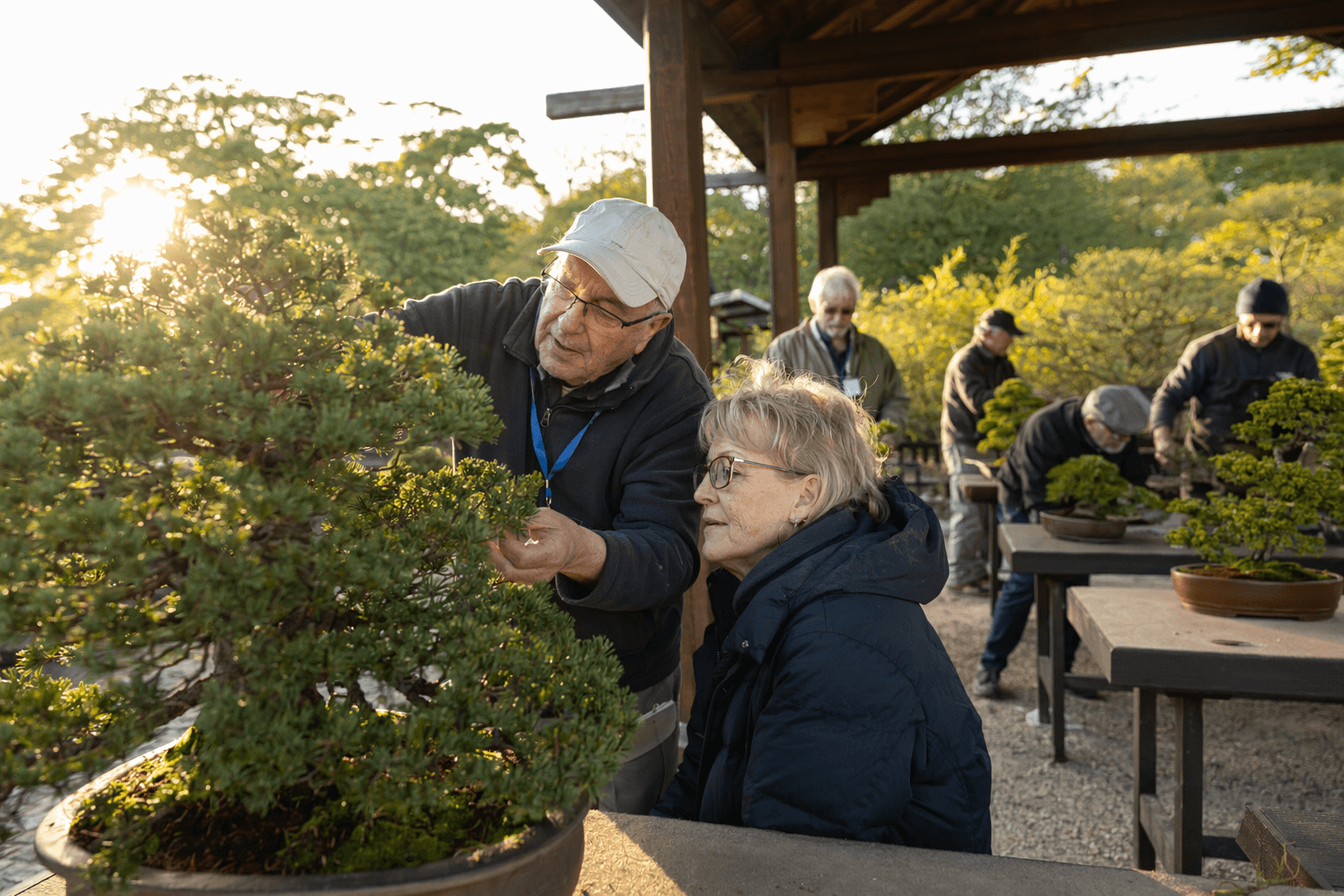
The clearest lesson at Meadowlark is that a bonsai collection does not run on admiration alone. NVBS members loan their own trees for display, tend them daily, and serve as docents who answer visitor questions. That means the collection is constantly being refreshed by people who know the difference between a tree that merely survives and a tree that reads well in a public setting.
That daily care is the hidden labor that makes the pavilion possible. Watering, checking health, adjusting display, and keeping each tree presentable are not seasonal extras. They are the routine that lets visitors see living bonsai at their best instead of stressed trees in recovery. In a botanical garden, that kind of stewardship is the difference between a display and a collection.
Why Meadowlark is the right home for bonsai
Meadowlark Botanical Gardens gives the pavilion more context than a stand-alone display ever could. NOVA Parks describes the garden as 95 acres in Vienna, Virginia, and frames its mission around celebrating nature while fostering a deeper understanding of plant diversity and conservation. Bonsai fits that mission perfectly because it asks visitors to look closely at scale, form, and long-term cultivation.
Meadowlark’s history also shows that plant collections have long been part of its identity. The Visitor Center opened in 1992, and not long after, the garden received a large donation of dwarf conifers from the private collection of Dr. Albert Paulsen. That history reinforces the same idea the bonsai pavilion makes visible now: Meadowlark is a place where living collections are preserved through gifts, care, and a steady commitment to horticulture.
The garden’s collections page pushes that idea even further, describing Meadowlark as a member of the American Daylily Society and noting that it showcases, preserves, contributes, and distributes plant specimens. In other words, this is not a passive park. It is a collections garden, and the bonsai pavilion is one of its most hands-on examples.
What the pavilion teaches while you are looking
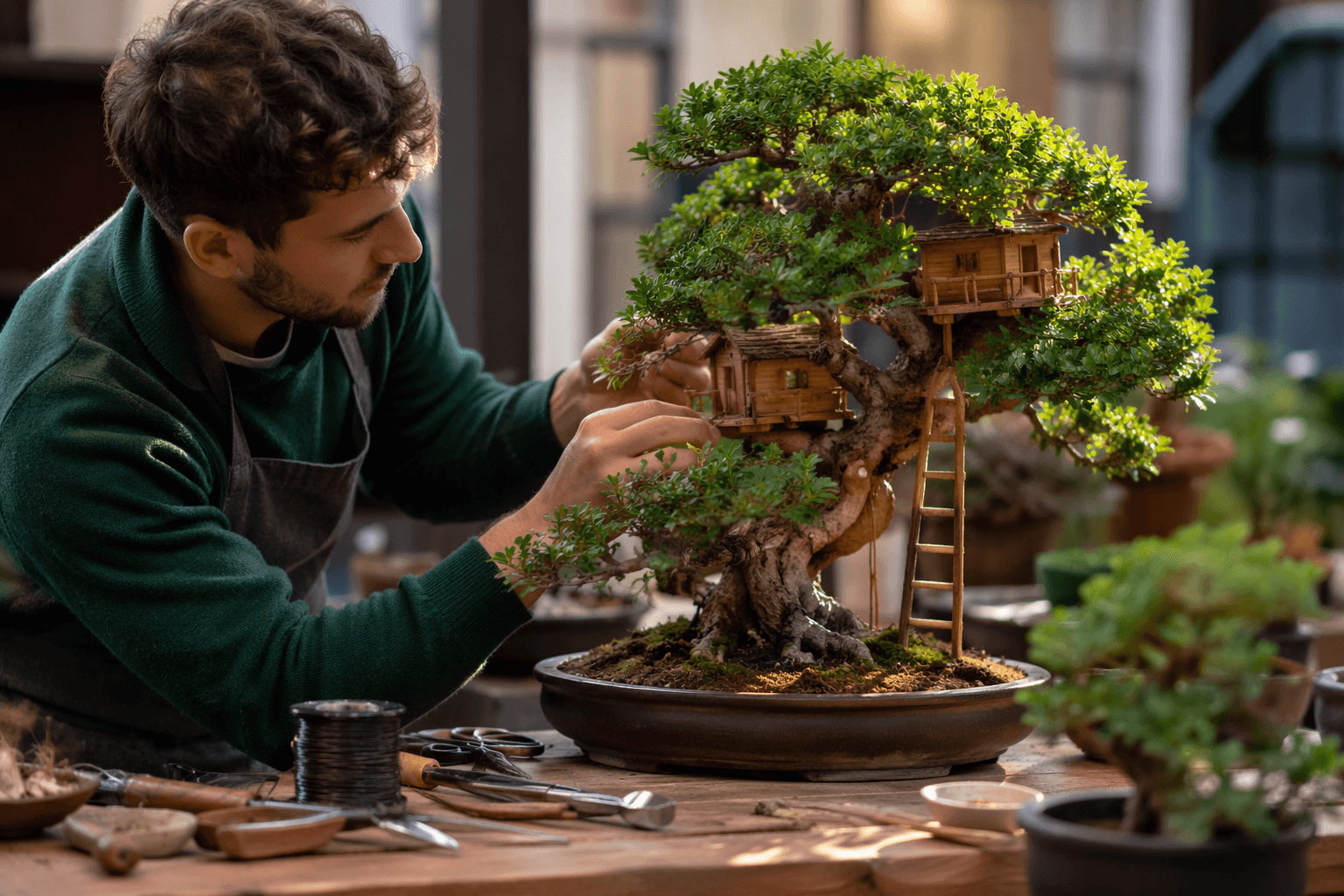
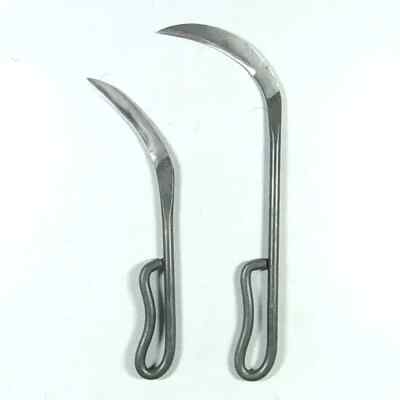
The pavilion is also a compact bonsai primer, which is one reason it works so well as a public exhibit. NVBS explains that bonsai literally means a tree in a pot, and the trees on display show how far that simple phrase can go when it is backed by technique. Trimming and wiring shape the canopy, periodic root pruning keeps the tree manageable, and the growing medium matters as much as the container.
That soil detail is not trivia. A coarse, well-drained mix with ingredients like pumice and lava rock is part of what keeps bonsai healthy over time. If the pavilion does its job, visitors leave understanding that bonsai is not miniaturization by force. It is controlled growth, repeated maintenance, and a willingness to think in years instead of weekends.
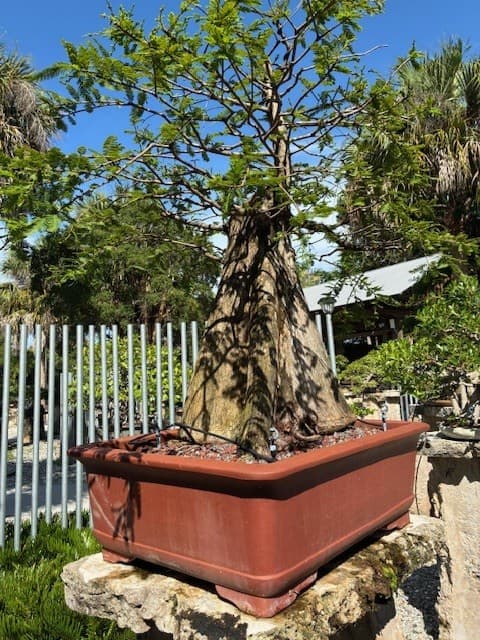
The species on display help make that lesson concrete. The collection includes elms, pines, spruces, maples, cypresses, and azaleas, a mix that shows bonsai is not tied to a single plant family or style. Each tree type brings its own habits, and the pavilion turns that variety into a live demonstration of how different species respond to the same discipline.
The deeper history behind the display
NVBS gives the pavilion a useful historical frame as well. The club notes that penjing began in China approximately 2,400 years ago, and that the Chinese form emphasizes landscape while the Japanese form concentrates more on the tree itself. That distinction matters when you are standing in front of a public collection, because it explains why bonsai can feel both sculptural and botanical at the same time.
The pavilion becomes more than a local attraction when you see it through that lens. It is a small, carefully maintained chapter in a much longer tradition that moved from China to Japan and then to the West after World War II. Meadowlark gives that history a physical home where visitors can see the art and the horticulture in the same frame.
A club with the muscle to maintain it
The Northern Virginia Bonsai Society is not a casual interest group. NVBS says it has been active in Northern Virginia since 1965, has more than 90 members, and is a nonprofit dedicated to furthering the art and science of bonsai. That kind of depth is exactly what a public collection needs, because bonsai care requires continuity, not occasional enthusiasm.
The club’s meeting structure says a lot about how it works. NVBS meetings typically include a lecture or demonstration followed by hands-on work sessions, which is the right formula for a practice that has to be learned through repetition. The Meadowlark pavilion grows out of that culture of doing, not just talking.
The pavilion is still an active calendar item
The current programming shows the pavilion remains a working resource rather than a finished exhibit. NVBS lists a repotting workshop at Meadowlark on March 7, 2026, and its Spring Show at Meadowlark Botanical Gardens for April 25 and 26, 2026. The society also says its spring show setup runs Friday afternoon, with teardown Sunday afternoon, which tells you the display is assembled and dismantled with the same care that goes into the trees themselves.
That rhythm is the real story at Meadowlark. The pavilion survives because volunteers keep showing up to repot, place, water, explain, and rebuild the display around living material that never stops changing. In a field where the best trees reward patience, Meadowlark’s Bonsai Pavilion is proof that public bonsai is not a static collection at all, but a season-by-season act of stewardship.
This article was produced by Prism’s automated news system from verified source data, official records, and press releases, then run through automated quality and moderation checks before publishing. The system is built and supervised by the people who set the standards it runs under. Read our full AI policy.
Did this article answer your question?