Mid-Atlantic Bonsai exhibit blends artistry, critique, and hands-on learning
The Mid-Atlantic show is less a gallery than a workshop, where eleven clubs, guest critiques, and standout trees turn a convention into a master class.
Why the Mid-Atlantic festival matters
The best trees at the Mid-Atlantic show were not just displayed, they were discussed, challenged, and studied in public. That is the real draw of the 2026 MidAtlantic Bonsai Festival, held April 17-19 at the Holiday Inn Harrisburg-Hershey in Grantville, Pennsylvania: it gave the region’s bonsai community a place to see finished work and, more importantly, hear how experienced eyes break that work down.
MidAtlantic Bonsai Societies treats that exchange as its mission, and it matters that the group is a 501(c)(3) nonprofit built around education. The network brings together eleven local bonsai clubs across New Jersey, New York, Connecticut, Delaware, and Pennsylvania, then folds them into one annual Spring Festival so the whole region can compare notes in the same room.
A show built around learning, not just looking
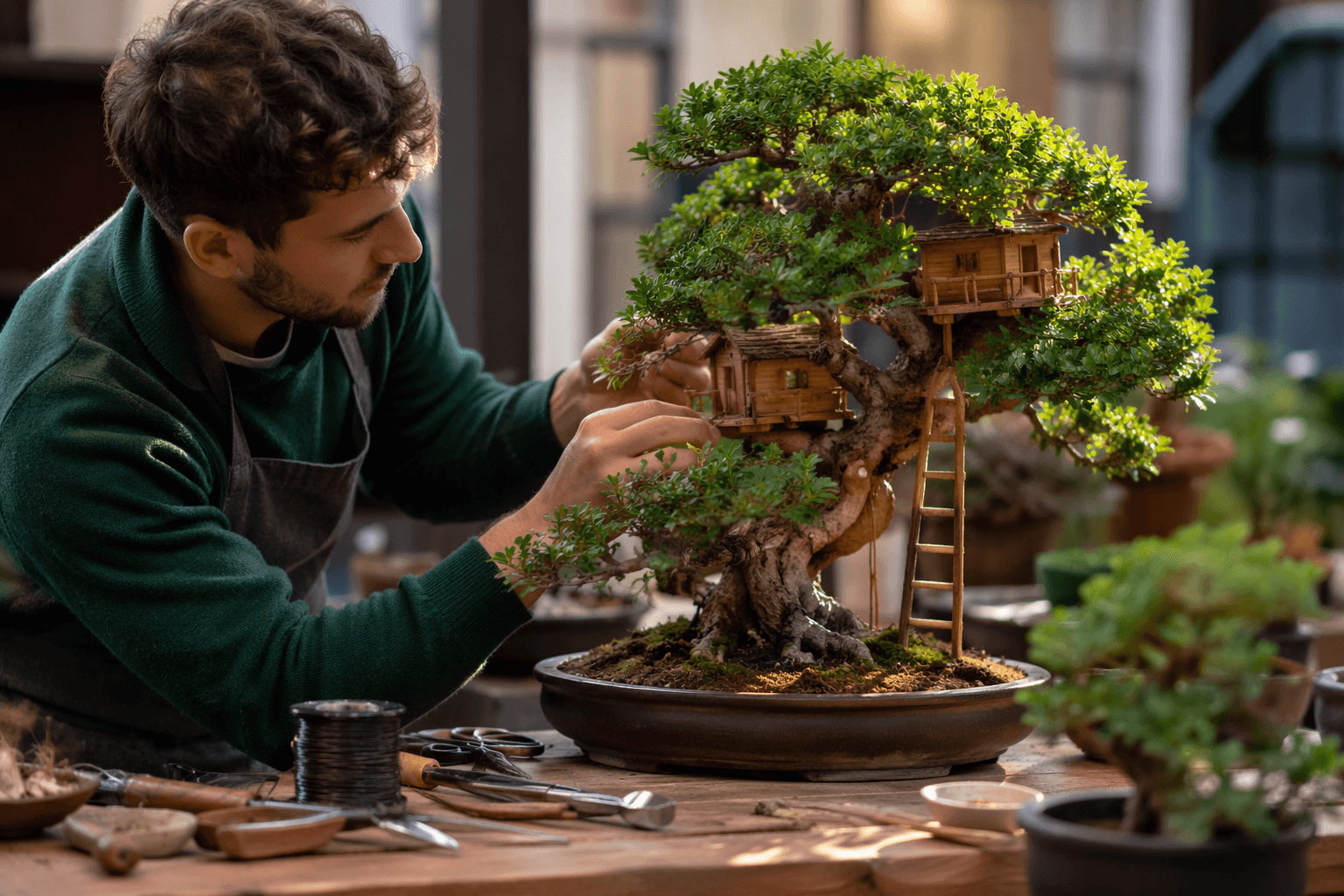
The festival format makes the point plainly. Alongside club exhibits, the weekend included demonstrations, hands-on workshops, a vendor marketplace, raffles, auctions, and community events. That mix turns the convention into a working bonsai weekend rather than a passive exhibition, and it is exactly why the event keeps pulling serious growers back year after year.
The fact that the Spring Festival moves locations to stay close to member societies says a lot about how this network operates. MidAtlantic Bonsai Societies is not trying to build one fixed destination show and hope people come to it. It is building a regional circuit that meets growers where they are, which is a much smarter way to keep clubs engaged and standards climbing together.
Critique culture is the point
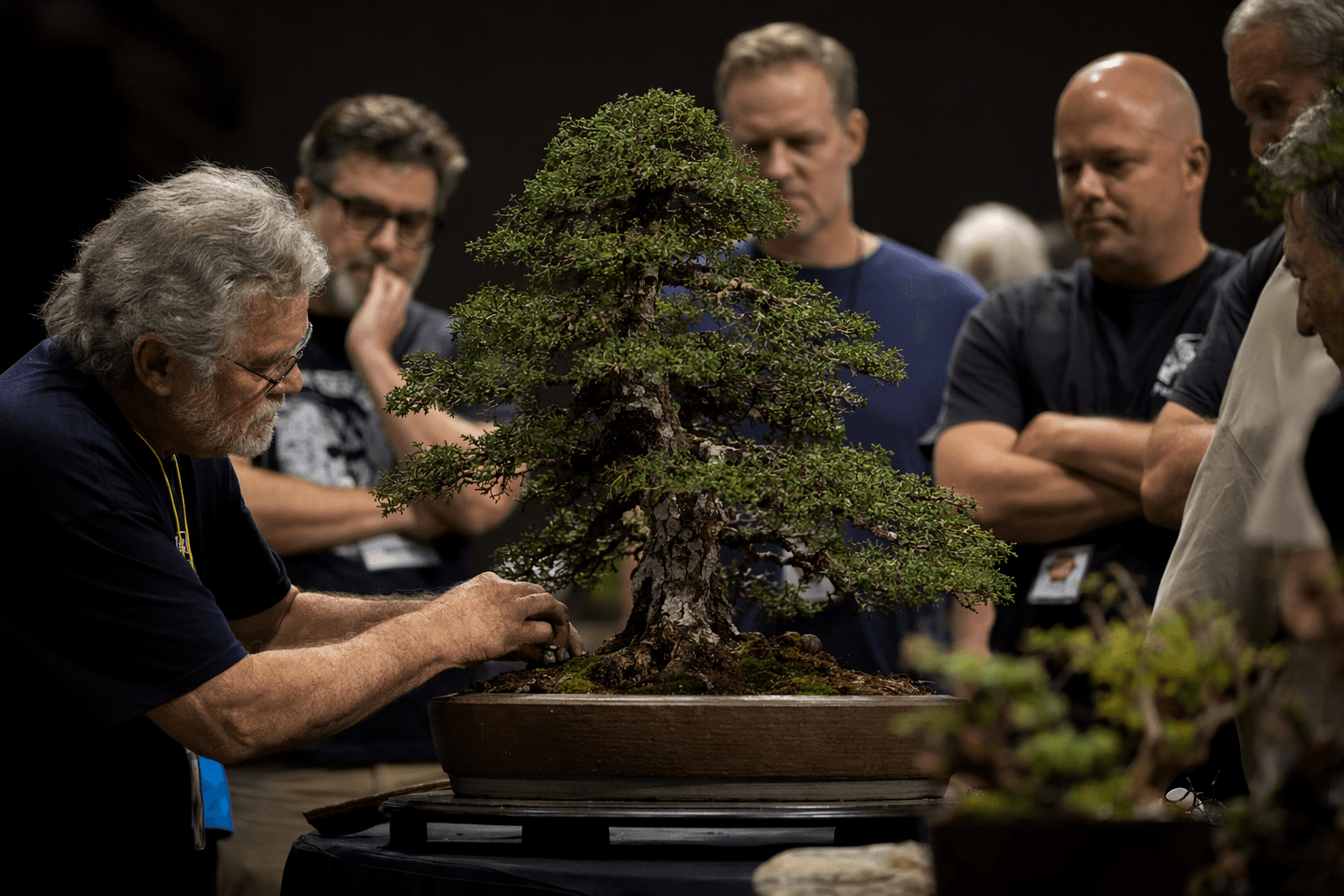
The most valuable part of the show was the critique culture. Guest artists Peter Warren, Kaya Mooney, and Jonas Dupuich led demonstrations, workshops, and exhibit critiques, and the event was set up so people could look closely at design choices instead of only admiring the final result. That is where bonsai education actually happens: in the conversation about why a branch stays, why a pot works, why a tree reads as mature or not quite there yet.
Dupuich’s approach was especially telling because he and Kaya blended critique groups so the audience could hear multiple perspectives on the same tree. That kind of format is worth copying in any club, because it teaches members that bonsai judgment is rarely a single voice. A white pine may read one way to one artist and another way to a second, and hearing both perspectives in real time is more useful than a polished lecture that only hands down conclusions.
What made the display room worth the trip
Inside the exhibit, the trees were arranged in traditional display formats with stands and accents, which gave the show a real judging-room feel. That matters because bonsai is read in relationship: tree, pot, stand, accent, and negative space all have to pull in the same direction. When a regional exhibit is hung this way, visitors can learn not just what looks good, but why the whole composition lands.
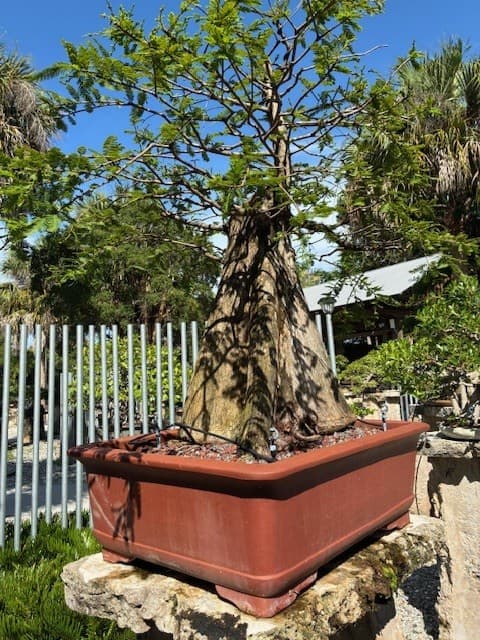
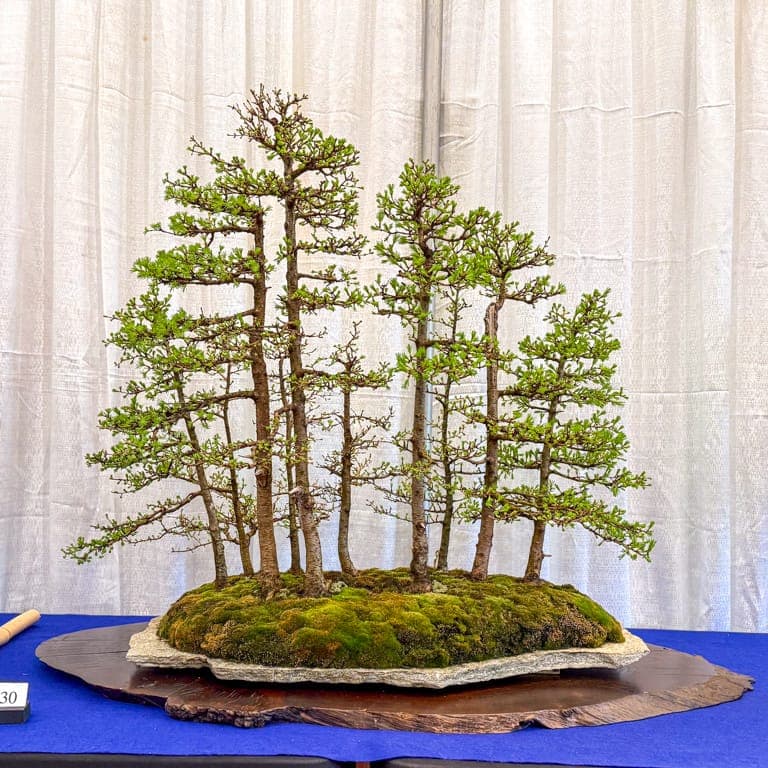
The standout compositions made that lesson easy to see. A white pine showed how age and restraint can carry a display when the silhouette and branching are disciplined. A hinoki cypress demonstrated the value of dense, controlled foliage and clear structure, while a Chinese elm forest showed how scale and rhythm can be balanced in group planting without losing visual clarity. These are the kinds of trees that reward close study because they reveal how experienced growers solve specific problems, not just how they collect material.

Awards also played their part by recognizing excellence across categories. That gives newer club members a benchmark, but it also gives veteran growers a chance to see which decisions the regional judging culture values most. In a good bonsai show, the awards are not the end of the conversation; they are a prompt for more discussion about composition, refinement, and future work.
The broader Mid-Atlantic season is bigger than one weekend
The festival did not exist in isolation. Before entering the exhibit, guests also saw trees from the Longwood Gardens Bonsai Collection, which widened the range of material on view and let attendees compare club trees against institution-level work. That is a useful lesson for any society planning a show: bring in one or two high-level reference collections if you can, because it sharpens everyone’s eye immediately.
The region’s schedule also shows why the Mid-Atlantic bonsai calendar feels alive instead of episodic. A nearby club listing pointed to Longwood Gardens’ planned “Summer of Bonsai” exhibition in June 2026, which frames the Spring Festival as part of a longer seasonal run of shows and programming. When regional institutions and clubs keep feeding each other that way, the community does not just preserve bonsai knowledge, it keeps raising the bar for what local exhibitions are expected to do.
Why the regional model works
There is also history behind the format. A 2024 festival report described the group’s annual spring festival in Harrisburg, Pennsylvania, and noted that it had already been operating for decades, which means this is not a one-off showcase trying to invent its identity. It is a long-running regional fixture that has had time to build standards, habits, and a shared visual language across multiple states.
That longevity is why the 2026 guest roster carried weight. External club listings identified Peter Warren as coming from the UK, Jonas Dupuich from the U.S., and Kaya Mooney from Japan, giving the weekend an international mix of perspectives without losing its regional core. For a club or society looking to improve fast, that combination is hard to beat: local trees, outside eyes, public critique, and enough hands-on programming to turn admiration into actual technique.
What local clubs can borrow from this playbook
The Mid-Atlantic festival offers a clear model for any bonsai society trying to do more than mount a pretty room of trees. Put club exhibits next to demonstrations and workshops. Build critique sessions that let multiple artists examine the same tree. Include vendor traffic and community events so the weekend has energy beyond the display tables.
Most of all, make the show a place where members can see how judges think. That is what happened in Grantville: eleven clubs pooled their work, guest artists pushed the discussion forward, and the exhibit became a live classroom. If bonsai grows by repetition, correction, and patience, then this is the kind of weekend that speeds up all three.
This article was produced by Prism’s automated news system from verified source data, official records, and press releases, then run through automated quality and moderation checks before publishing. The system is built and supervised by the people who set the standards it runs under. Read our full AI policy.
Did this article answer your question?