Newbury Bonsai Society Members Showcase Trees at April 2026 Table Show
Newbury's spring table show on 3 April put members' trees under peer critique at the moment April bud-break makes display decisions most consequential.
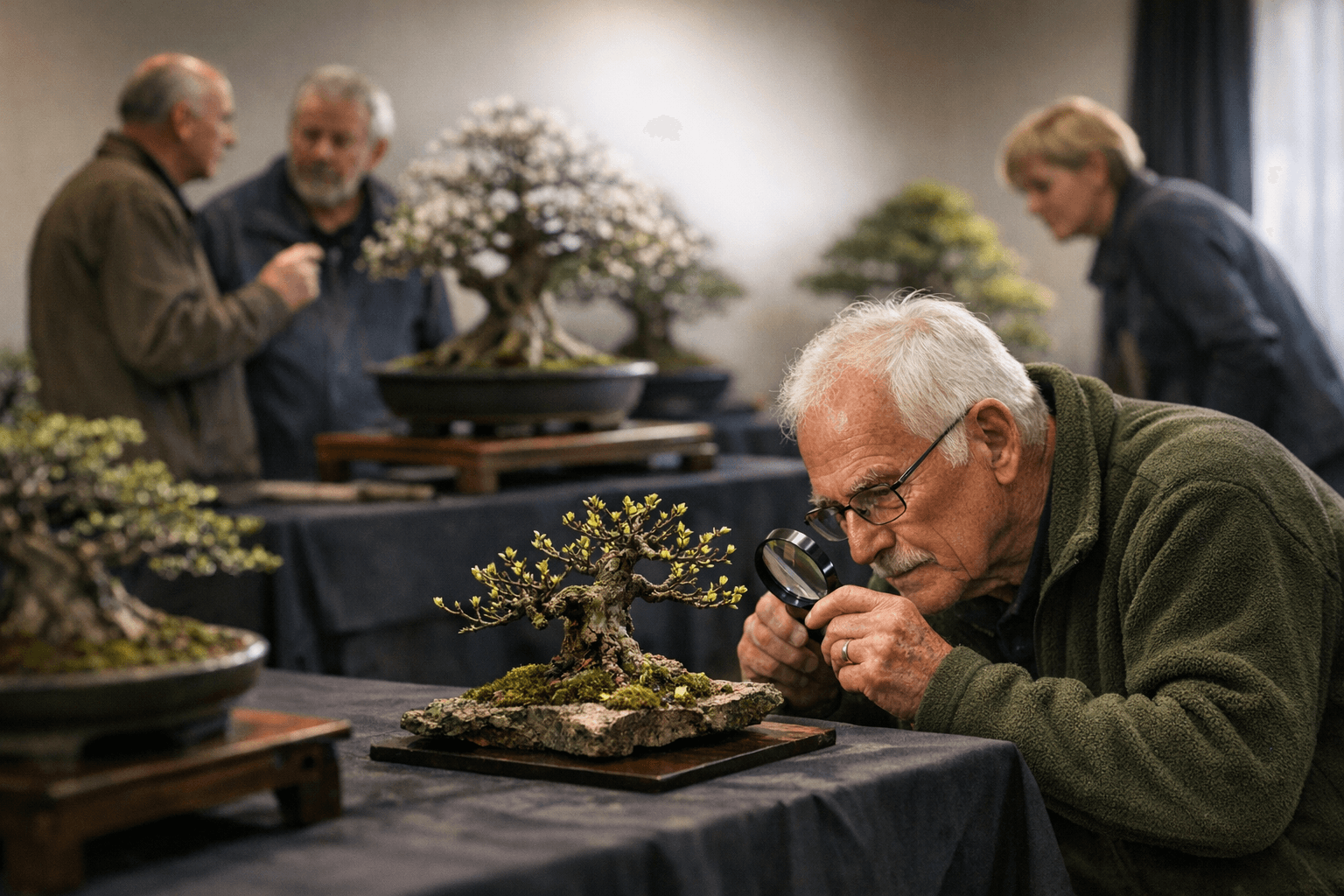
Spring's arrival in West Berkshire is never clean. Maples that looked dormant one week are pushing new buds the next, recently repotted material is still settling into fresh compost, and overnight temperatures in southern England can still threaten frost well into April. It was into that precise and precarious window that the Newbury & District Bonsai Society held its April 2026 table show on 3 April at Speen Parish Hall on Speen Lane in Newbury.
The table show format carries a particular weight in small-club bonsai culture that larger public exhibitions do not quite replicate. When a member carries a tree through the door and sets it on a display table under fluorescent club lighting, they are making a claim: that this tree, right now, in its current seasonal condition, is worth looking at and worth critiquing. April complicates that claim like no other month. Trees are either demonstrating the benefit of winter decisions or exposing their costs. A skilfully timed repot shows fresh, vigorous root activity; a mistimed one puts a tree at risk through the show season's most demanding stretch. Wiring applied through autumn reveals itself in branch set, or, if removed too late, in the marks that clubs are still politely debating across post-show tables everywhere.
The Newbury club, with a membership of around 20, runs one of West Berkshire's more consistent bonsai programmes. Its rhythm of first-Wednesday evenings at Speen Parish Hall, beginning at 7.30pm and running through most of the year except January, gives the calendar a dependability that sustains smaller clubs over the long term. Most meetings take a hands-on workshop format, with members working their own trees alongside shared discussion. Table shows represent a deliberate shift in register: structured display and critique replace the open bench, and the social element of seeing what your fellow members have produced becomes as instructive as any technique session.
The April show sits at a crossroads point in the society's annual programme. Earlier in the year, members have made their most consequential decisions: yamadori digs, repotting choices as temperatures begin to lift, any major structural work on deciduous material before new growth closes that window. By early April, those decisions are locked in and the trees are telling their own story. Broadleaf species in fresh bud-break reward the risk-takers who repotted early and got away with it. Trees left longer in their pots arrive more settled but often less visually dynamic against competitors catching the eye with spring colour.
The club has a wider regional footprint that gives its table shows an additional edge. Newbury members regularly exhibit at the Heathrow Show in Bracknell and the Wessex show circuit, and the society has sent trees to Bonsai UK expo events at Crawley. Hands-on instruction from visiting artists, including UK practitioner Chris Thomas, who has run workshops for the club, means that technique discussed at one level percolates into the display material that eventually reaches table shows. The result is that a club evening of twenty members carries more accumulated knowledge than its size suggests.
The April meeting was documented on the club's public blog, which has functioned as the society's running diary for years under the author name "bilbo," recording meetings, show results, and workshop outcomes for members and prospective newcomers alike. For anyone in southern England weighing up whether to join a local club, that diary is worth reading not just for the events it announces but for the tone it sets: a small group of serious practitioners who treat the craft with the same rigour they bring to their trees.
The next months will test what April revealed. Trees that looked sharp under the hall's lights on 3 April will face summer heat, defoliation decisions, and the slow work of ramification. The May and June calendar typically brings watering and feeding workshops, competition and display evenings, and the longer daylight hours when a bonsai's pace of growth outstrips even an experienced grower's schedule. April's table show is not the end of anything. It is the season's opening argument.
This article was produced by Prism’s automated news system from verified source data, official records, and press releases, then run through automated quality and moderation checks before publishing. The system is built and supervised by the people who set the standards it runs under. Read our full AI policy.
Did this article answer your question?