Philippines Bonsai Forest Faces Destruction From Proposed Open-Pit Mining
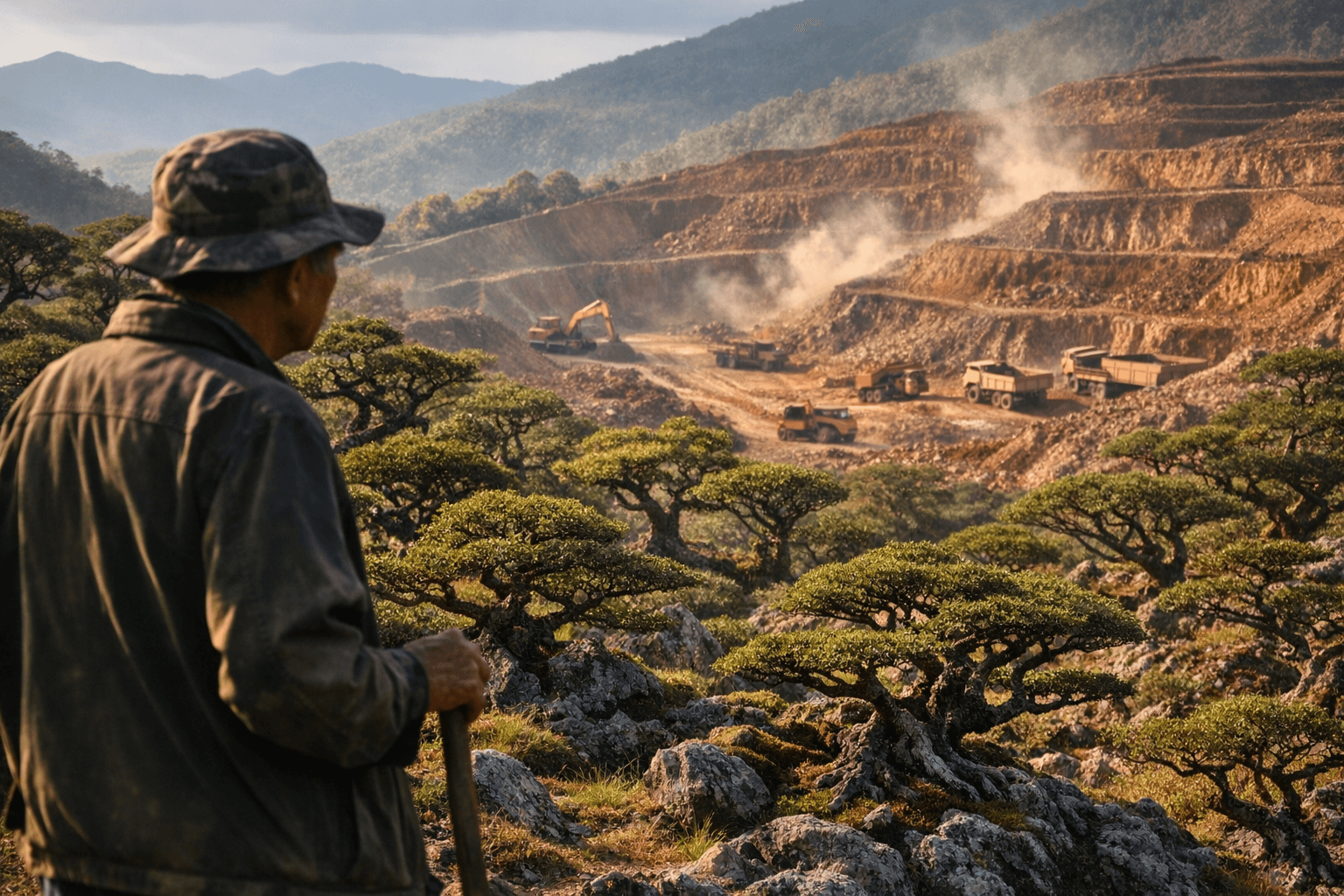
A 100-hectare forest of century-old dwarf narra, molave, and ipil trees in the Philippines faces destruction from proposed open-pit nickel mining.
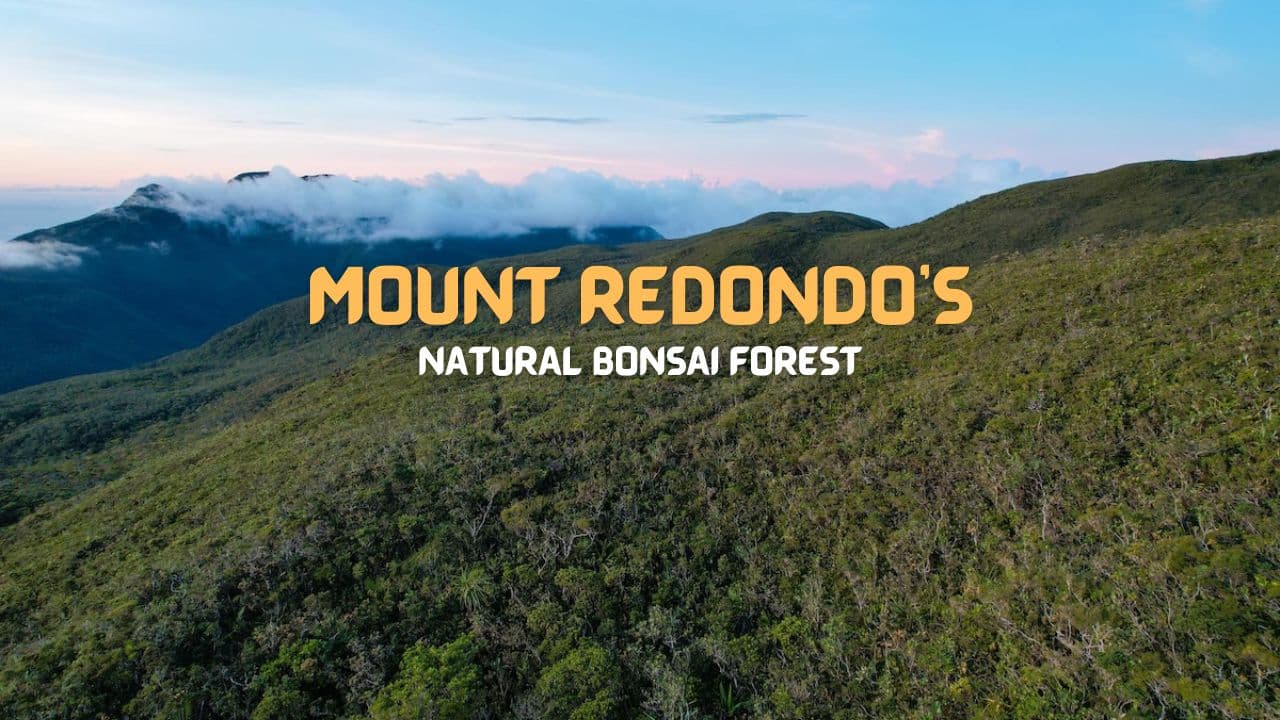
Visitors to Mount Redondo Natural Bonsai Forest in Loreto, Dinagat Islands, must currently obtain permission from a mining company just to set foot on the trail. That detail, buried in the municipal tourism office's access instructions, captures the stakes precisely: 11 active nickel operations already hold ground across the province, and proposed open-pit expansion now threatens the forest itself.
Former Congressman Teddy Baguilat Jr. has spoken out against the open-pit mining plans, warning that the operations would destroy one of the Philippines' most distinctive natural ecosystems. Activists have staged protests, with video circulating of demonstrators making a stand to protect the forest from industrial development.
Mount Redondo's bonsai forest spans over 100 hectares in the municipality of Loreto. The trees are not cultivated specimens but century-old dwarf narra, molave, ipil, and agoho that have adapted naturally to the mountain's rocky terrain and persistent winds. The forest also contains rare plant species, including an endemic pitcher plant found nowhere else. The surrounding rainforests host 36 species of mammals, 63 species of reptiles and amphibians, and more than 70 species of birds. Across Dinagat Islands as a whole, roughly 100 bird species and 400 plant species have been recorded, with 20 species listed as globally threatened by the International Union for Conservation of Nature.
The mountains feeding these forests are also the source of the watersheds that local communities depend on for drinking water, food production, flood control, and disaster risk reduction. Temario, a local resident who has relied on those watersheds since childhood, put the threat plainly. "The forest has always been our source of water. It keeps the streams alive," she said. She added a warning about permanent damage: "Nothing grows back once the soil is disturbed."
Dinagat's mineral wealth is real and longstanding. The island was declared a mineral reservation area by presidential proclamation in 1939, at a time when the population was sparse and the land was identified primarily by its ore deposits. Nickel production reached PHP 4.01 billion in gross outputs in 2019 according to Mines and Geosciences Bureau figures, and the MGB's 2024 Mineral Profile of the Caraga Region counts 11 active nickel operations currently running in the province. An open-pit nickel mine already operates in Tubajon, another Dinagat municipality. Dinagat sits in the Caraga region, which is regarded as the mining capital of the Philippines.
Mendoza, who provided historical context on the mining designation, acknowledged the ground has shifted considerably since the original proclamation. "But times have changed," he said, noting that population growth and community spread across the islands have fundamentally altered what was once essentially uninhabited mineral land.
In the House of Representatives, a legislator identified as Bag-ao has pledged to introduce protective legislation. "In the course of our duties in the House, I will be proposing legislation to ensure the protection of different vulnerable ecosystems in our province, including the watersheds identified by our communities, our precious bonsai forest in the municipality of Loreto, and other watershed areas in Dinagat Islands," Bag-ao said. She added: "Conservation has always been at the core of my public service. For me, progress loses its meaning if it comes at the cost of our environment."
Hilario, calling for environmental assessments to precede any policy decisions, framed the data as urgently necessary. "These assessments are important to cement how these watersheds and local conservation areas must be protected. They will also provide critical data for future policies, whether through congressional legislation or presidential proclamation, to safeguard Dinagat Islands' watersheds from mining," Hilario said.
Dinagat's vulnerability compounds the urgency. The island was among the most severely impacted areas when Typhoon Odette, the third Category 5 typhoon to strike the Philippines in two years, made landfall. Regulatory oversight of mining operations during and after that disaster was widely criticized as inadequate, with affected farmers, fisherfolk, and local communities reporting a lack of reparations and accountability from corporations operating in the area.
The municipal tourism page for Mount Redondo describes the biological wealth of the mountains as being "in danger of being lost forever to make way for the extraction of Dinagat's other more convenient wealth, namely the minerals contained in its mountains." Whether Bag-ao's proposed legislation or a potential presidential proclamation can change that trajectory before open-pit operations expand further into Loreto remains the central question facing the islands.
Know something we missed? Have a correction or additional information?
Submit a Tip