Regency Park Library explores bonsai as art, history and care
Regency Park Library turned bonsai into an easy first step, pairing Extension expertise with a public-library setting that makes the art feel approachable fast.
A low-pressure place to start
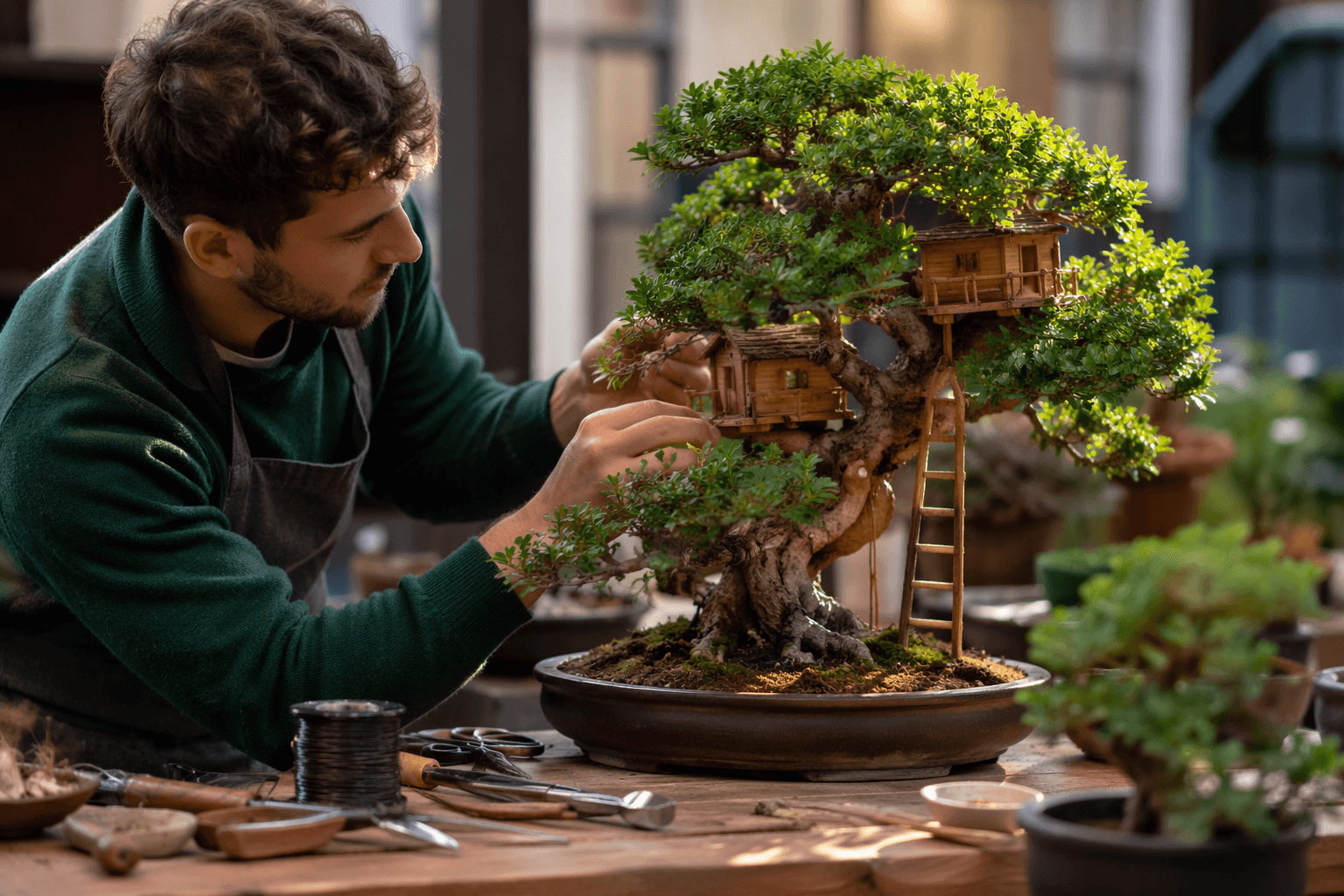
Regency Park Library in New Port Richey, Florida, put bonsai exactly where a lot of newcomers are most likely to try it for the first time: in a one-hour, in-person adult program at 6:00 p.m. EDT on Monday, May 11, 2026. Organized by UF/IFAS Pasco County Cooperative Extension and led by UF/IFAS Extension Master Gardener volunteers, the session, titled *Master Gardener Presents: The Art of Bonsai*, is a strong example of how public libraries are becoming real entry points into bonsai education.
That matters because the setting changes the tone before the first wire is bent or the first branch is discussed. A library classroom feels less intimidating than a specialty nursery, a club meeting, or a show hall, and Pasco County Public Libraries placed the event in the same orbit as social gathering, home and garden, and community partner programming. For adults who are curious about bonsai but not ready to commit to club membership or paid instruction, that kind of access is often the difference between browsing and actually starting.
What the class was really teaching
The listing sounds simple on the surface, but the description gives the program real depth. Bonsai is presented as an ancient practice that aims to capture the essence of a full-sized tree in miniature, and the talk explains how the art spread through centuries of travel and trade before taking root in Japan. That historical framing is important, because it keeps bonsai from being reduced to a novelty plant in a shallow pot.
The lesson also leans into what experienced growers know is the real standard: proportion, trunk character, branch structure, and the overall impression of a mature tree in nature. That is the difference between a plant that merely looks small and a tree that reads as believable. It is the same distinction that separates a forgettable novelty from a bonsai worth studying.
Scale is not the point
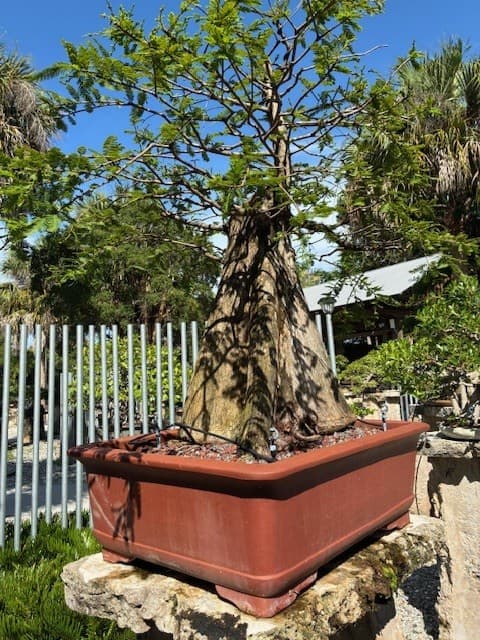
One of the most useful ideas in the event copy is also one of the most easily missed by beginners: bonsai is not about making a tree as small as possible. The art comes in many sizes, from several feet tall to only a few inches, and the emphasis stays on the tree’s form and presence rather than its height.
That distinction matters in practice. A good bonsai does not scream for attention because it is tiny. It holds attention because the trunk suggests age, the branching feels balanced, and the whole composition looks like a real tree seen in the landscape. The event description also makes a point that beginners should hear early: actual age is not the central concern. With proper care, a tree can live for generations and pass from one owner to another, which gives the art its long memory and much of its emotional pull.
Why libraries and Extension make this easier to trust
The Regency Park program fits a larger pattern in public horticulture education. UF/IFAS Master Gardeners are an outreach arm of UF/IFAS Extension, and they provide research-based horticultural advice and recommendations approved by the University of Florida Institute of Food and Agricultural Sciences. That credentialing matters in bonsai, where bad advice can be expensive, and sometimes fatal, to a tree.
Public-library programming backed by Extension gives newcomers something better than vague internet wisdom. It gives them a local contact point, a short evening schedule, and a learning environment built around practical instruction. In other words, it lowers the barrier without lowering the standard. That is exactly why these community events are becoming so valuable for adults who want a credible introduction before they invest in tools, stock, or a club path.
Bonsai’s public-institution backbone
The library event also sits inside a much bigger public-institution story. The U.S. National Arboretum says bonsai and penjing use woody plants in containers to portray the natural growth habit of trees in the landscape. That is a concise way of saying these are living sculptures, and it helps explain why bonsai has always lived comfortably in educational settings, museums, and public gardens.
The National Bonsai & Penjing Museum at the U.S. National Arboretum keeps that tradition open to everyone, with free admission and no tickets required. That model echoes what Regency Park Library is doing on a smaller scale: making the art visible without making it exclusive. Bonsai does not need a velvet rope to feel serious, and public institutions have been proving that for years.
A collection with real historical weight
Harvard University’s Arnold Arboretum adds another layer to that story. Its Bonsai & Penjing collection began with the donation of the Larz Anderson Collection of Japanese Dwarfed Trees in 1937, and today it comprises 67 masterfully curated specimens. That kind of collection shows that bonsai is not just a hobby practice, but a living art form with museum-level stewardship behind it.
Smithsonian reporting has also highlighted one of the most famous trees in the field, a white pine bonsai donated for the U.S. bicentennial in 1976 that survived the Hiroshima bombing. That story has become part of bonsai’s wider public memory because it connects the art to endurance, transmission, and care across generations. It also helps explain why a one-hour library talk can carry more weight than it first appears to. Bonsai is not just something you learn to trim. It is something you learn to understand as history you keep alive.
Regency Park Library’s session worked because it met people where they already are, then offered a serious doorway into the craft. That is the real value of library and Extension partnerships in bonsai right now: they turn curiosity into credible first steps, and they do it in a room that feels open enough for anyone willing to learn.
This article was produced by Prism’s automated news system from verified source data, official records, and press releases, then run through automated quality and moderation checks before publishing. The system is built and supervised by the people who set the standards it runs under. Read our full AI policy.
Did this article answer your question?