Santa Anita Bonsai Society Prepares for 59th Annual Memorial Weekend Show
The Santa Anita Bonsai Society's 59th annual show opens Memorial Day Weekend at the LA County Arboretum, where 65 years of community craft meets display-ready maples, junipers, and pines.
The name Santa Anita carries a specific gravity in Southern California. The racetrack two miles up Baldwin Avenue stages some of its biggest events around Memorial Day, and the Los Angeles County Arboretum, tucked quietly just down the road in Arcadia, has its own Memorial Weekend tradition that has been running nearly as long. For 59 years, the Santa Anita Bonsai Society has brought trained trees to the Arboretum's grounds over that same holiday weekend, quietly building one of the most durable exhibition records in California bonsai.
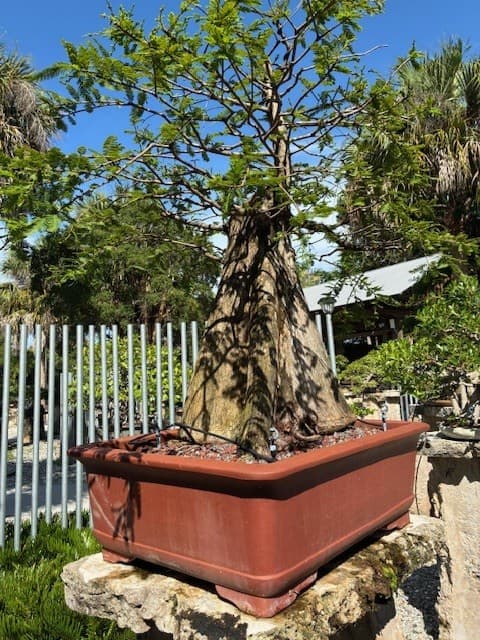
The 59th Annual Memorial Weekend Show runs May 23 through 25 at Ayres Hall on the Arboretum campus. The Los Angeles County Arboretum lists the event on its official public calendar, a standing arrangement that reflects the show's status as more than a club gathering. On the floor, visitors will find maples, junipers and pines among the display specimens, with some trees reaching up to four feet in height, the kind of scale that reframes what bonsai means to anyone expecting miniatures. Live demonstrations run daily at 1pm, and a sales table and vendor area offering tools and accessories round out the three-day program.
The 59th count carries a compressed institutional history inside it. SABS held its 56th Anniversary Show in May 2022, which means two editions were skipped, almost certainly during the COVID-19 pandemic years of 2020 and 2021. The show's numbered lineage traces back to approximately 1965, four years after the society's founding. Each annual installment since then represents a deliberate act of organizational will: volunteers recruited, trees prepared, tables set, and the Arboretum floor claimed for a weekend. Clubs that lose momentum rarely get it back. SABS has not lost it.
The founding story is straightforward and specific in the way that good origin stories tend to be. In 1961, a small group of enthusiasts met at the home of Melba Tucker, and Jim Barrett stepped up as the group's first volunteer instructor. What that founding cohort built proved durable beyond any reasonable expectation: by the society's 35th Anniversary Show in May 1999, three of the original 1961 members were still active participants, still preparing trees, still walking through the door. As of 2026, SABS is approximately 65 years old and stands among the oldest of more than 31 bonsai clubs active in California, all operating under the umbrella of the Golden State Bonsai Federation.
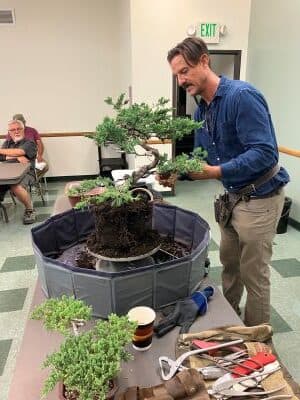
The preparation arc for this year's show has been running since at least November 2025. Back at that month's meeting, Daniel Deephouse worked individually with members, reviewing each tree they planned to develop for the May exhibition and talking through next steps specific to each specimen. That kind of one-on-one diagnostic work, tree by tree, potential by potential, is not a casual favor. Deephouse brings genuine institutional weight to these sessions: he serves as curator of the Huntington Gardens bonsai collection and has accumulated 40 years of international bonsai experience. His involvement with SABS as a returning demonstrator is the practical expression of what a serious mentorship pipeline looks like inside a healthy club.
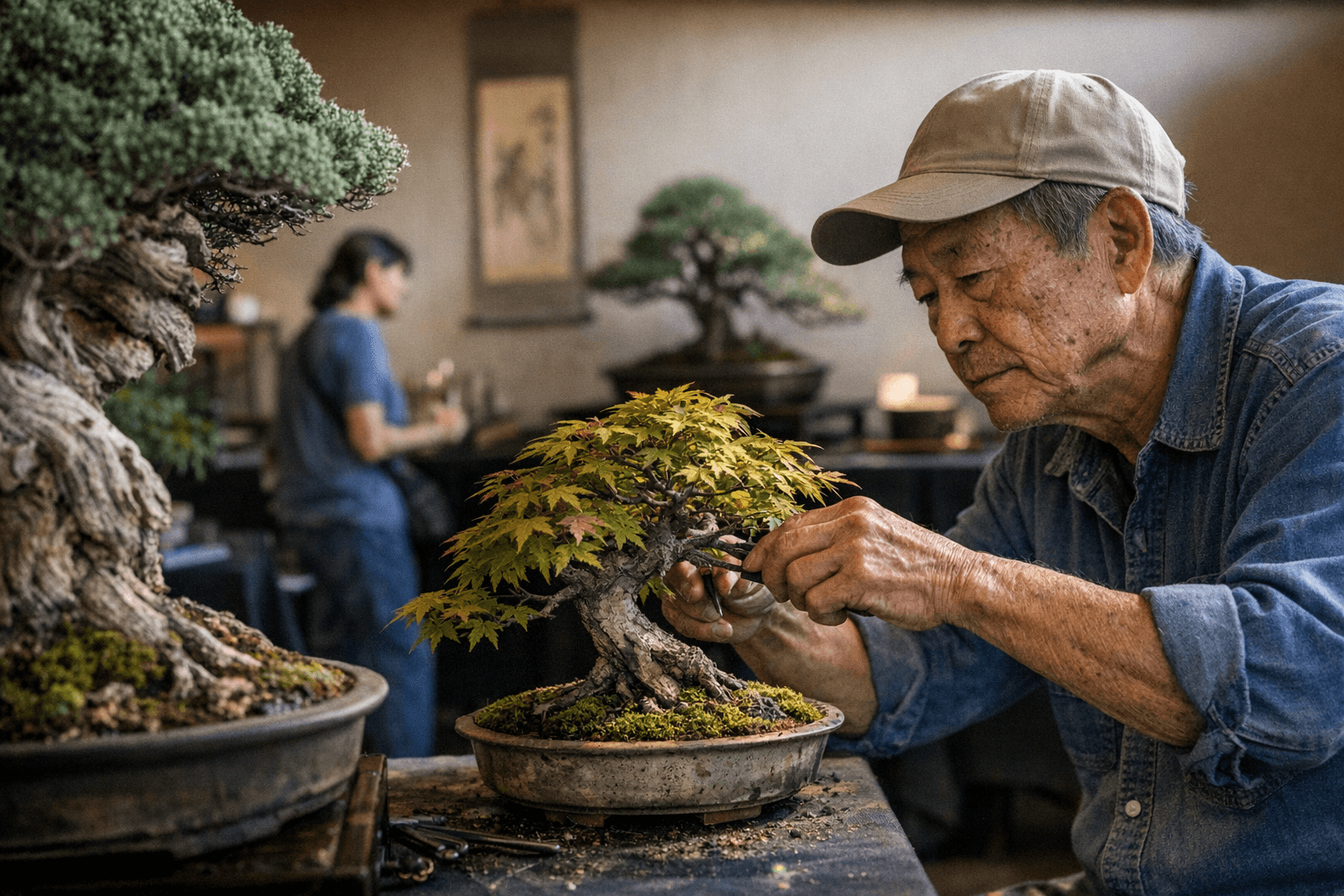
The April 11 monthly meeting at the Arboretum's Palm Room continues that preparation thread. Deephouse's demonstration will focus on mossing and soil top-dressing, the finishing work that separates a tree in good health from a tree ready to hold its own on a show table. Mossing is not decoration. A properly established moss surface distributes moisture evenly across the root zone, reinforces the visual line between pot rim and nebari, and tells any experienced viewer immediately whether the exhibitor understands presentation as a discipline. Soil top-dressing performs a similar function: it controls what the eye does when it reaches the base of the trunk and either confirms or undermines everything above it. These are the final-inch decisions that judges and fellow exhibitors read in seconds.
What falls upstream of Deephouse's April demo is the longer preparation timeline that every show exhibitor has already been managing. For deciduous trees, wiring decisions made after the spring flush runs risk biting in before the show date: a maple with wire scars earned in April will not recover its surface by late May. The window for meaningful structural work on faster-responding species narrows sharply once the season turns. Pot selection, which sounds like a finishing question, actually shapes the entire presentation: a container that fits the tree's movement in the grow area may read entirely wrong against the neutral backdrop of a display table. And transport, the part of the process that most exhibitors underestimate until they've lost a branch to a speed bump, demands its own set of calculations. Trees that appear structurally stable in a static setting can reveal surprising vulnerabilities the moment they're secured inside a vehicle.
Alongside the show preparation cycle, SABS is running its annual community outreach effort. The Friendship Through Bonsai Celebration, scheduled for April 18, functions as a pipeline event: the kind of gathering that converts interested observers into dues-paying members who will, eventually, be preparing their own trees for a future show floor. Lorraine Miles, who authored the April 2026 society update, flagged the headcount deadline for that event as April 5, a logistical specificity that reflects how SABS actually operates. Clubs that publish volunteer requests, hold hard RSVPs and run member meetings on fixed second-Saturday schedules are clubs that have their infrastructure in order. That infrastructure is what makes a 59th show possible.
There is something that fits about bonsai claiming Memorial Day Weekend in Santa Anita. The holiday carries a relationship to things that outlast the people who built them, to continuity maintained through effort rather than accident. A juniper that first went into training in the 1970s is not merely a horticultural object; it is institutional memory made physical, passed forward through demonstration sessions and show preparation meetings and the accumulated judgment that Deephouse brings back to the Palm Room every season. When Ayres Hall opens its doors on May 23, the trees that take the floor will have been shaped by years of exactly that kind of handed-down attention. The 59th show is proof that something started in Melba Tucker's living room in 1961 is still being passed forward.
This article was produced by Prism’s automated news system from verified source data, official records, and press releases, then run through automated quality and moderation checks before publishing. The system is built and supervised by the people who set the standards it runs under. Read our full AI policy.
Did this article answer your question?