Shohin Bonsai Styling Transforms a Small Tree Into Graceful Elegance
Shohin styling is less about miniaturization and more about conveying the full weight of a mature tree in a palm-sized form — here's how proportion and line do the work.

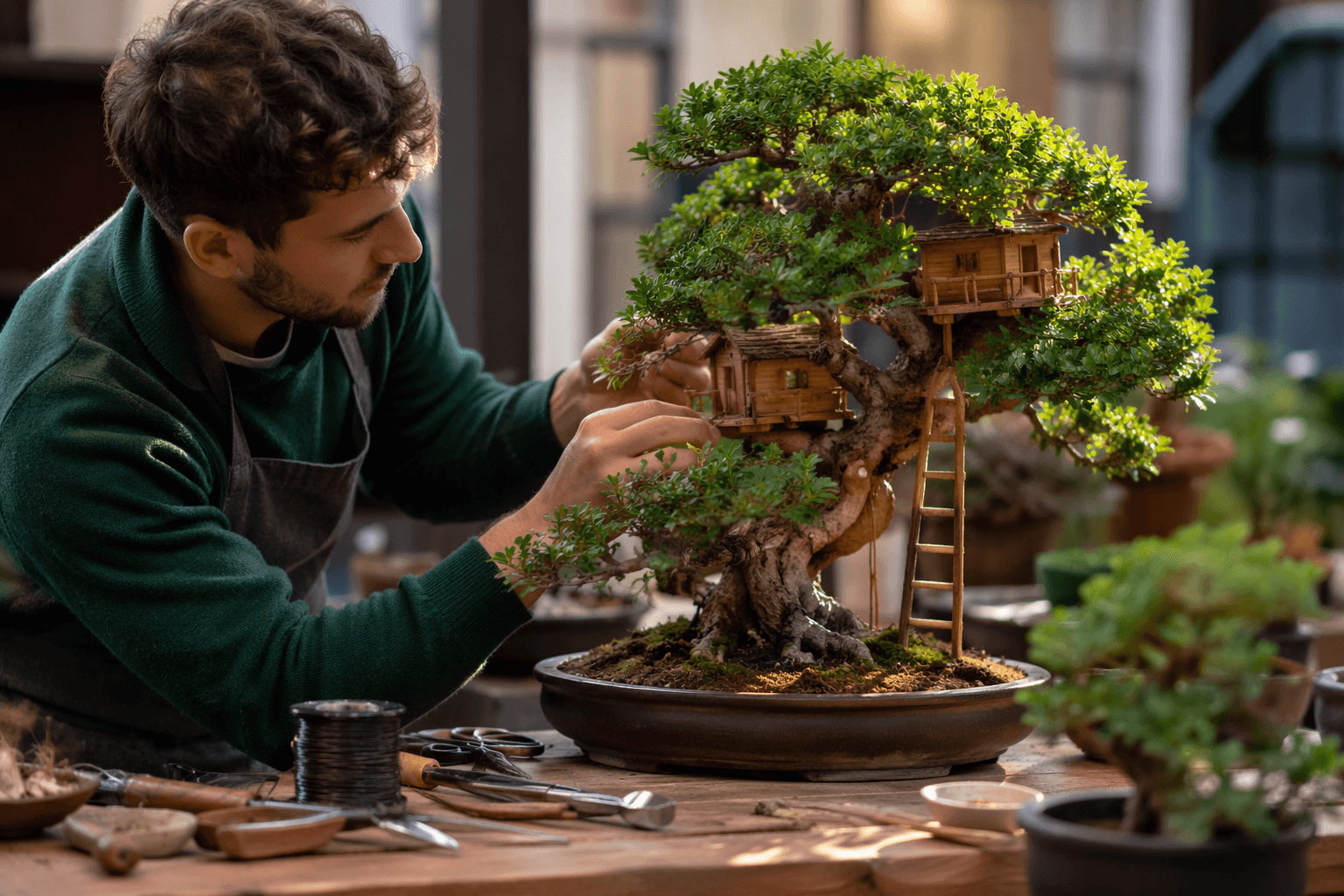
There's a reason shohin bonsai stops people cold at exhibitions. A tree that fits in your cupped hands somehow reads as ancient, windswept, fully resolved. That contradiction is exactly what the "Little Ballerina" concept captures: the idea that a small tree, worked with intention, can project the same poised elegance as a full-scale specimen. Getting there requires understanding a specific set of principles — proportion, line, and the relationship between negative space and branch placement — that operate differently at shohin scale than they do on a larger tree.
What Shohin Scale Actually Demands
Shohin is typically defined as bonsai under roughly 20 centimeters in height, measured from the soil surface to the tree's apex. At that size, every decision is amplified. A branch that reads as minor on a larger tree becomes a dominant visual element on a shohin. A slightly off-center nebari — the surface root spread at the base — that you might overlook on a 60-centimeter tree becomes the first thing a viewer's eye lands on at shohin scale. This is both the challenge and the appeal: the margin for imprecision is almost zero, which means the craft becomes visible in a way it simply isn't on larger material.
The "Little Ballerina" framing is apt because ballet training is fundamentally about control producing the illusion of effortlessness. A dancer's extended line doesn't look strained because years of conditioning have made the difficult position natural. Shohin styling works the same way. The goal isn't a tree that looks worked on; it's a tree where the wiring, pruning, and repotting decisions have been absorbed into the material so completely that the result looks inevitable.
Proportion: The Foundation of the Illusion
Proportion in shohin is not simply "everything smaller." The trunk-to-height ratio, the taper from base to apex, the spacing between branch levels — all of these need to tell the story of a mature tree, compressed. A common beginner mistake is working with material that has a thin, whippy trunk and then trying to style it into something convincing. The trunk is the non-negotiable anchor. Before any branch work, the nebari and the first few centimeters of trunk need to carry visual weight. Without that foundation, no amount of refined ramification in the upper canopy will save the composition.
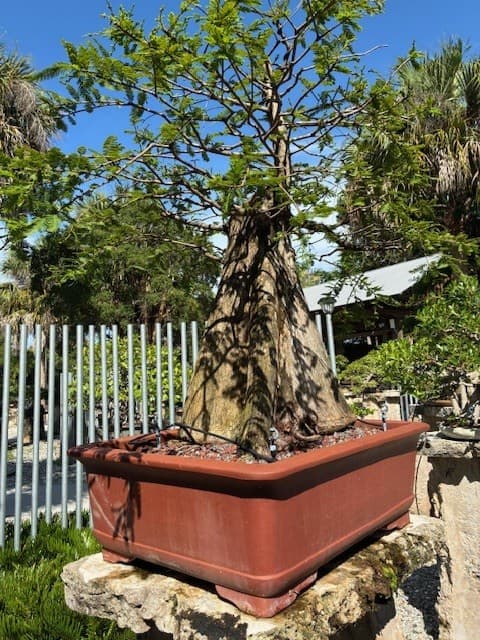
Taper is closely related. A convincing shohin trunk should show meaningful reduction in girth as it moves upward, ideally with movement — gentle curves or a more dramatic literati lean — that suggests the tree has responded to decades of wind and light. Straight, uniform trunks produce bonsai that read as sticks with foliage attached, regardless of how refined the branch work becomes.
Line and Movement in a Palm-Sized Canvas
Line is where shohin styling becomes genuinely difficult and genuinely rewarding. On a larger tree, you have physical space to create secondary and tertiary branch movement that guides the viewer's eye through the composition gradually. On a shohin, that journey happens in centimeters. Every branch needs to contribute to a coherent directional flow — typically angling slightly downward at the outer tips to convey age and weight, with the primary branches establishing a clear left-right-back triangulation that gives the tree three-dimensional presence even when viewed from the front.
Wiring at this scale requires finer gauge and more patience. Aluminum wire in the 1.0 to 1.5 mm range is standard for primary branches on most shohin material, with 0.8 mm or finer for secondary ramification. The wrapping angle matters more at this scale because the branches are shorter and the wire has less room to do its work before reaching the tip. A 45-degree wrap is the standard starting point, adjusted based on how resistant the specific branch is and how much movement you're trying to achieve.
The Step-Wise Approach to Styling
The step-wise demonstration approach — working through the tree methodically rather than attacking it from every angle simultaneously — is the right framework at any scale, but it's especially important for shohin because the tree's overall silhouette can shift dramatically with the removal of a single branch. A logical sequence looks roughly like this:
1. Study the tree from all angles before touching it. Identify the front, the best nebari presentation, and the apex line.
2. Remove any clearly deadwood, crossing branches, or growth that disrupts the primary structure. Don't refine yet — just clear the noise.
3. Wire primary branches and set their basic position before moving to secondary growth.
4. Step back frequently. At shohin scale, the difference between "almost right" and "finished" is often a single small adjustment that only becomes visible when you stop working and look.
5. Pot or repot in a container that complements rather than competes. Shohin containers should be shallow enough to emphasize the tree's vertical presence, with a glaze and shape that echo the tree's character without distracting from it.
Negative Space as an Active Element
One of the most counterintuitive aspects of shohin styling is learning to treat the open air around the branches as a design element, not an absence. The spaces between branch levels, and between the canopy edge and the container rim, are where the tree breathes. Filling every gap with foliage produces a blob, not a tree. The "ballerina" quality that makes a well-styled shohin feel graceful comes directly from restraint: knowing which pads to develop and which spaces to protect.
This is why back-budding and ramification work that builds foliage density needs to be balanced against deliberate thinning. After a growing season, it's common to find that a shohin has filled in to the point where the interior structure is no longer visible. That's the moment to thin, not to celebrate the growth. Visibility of branch structure, especially in the lower and middle sections of the tree, is what separates a styled bonsai from a well-kept shrub.
Species That Reward Shohin Styling
Not every species is equally suited to shohin work. The best candidates share a few characteristics: small natural leaf size (or reliable leaf reduction under bonsai cultivation), good back-budding response, and tolerance for the more frequent repotting that shohin require because they're in smaller soil volumes. Japanese maples, cotoneaster, trident maple, Scots pine, and various junipers are workhorses at this scale. Flowering species like Japanese quince (Chaenomeles) and serissa can be stunning in shohin form, though they require more attention to soil moisture given their small pot volumes.
Whatever the species, the container soil mix needs to prioritize drainage and aeration even more than it does at larger scales. A waterlogged shohin can decline faster than you can diagnose the problem.
Why the "Little Ballerina" Framework Holds Up
Elegance in bonsai is not decoration. It's the result of decisions made at every stage of development that collectively produce a tree where nothing is superfluous and nothing is missing. At shohin scale, those decisions are simply more exposed. The framework of a dancer poised in stillness — all that training invisible, only the result visible — is one of the better mental models for what you're working toward: a small tree that holds its position with complete conviction, and makes the effort look easy.
This article was produced by Prism’s automated news system from verified source data, official records, and press releases, then run through automated quality and moderation checks before publishing. The system is built and supervised by the people who set the standards it runs under. Read our full AI policy.
Did this article answer your question?