Why azalea and rhododendron bonsai are easier than many think
Azalea and rhododendron bonsai reward restraint: build the branch structure first, and the flowers get better instead of getting in the way.
The trap with flowering bonsai is thinking the blooms are the finish line. With azalea and rhododendron, that impatience usually costs you next season’s flower set and a clean trunk line, which is exactly why Ted Groszkiewicz’s old JARS article still lands: the plant is more approachable than its reputation suggests. Virginia Tech’s archive preserves his promise to “un-shroud the ‘mystique’” around bonsai, and that is the right way to think about these trees.
Start with the right mental model
Azalea bonsai are not just pretty trees that happen to flower. They are broadleaf evergreens with a growth pattern that responds sharply to timing, pruning, and root work, so the real game is sequencing. If you chase flowers too hard, you can end up with a tree that blooms once and then spends years recovering its structure.
That is why azalea and rhododendron bonsai often feel easier than beginners expect. Once you stop treating them like short-lived display plants and start treating them like trees that need to be built over time, the rules get clearer. Groszkiewicz’s framing in the 1984 JARS piece, published in Volume 38, Number 3 of the Journal American Rhododendron Society, fits that mindset perfectly: bonsai can be for azalea and rhododendron lovers, not just specialists.
Know what you are actually growing
One reason people get tangled up is that the rhododendron world is bigger than the casual name suggests. Rhododendrons International separates rhododendrons, azaleas, maddenias, and vireyas into distinct groups within the broader genus, and that distinction matters when you are making bonsai decisions. Azaleas are not a vague subset you can handle by guesswork, and rhododendron care is not a one-size-fits-all formula.
Satsuki azaleas are the clearest example of why the category matters. A Prairie State Bonsai Society note describes the Satsuki evergreen azalea as a popular bonsai plant that has been hybridized in Japan for over 500 years. Another source traces the earliest Satsuki plants to likely natural hybrids of Rhododendron indicum and Rhododendron tamurae, which helps explain both their variety and their staying power in training.
Why the flowers are part of the structure, not a bonus on top
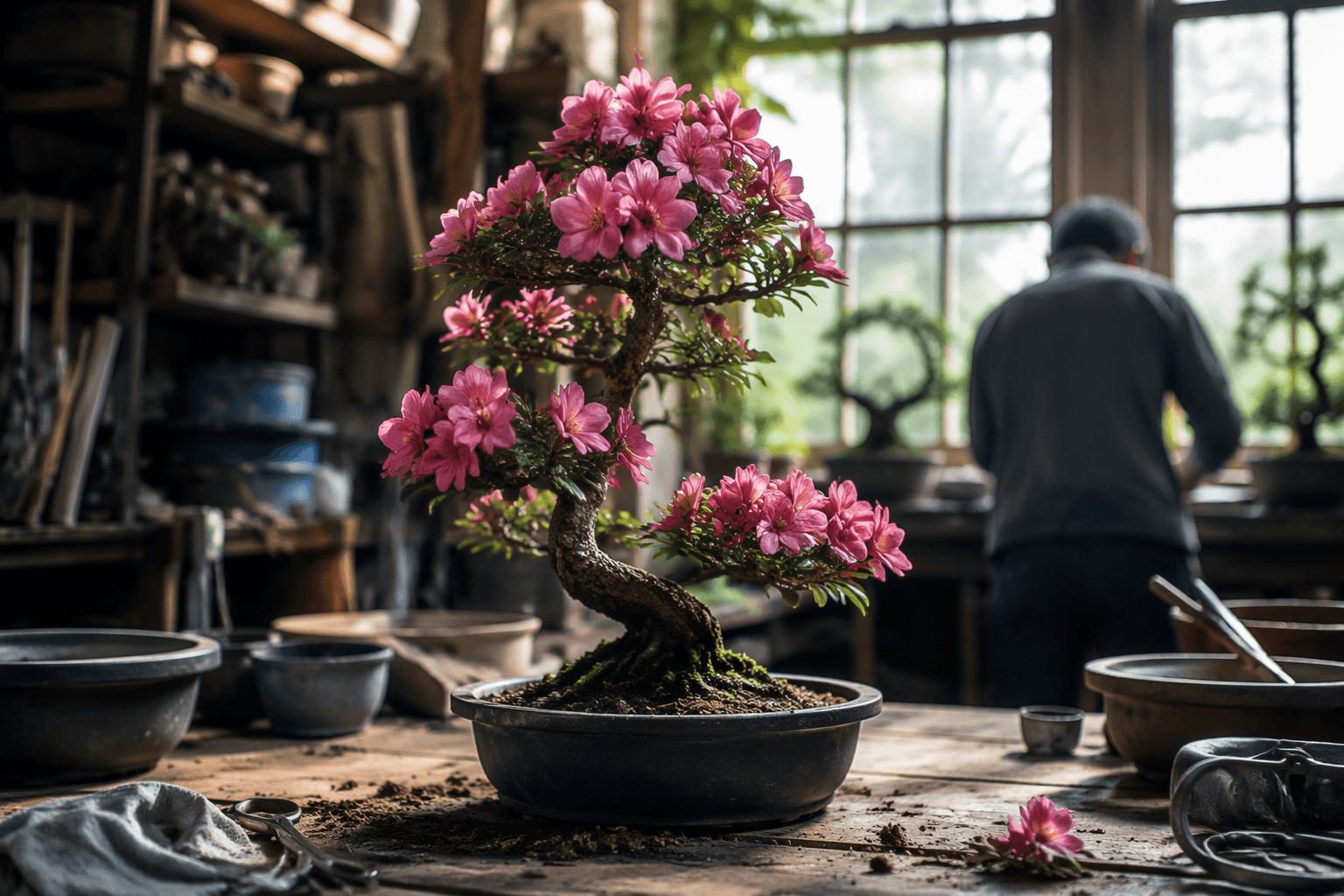
The best azalea bonsai do not separate bloom from design. Their fine twig structure, dense canopy pads, and the contrast between flowers, dark bark, and a refined trunk all work together, which means branch placement has to be handled with the flower cycle in mind. If you prune at the wrong time, the tree may still be healthy, but the composition will look off and next year’s display can be compromised.
That is the key beginner mistake: trying to get flowers now and structure later. Experienced growers do the opposite. They keep working toward branch movement, taper, and canopy balance even when the tree is carrying buds, because the long-term silhouette is what makes the flowers look intentional instead of crowded.
A practical way to think about it:
- Prune with the bloom cycle in mind, not on a generic calendar.
- Do not sacrifice next year’s flowers just to shorten a shoot today.
- Protect root health after styling or repotting, because a stressed root system can set the tree back hard.
- Keep building the trunk and primary branches even if that means a quieter display for a season.
Satsuki is where patience really pays
Satsuki azaleas are the classic proof that these trees reward discipline. One variety was registered in 1988 and created by Wataru Okubo in Kanuma City, Tochigi, which shows how much named breeding still matters in the Satsuki world. The Ueno Satsuki Azalea Festival, along with Japanese display traditions more broadly, shows that these trees are valued not only for bloom but for the whole package of structure, timing, and presentation.
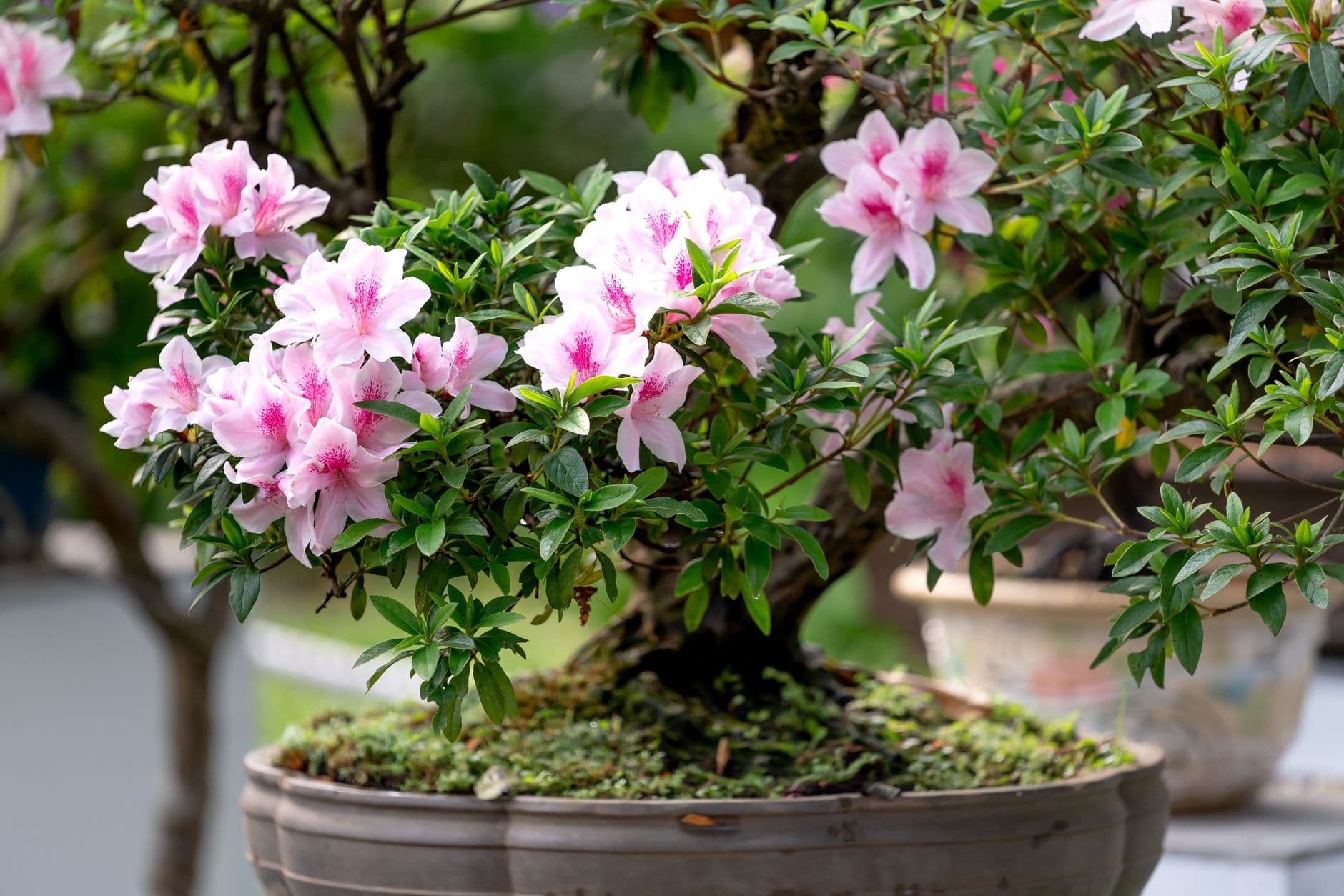
The patience requirement is not theoretical. A U.S. National Arboretum azalea bonsai note records one tree that had been in training since 1978, and that kind of timeline tells you exactly what these trees ask for. You are not forcing a quick reveal; you are refining a living frame that will eventually carry flowers better because you gave it time.
A recent bonsai species guide also describes Satsuki azalea as a broadleaf evergreen bonsai species, which is useful because it keeps the expectation grounded. This is not a temporary indoor flowering plant dressed up as bonsai. It is an outdoor bonsai subject with its own rhythm, and the rhythm is what makes it manageable.
The practical payoff for growers
Once you stop trying to rush azaleas into a bloom-first schedule, the appeal gets obvious. Groszkiewicz was right to frame the subject as something that can “un-shroud” bonsai for azalea and rhododendron lovers, because the method is less mysterious than people assume: respect the flowering window, keep the root system healthy, and let the structure mature alongside the flowers.
That is why azalea and rhododendron bonsai are easier than many think. They are not forgiving of random timing, but they are very responsive to informed restraint, and that makes them one of the cleanest examples of what bonsai really is: a long-term relationship between a tree’s biology and the hand that shapes it.
This article was produced by Prism’s automated news system from verified source data, official records, and press releases, then run through automated quality and moderation checks before publishing. The system is built and supervised by the people who set the standards it runs under. Read our full AI policy.
Did this article answer your question?