Climate Change Threatens Arabica Supplies, Pushing Growers to Robusta and Higher Altitudes
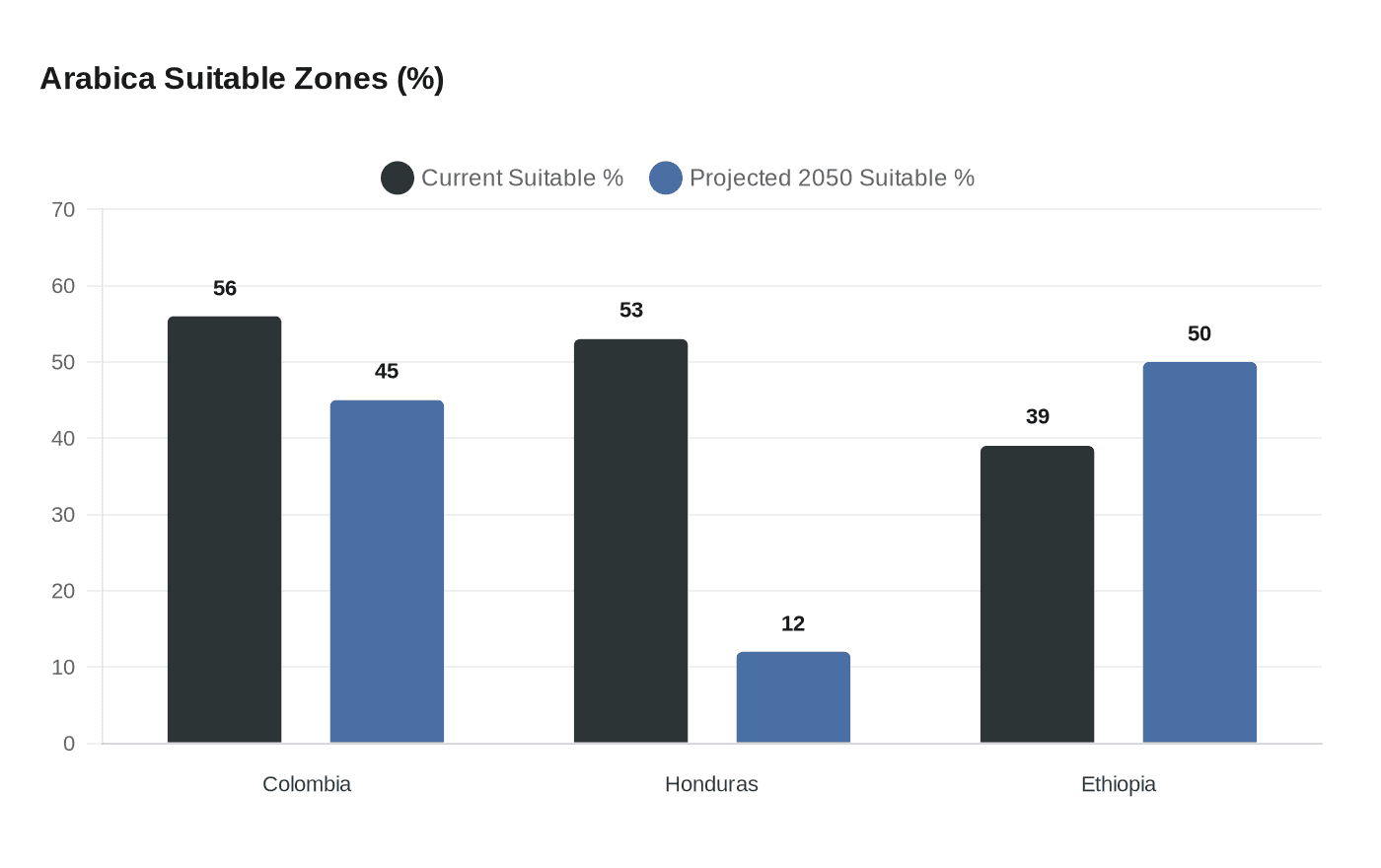
A fifth of all arabica-growing land could be climatically unsuitable by 2050, and Honduras stands to lose 41 of its 53 suitable percentage points, with café prices already feeling the squeeze.
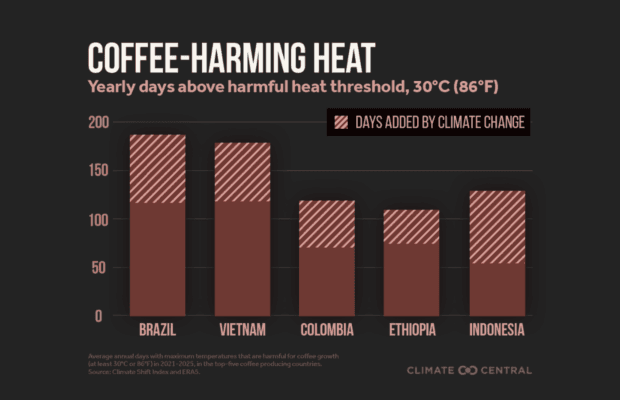
A Rabobank analysis published late March put a precise number on something specialty coffee drinkers have been sensing at the register for two years: 8% of current arabica growing areas globally are already classified as climatically unsuitable, and that figure could rise to about 20% over the next 25 years as warming accelerates. The four countries most exposed, Brazil, Colombia, Ethiopia and Honduras, together accounted for 58% of global arabica exports in 2023/24, led by Brazil at 36.5 million 60-kilogram bags, followed by Colombia at 11 million and Ethiopia at 5.6 million.
Arabica supply for consumers and brands may become more volatile, more origin-specific, and more dependent on long-term investment, according to Rabobank's climate and economics analyst Camila Bonilla Cedrez. That volatility already showed up brutally in pricing: arabica prices rose by 13% in December 2024 alone, exceeding a 60% year-on-year increase, while robusta prices doubled compared to 2023 levels. ICE Futures US New York arabica contracts hit record highs in early 2025.
The geographic losses are not evenly distributed, and that asymmetry matters for what ends up in your bag. Colombia faces unsuitable zones rising from 7% to 18% of current production, with suitable zones shrinking from 56% to 45%. Honduras takes the sharpest hit: suitable zones are projected to fall from 53% to just 12%. Honduran beans, long a staple of value-tier specialty blends for their clean, sweet profile, are precisely the ones likely to thin out on roasters' green-coffee menus first. Ethiopia, by contrast, is forecast to see arabica-suitable growing area rise from 39% to 50% by 2050, making it an increasingly important origin.
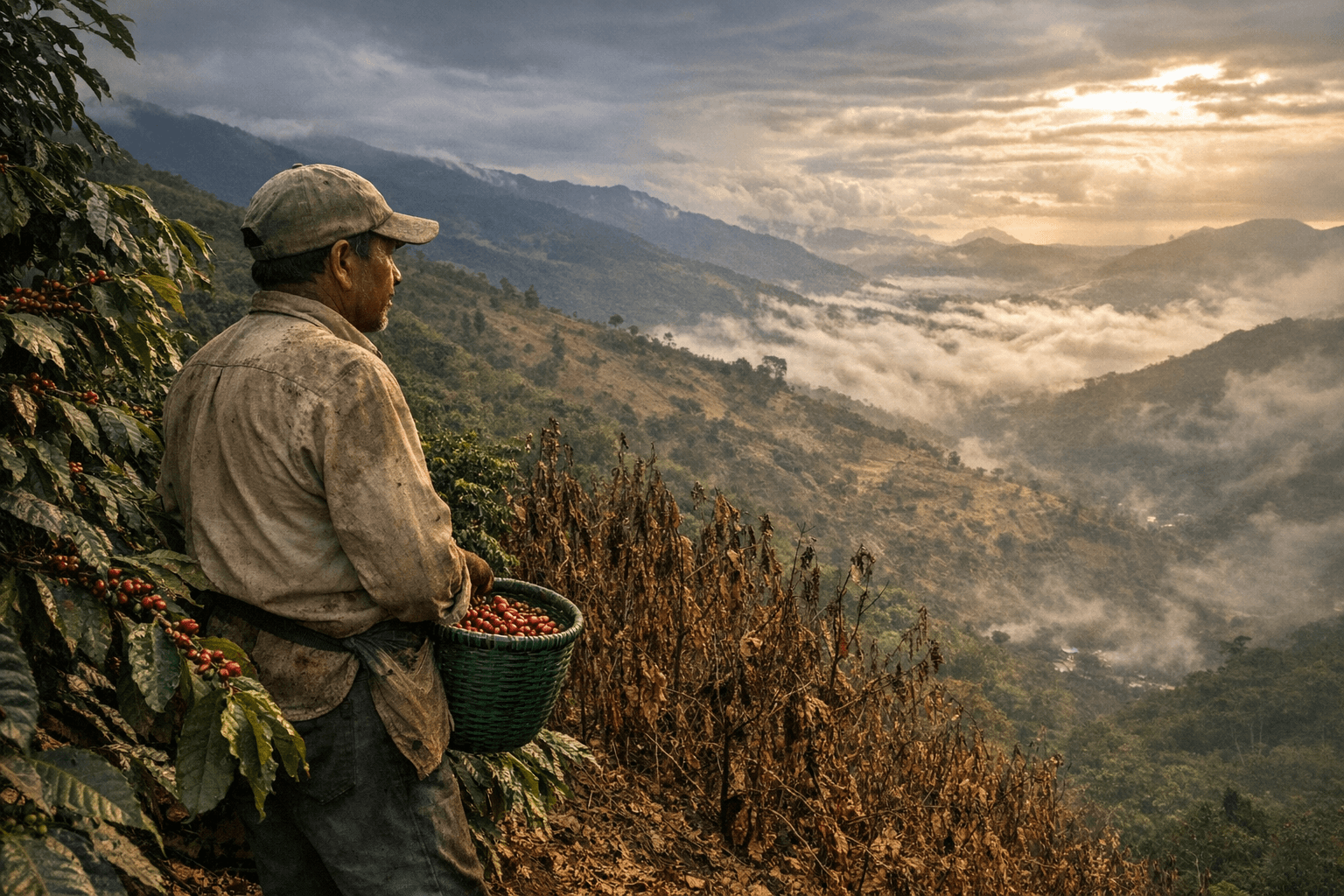
The conditions under which coffee is grown, including soil type, altitude, sunlight, rainfall and temperature, shape its flavor profile, much like terroir in wine. As climate change alters these factors, the distinctive flavors associated with specific origins may shift or become harder to maintain. For Colombia specifically, the concern is not just volume. Moving production to other areas or adopting new hybrid varieties could alter the characteristics that define some of the most recognizable coffees on the market.
Arabica plants, which account for about 60 to 70% of the global supply, are more sensitive to heat than robusta varieties. Research shows that even temperatures in the 25 to 30°C range are suboptimal for arabica growth, and Climate Central's analysis found that warming is already pushing more days past the 30°C threshold across the bean belt. Robusta, the workhorse behind espresso blends and instant coffee, will also be impacted by climate change, with one study finding weather anomalies can reduce yield by up to 36%, though it is a much more resilient variety and is increasing in popularity among growers.
That resilience is already reshaping blends. Roasters squeezed by arabica price volatility have been quietly leaning heavier on robusta, which trades at roughly half the price per kilogram. If you've noticed your go-to espresso blend tasting a little flatter, a little more bitter, with less of the fruit or caramel brightness you remember, there is a structural reason for that. Robusta brings body and caffeine punch but lacks the aromatic complexity that arabica origins like Yirgacheffe, Huila or Antigua deliver.
A 2022 peer-reviewed study by researchers at Zurich University of Applied Sciences projected a drop of more than 50% in the highest-suitability arabica areas across climate scenarios by 2050. Rabobank framed its own analysis as a signal of risk rather than a death sentence, noting that farmers in marginal zones are already deploying shade management, irrigation and improved varieties to keep yields viable. But the bank was direct about the stakes: the resilience of coffee supply chains would depend on decisions made today by producers, buyers and investors.
For anyone building a home pantry or managing a café program, the practical implication is straightforward. Single-origin Honduran and Colombian lots, especially from lower-elevation farms, are likely to become less consistent and more expensive over the next 12 to 24 months. Ethiopian and East African origins are the relative safe bet for arabica supply continuity. And if robusta-heavy blends are coming whether you want them or not, dialing in a slightly lower brew temperature, around 91 to 92°C instead of 94°C, pulls back some of the bitterness without sacrificing extraction. The cup is changing. The supply map is changing faster.
This article was produced by Prism’s automated news system from verified source data, official records, and press releases, then run through automated quality and moderation checks before publishing. The system is built and supervised by the people who set the standards it runs under. Read our full AI policy.
Did this article answer your question?