CO2 Fermentation Boosts Colombian Coffee Cupping Scores to 86.90
A Colombian trial sealed whole cherries in CO2 for 24 hours and pushed SCA cupping scores from 82.15 to 86.90, crossing the threshold into higher-end specialty territory.
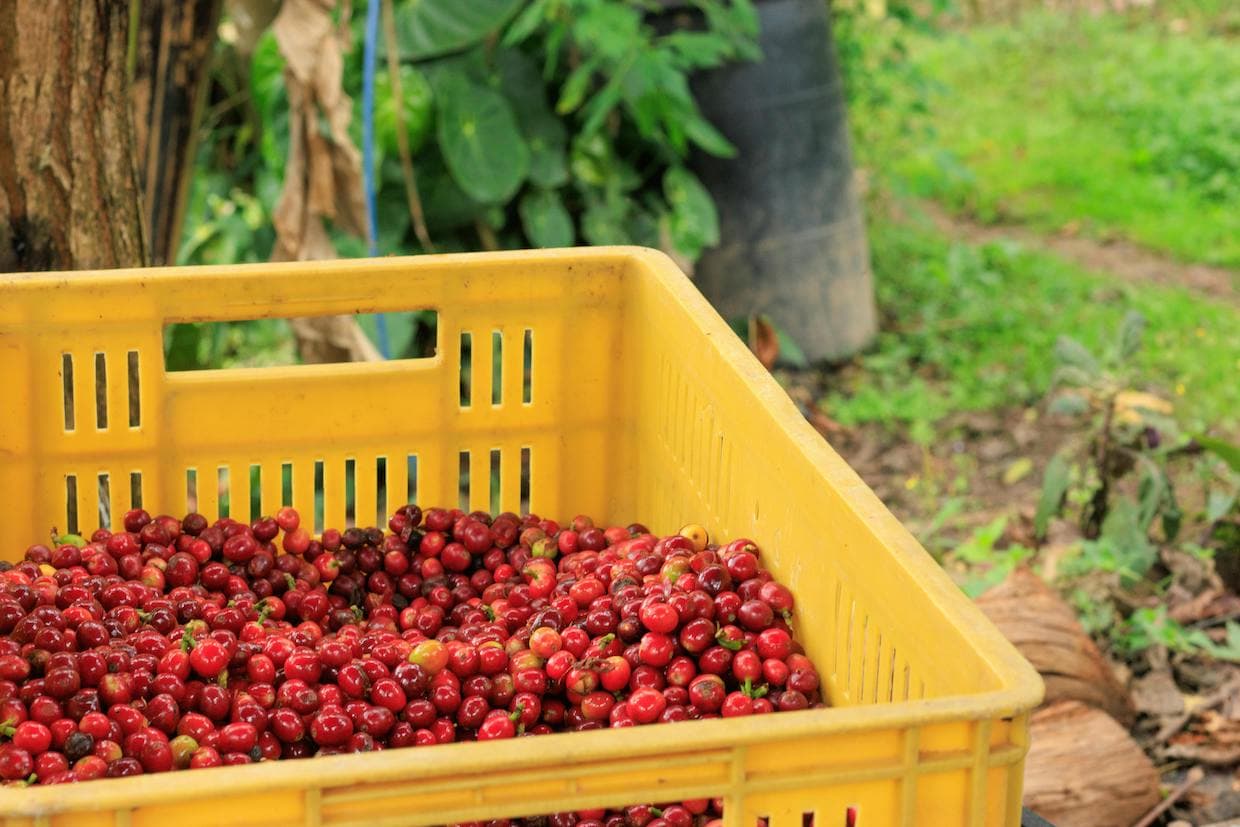
A sealed container and a dose of carbon dioxide may be enough to nudge certain natural-process coffees into higher-end specialty coffee territory, according to a Colombian study that compared open-air and CO2-assisted closed fermentation techniques on a working farm in El Águila, Valle del Cauca.
Researchers from Servicio Nacional de Aprendizaje (SENA) and Universidad del Valle ran five treatments on whole arabica cherries from a single lot of the Colombia cultivar, all harvested at ripening Stage 5-6 and sorted by flotation before any fermentation began. The treatments ran the range: an unfermented control, open-air aerobic fermentation at 24 and 48 hours, and sealed-container CO2 fermentation at 24 and 60 hours. After drying, the roasted lots were evaluated using the Specialty Coffee Association's legacy 100-point cupping protocol.
The 24-hour CO2 modified-atmosphere treatment won by a clear margin. That lot averaged an 86.90 final SCA score against 82.15 for the unfermented control, a 4.75-point swing that carries real commercial weight in a market where the line between commodity-adjacent and genuine specialty can hinge on a point or two. The study, published in December 2025 in the Scientific World Journal, did not just report scores; the authors also tied the performance gap to specific chemistry, linking differences in sugars and fatty acids to the sensory outcomes measured under those real production conditions.
What makes this trial worth paying attention to is its on-farm setting. A lot of fermentation research happens under tightly controlled lab conditions that bear little resemblance to what a smallholder in Valle del Cauca is actually dealing with. SENA and Universidad del Valle ran these treatments at scale on a working farm, which is exactly the kind of grounding that makes results like these transferable.
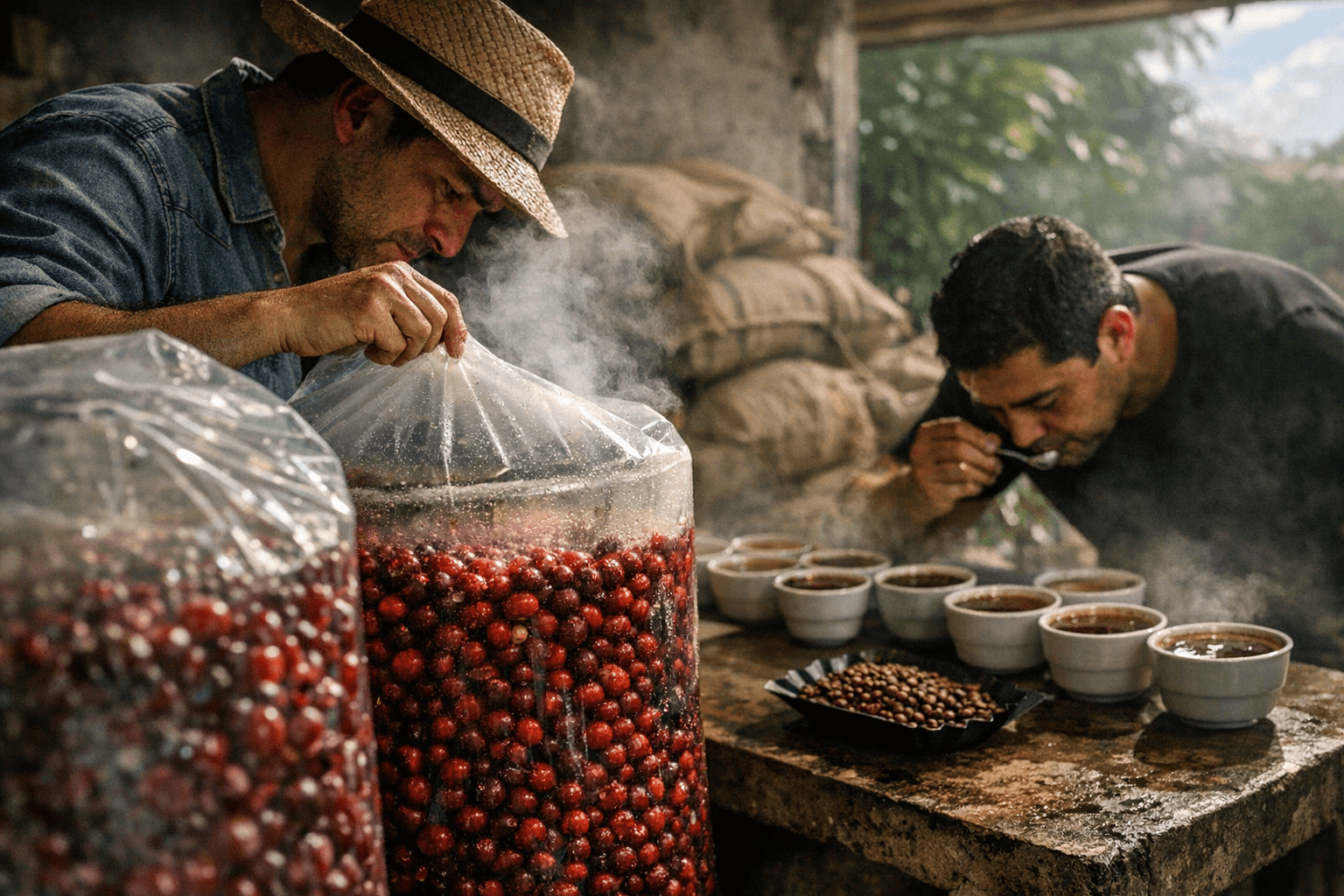
The authors framed the implications directly: the trials could help form a framework for more repeatable and scalable strategies in a part of the specialty market that is often driven by small-scale experimentation. That framing matters. Modified-atmosphere fermentation has been circulating in specialty circles for a few years now, usually attached to competition lots and eye-watering price tags. A peer-reviewed trial showing a nearly 5-point SCA score lift from a 24-hour sealed CO2 treatment on a standard Colombia-cultivar farm lot is a different kind of data point entirely, one that suggests the technique may be more accessible than its boutique reputation implies.
The study stops short of providing full sensory breakdowns for all five treatments or the chemical concentration data that would let producers tune the process precisely. Those details are in the full Scientific World Journal paper. What the trial establishes clearly enough is the directional case: closed CO2 fermentation at 24 hours outperformed every open-air treatment and the control, and the researchers connected that outcome to measurable changes in the coffee's chemical profile rather than leaving it as an unexplained score bump.
This article was produced by Prism’s automated news system from verified source data, official records, and press releases, then run through automated quality and moderation checks before publishing. The system is built and supervised by the people who set the standards it runs under. Read our full AI policy.
Did this article answer your question?