Coffee Futures Signal Bearish Reversal as Brazil Crop Optimism Pressures Prices
Arabica futures hit a six-month low near $3/lb as Brazil's record-crop projections cracked key chart support; roasters locked in beans above $4 last year, so your morning cup price won't budge yet.
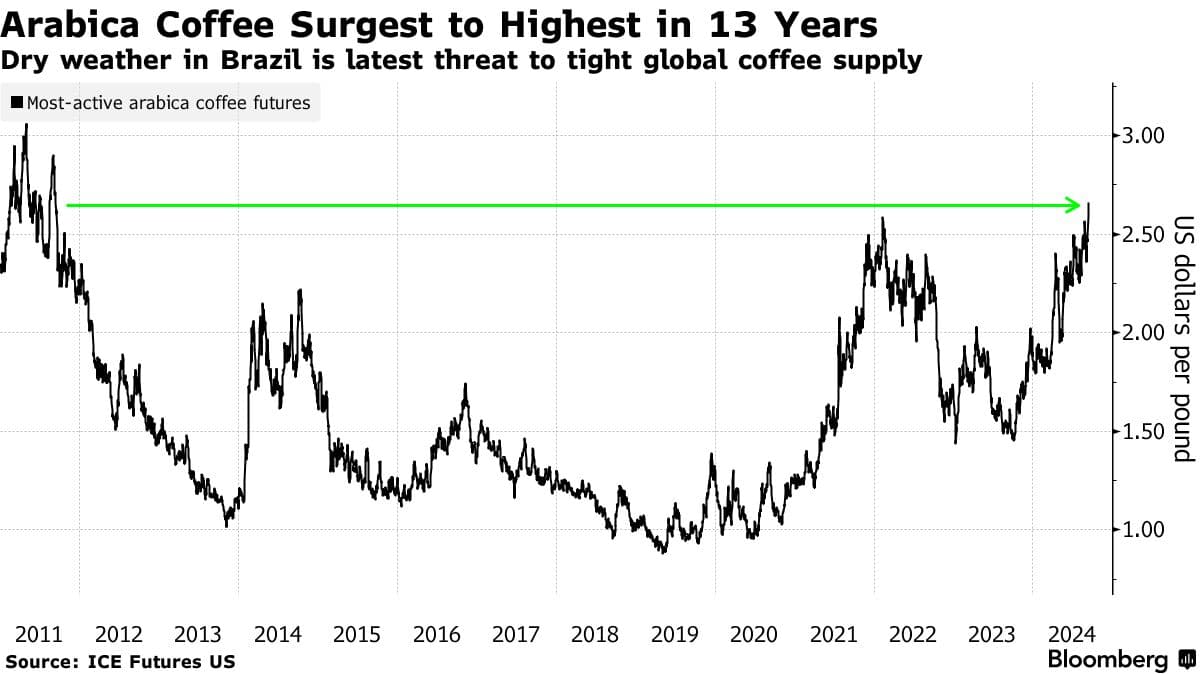
The evening star candlestick appeared on the arabica futures chart this week and broke through a key support level that traders had been circling for months, handing the advantage to sellers and completing a technical reversal that momentum indicators quickly confirmed. The catalyst is straightforward: Brazil, the world's largest coffee producer, is headed toward what every major forecaster is now calling a record 2026/27 harvest.
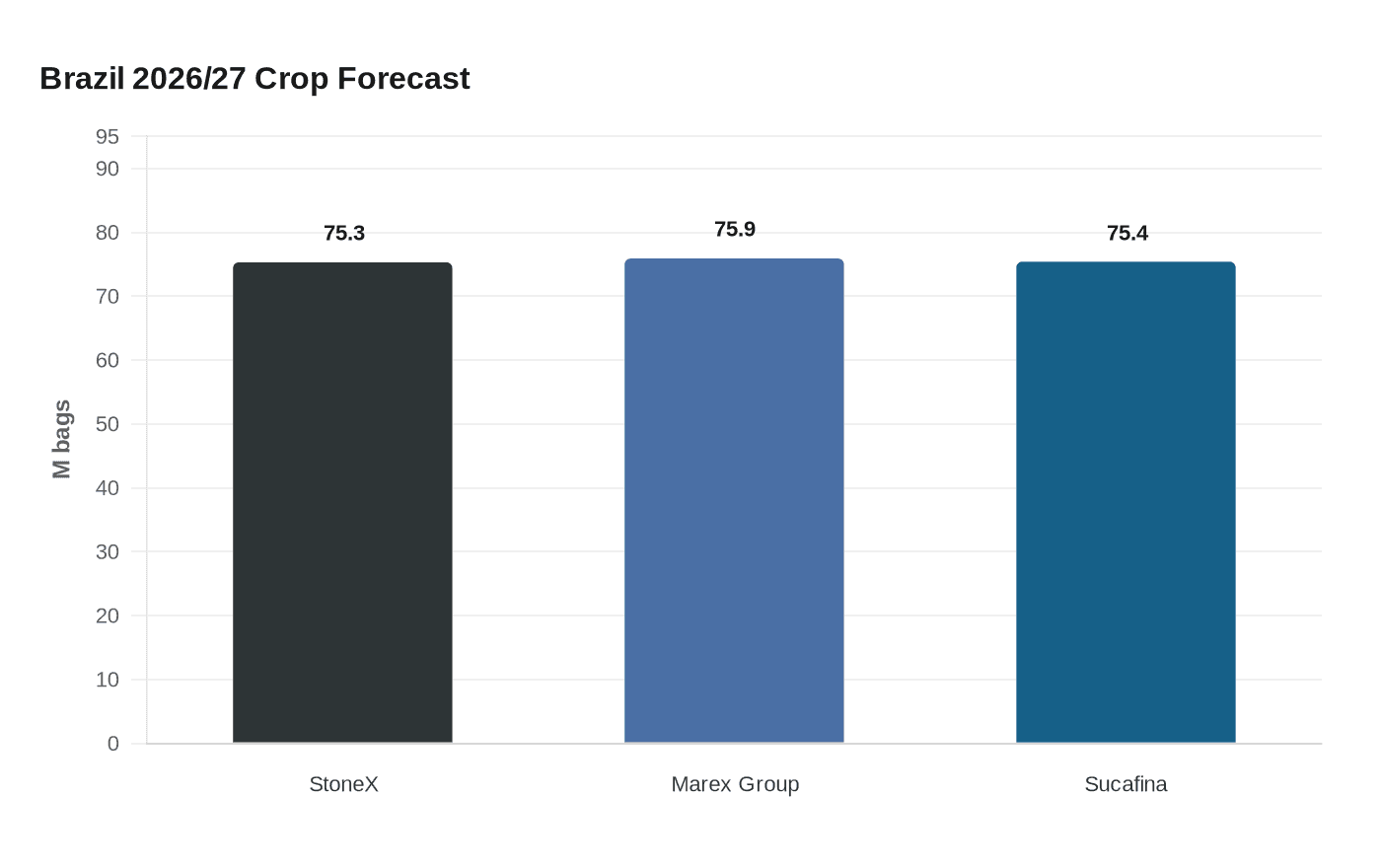
The numbers behind that optimism are hard to argue with. StoneX raised its Brazil 2026/27 production estimate to a record 75.3 million 60-kilogram bags. Marex Group went even higher, projecting 75.9 million bags, while Sucafina pegged the crop at 75.4 million bags, up more than 15% year-over-year. Against that backdrop, arabica futures slid to around $3 per pound, the lowest level in roughly six months and a steep retreat from the $4.40-plus highs of early 2025. Multiple analysts are now watching a key support zone near $277.25 on the weekly chart, identified as the neckline of a potential double top structure. A sustained break there would likely accelerate the selloff; bears hold the edge unless buyers step back in and reclaim the broken levels.
The question most people drinking coffee actually want answered: does any of this reach their cup?
Not anytime soon, and a Bloomberg report from March 11 captured the gap in a single headline: "Coffee Prices Stay at Record Highs Despite Drop in Bean Futures." The U.S. Bureau of Labor Statistics put ground roast coffee at $9.37 per pound in January 2026, up 33% from January 2025. That price reflects green coffee contracts that roasters locked in during the 2025 price spike, when the ICE C-price was well above $4. A futures chart forming an evening star does not reprint a café menu.
The supply chain lag is real and well-documented within the trade. Green coffee is contracted months before it gets roasted, shipped, and shelved. Rabobank has calculated that three consecutive production deficits from 2021/22 through 2023/24 created a cumulative global shortfall of 14.6 million bags, forcing roasters to pay elevated prices and absorb those costs into inventory that has not yet rotated out. The first significant global surplus Rabobank is projecting for 2026/27 will take time to flush through.
Physical supply has also stayed tighter than the futures market implies. Brazilian farmers held back beans hoping for higher prices, keeping spot availability constrained even as forward-looking crop estimates turned aggressively bearish. That mismatch between paper markets and physical coffee is precisely why roasters carrying high-cost green inventory are not changing their price lists on the back of a bearish candlestick formation.
If Brazil's harvest delivers at the record levels forecasters are projecting and the technical breakdown deepens below $277.25, the earliest realistic window for consumer relief is the second half of 2026. The timeline from futures floor to roaster savings to a lower number on a café chalkboard runs somewhere between six months and a year, and it assumes roasters have the margin flexibility to pass that savings forward once cheaper green finally clears their current contracts.
This article was produced by Prism’s automated news system from verified source data, official records, and press releases, then run through automated quality and moderation checks before publishing. The system is built and supervised by the people who set the standards it runs under. Read our full AI policy.
Did this article answer your question?