Coffee Waste Transformed Into Biobased Polymers Through WaysTUP Collaboration
WaysTUP! and AIMPLAS turned spent coffee grounds into biobased polymer feedstock, giving the industry's biggest waste stream a second life.

The WaysTUP! collaborative project and Spanish plastics technology institute AIMPLAS have successfully converted spent coffee grounds and related organic processing waste into biobased polymer feedstock, a development that positions coffee's most abundant byproduct as a raw material for the plastics supply chain rather than a disposal problem.
Progress from the collaboration was highlighted across industry and trade press on March 16, 2026, drawing attention to what the partnership has managed to extract from a waste stream that the global coffee sector produces in staggering volumes. Spent grounds account for the overwhelming majority of what remains after brewing or extraction at commercial scale, and most of it historically ends up in landfill or, at best, composting programs.
AIMPLAS, the Valencia-based plastics technology centre, brings the polymer science side of the equation. The institute's work within WaysTUP! focuses on processing the organic compounds found in coffee grounds, particularly the lignocellulosic material and lipid fractions, into inputs that can feed biobased polymer production. That means the same material a roaster or instant coffee manufacturer would otherwise haul away could instead move into a manufacturing chain producing bioplastics.
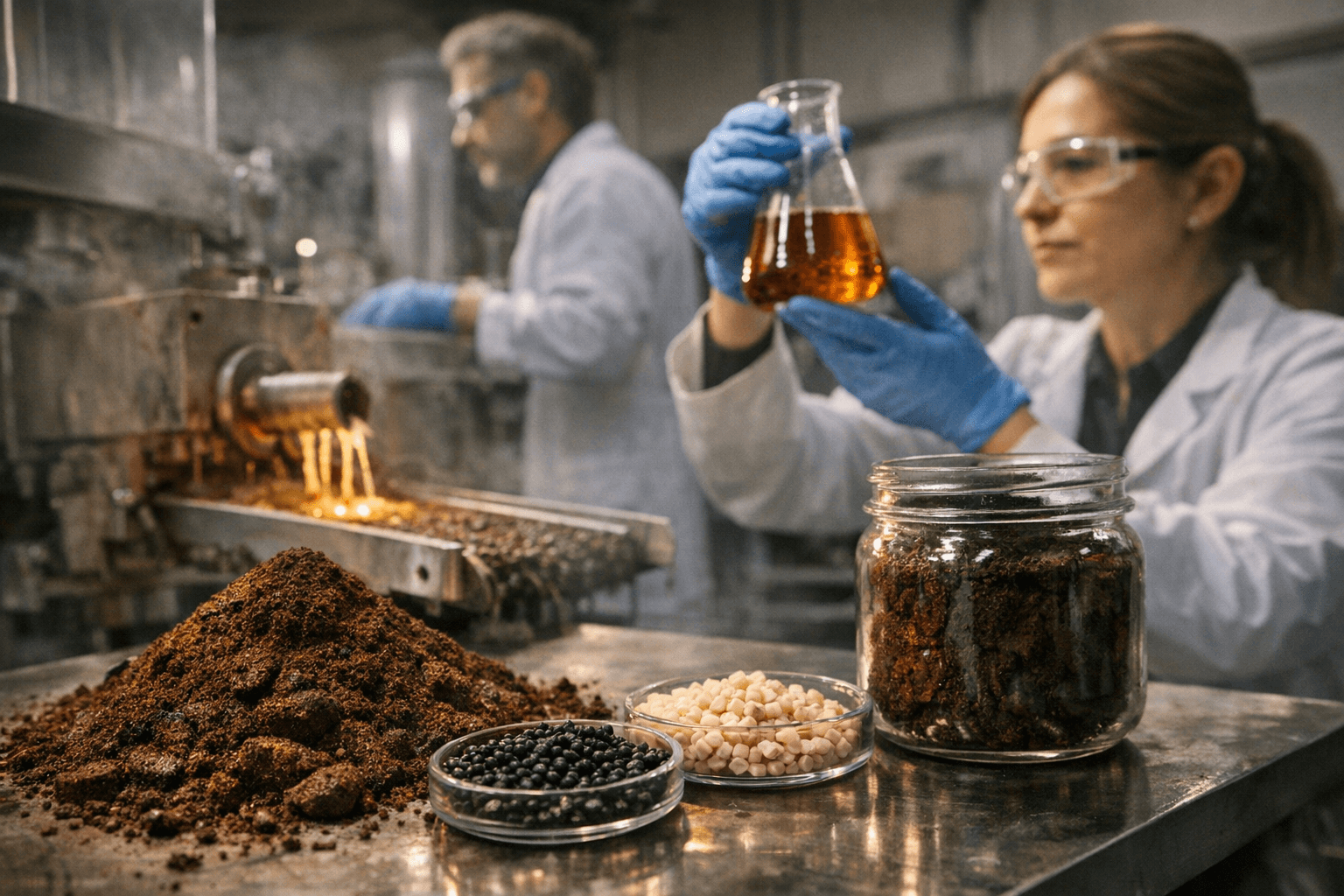
For specialty roasters and large-scale processors alike, this kind of valorization pathway changes the economics of byproduct management. Coffee grounds carry residual oils, polyphenols, and structural carbohydrates that synthetic chemistry has to work hard to replicate from petrochemical sources. The WaysTUP! framework is designed to capture that inherent value rather than bury it.
The WaysTUP! project sits within a broader European push to build circular bioeconomy pipelines from agri-food waste, and coffee is a logical target given the sheer consistency and volume of its waste output. Whether this moves from demonstrated feedstock viability to commercial polymer production at scale depends on what the partnership publishes next.
This article was produced by Prism’s automated news system from verified source data, official records, and press releases, then run through automated quality and moderation checks before publishing. The system is built and supervised by the people who set the standards it runs under. Read our full AI policy.
Did this article answer your question?