Physics Models Help Scientists Brew More Reproducible Espresso Shots
Finer is not always better: one physics study found grind can cross a cutoff where extraction drops, not rises, in espresso.

The strangest result in espresso physics is also the one baristas will recognize fastest: grinding finer can backfire. A 2023 Physics of Fluids study found that uneven flow may explain why, beyond a cutoff point, smaller particles can actually lower extraction instead of boosting it.
That finding sits inside a bigger push to turn espresso from an art with a hundred moving parts into a process scientists can measure. A 2020 Matter paper modeled espresso extraction as transport of solubles through a granular bed and paired that math with cafe-setting experiments. The paper showed how tightly the shot depends on grind setting, coffee mass, water pressure, temperature and beverage volume, which is exactly why two shots pulled on the same machine can taste different even when the recipe looks identical.
The brewing physics are brutally compact. Espresso is typically made by forcing hot water at about 92 to 95 C through a bed of roasted coffee under roughly 9 to 10 atmospheres of pressure. That bed is only about 1 cm high and about 2.7 cm in radius, yet it usually holds 15 to 22 grams of ground coffee. Coffee itself is chemically crowded, with nearly 2,000 separate substances in the cup, which helps explain why tiny changes in flow can send aroma, bitterness and strength in different directions.
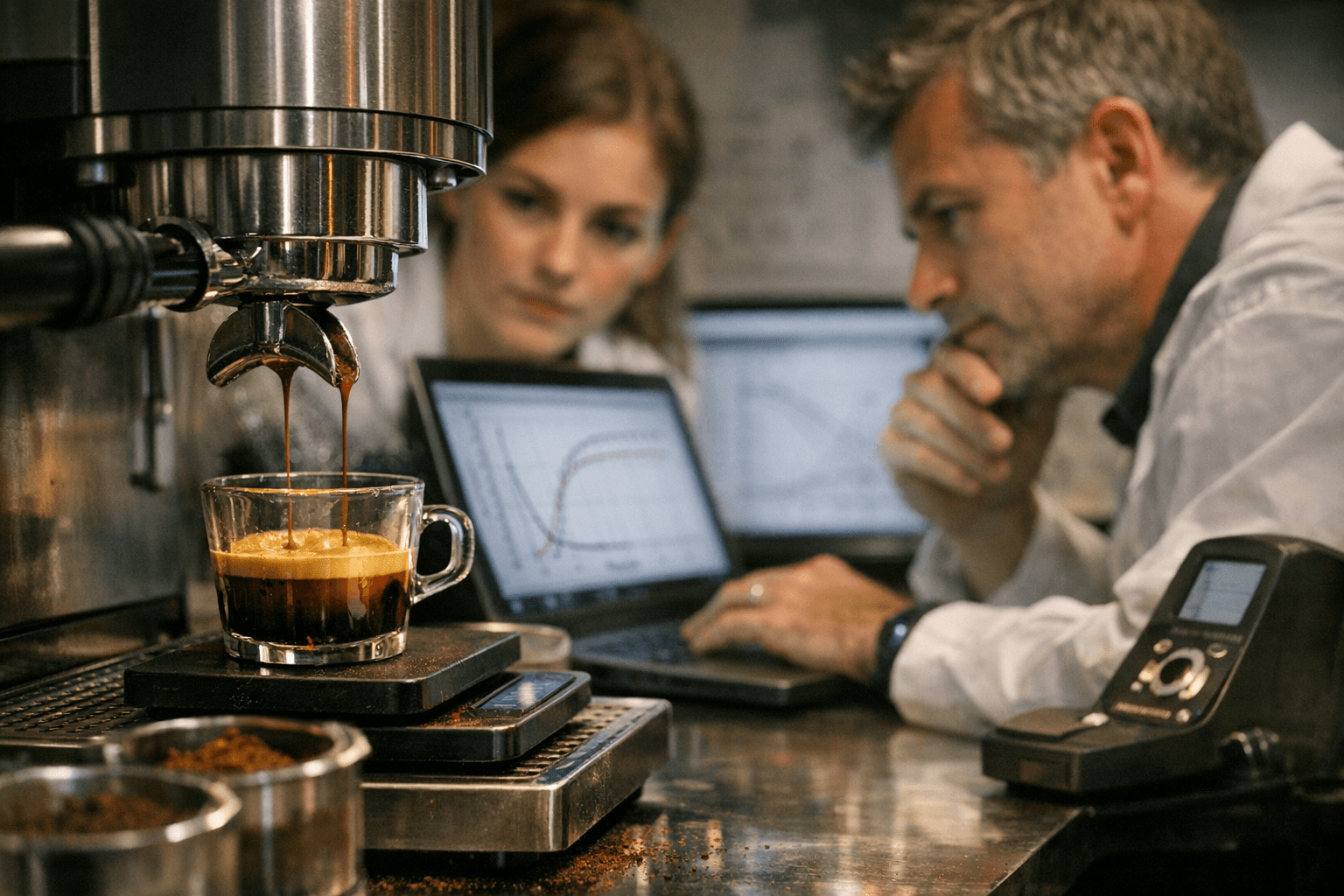
Recent studies have zeroed in on the messy parts at the start of the shot. A 2024 Physics of Fluids paper used x-ray tomography and a one-dimensional unsaturated porous-medium flow model to study infiltration into an espresso bed, the moment when water first permeates the dry grounds. A separate 2024 Scientific Reports study found that fines decrease bed permeability, reduce flow rates and lengthen extraction time. It also reported that aroma compounds rise non-linearly with extraction yield, meaning more extraction does not translate into flavor in a straight line.
Taken together, the work points toward a more useful goal than making espresso simply stronger. The models suggest better control over grind size, flow and dose can produce more reproducible shots with less waste, especially when a barista is trying to avoid chasing flavor through trial and error. That matters as climate change and coffee’s limited growing range put pressure on supply, a concern highlighted in a 2025 Cambridge paper on multiscale espresso modeling. In other words, the payoff is not just cleaner science. It is fewer sacrificial pucks, less guesswork and a shot that behaves the same way twice in a row.
This article was produced by Prism’s automated news system from verified source data, official records, and press releases, then run through automated quality and moderation checks before publishing. The system is built and supervised by the people who set the standards it runs under. Read our full AI policy.
Did this article answer your question?