Kenya coffee payouts surge, reviving smallholder confidence and investment
Kenya’s coffee market flipped fast: farm-gate prices climbed from about KSh50 to KSh150 a kilo, and top lots hit Sh51,743 per bag, pulling smallholders back in.
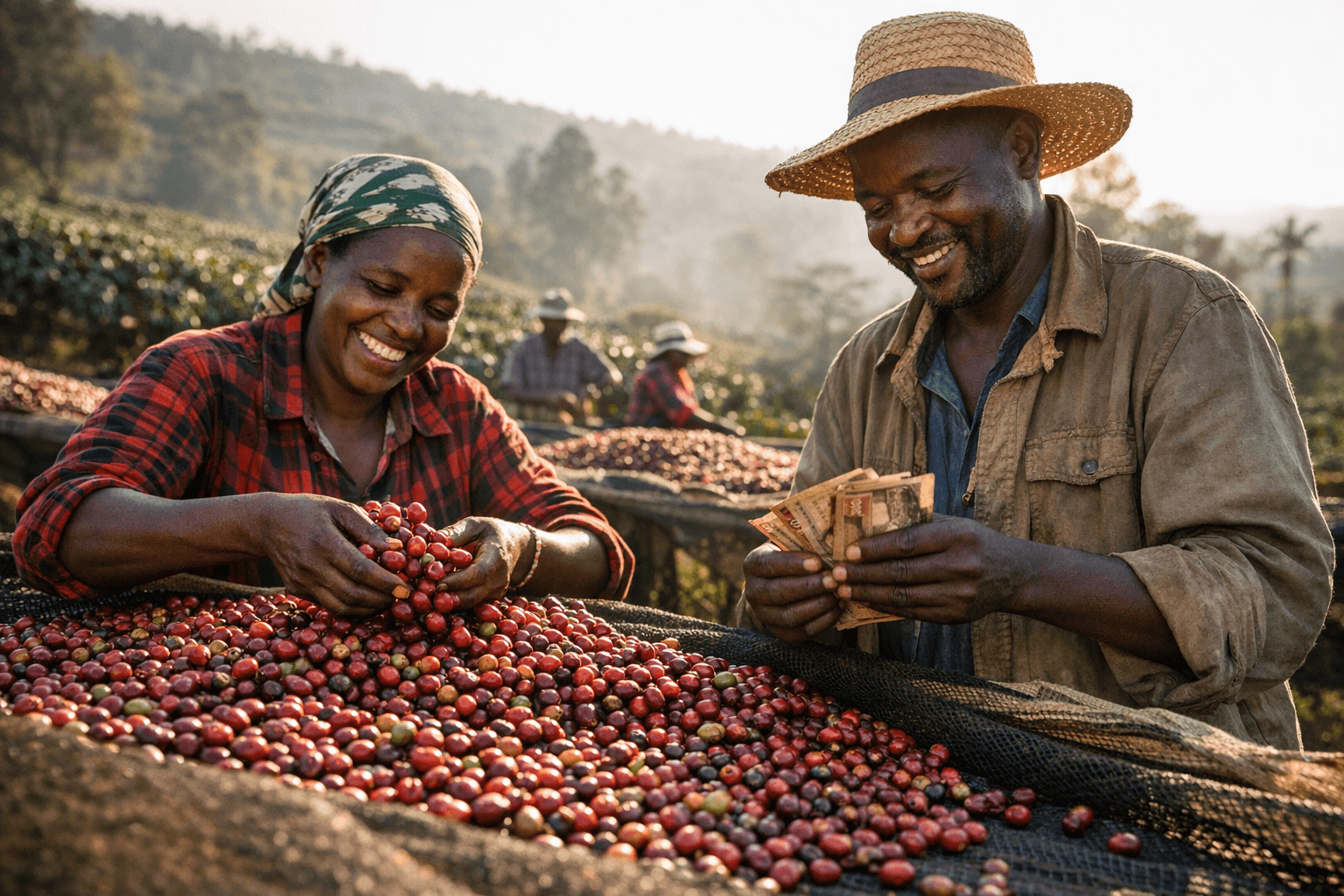
Kenya’s coffee market has turned sharply enough to change the mood at the factory gate. Farm-gate prices rose from about KSh50 a kilogram two years ago to as high as KSh150, while top lots at the Nairobi Coffee Exchange climbed to Sh51,743 for a 50-kilo bag. In Kirinyaga, Baragwi Coffee Factory farmers saw average cherry payouts hit Sh133 a kilo, with the best lots reaching Sh145.10, the strongest returns many growers have ever seen.
That jump matters because it signals a real shift in bargaining power after years when weak prices and cartel pressure left smallholders boxed in. Deputy President Kithure Kindiki has tied the rebound to reforms aimed at squeezing out entrenched middlemen, and the numbers back up the political message. Higher auction prices and better cherry payouts are putting cash back into farms that had been starved of working capital for years.
The policy reset has been broad. The Direct Settlement System was introduced in August 2023 to speed payment to farmers, the Nairobi Coffee Exchange was reopened, and in June 2024 Cabinet approved a KSh6.8 billion debt waiver for coffee farmers nationwide. By late 2024, the Coffee Cherry Advance Revolving Fund had already lent about Sh6.7 billion, giving growers cheaper access to credit at the same time prices were improving. Cabinet also set a target of 200,000 metric tonnes of production by 2027 and signaled a push to modernise the New Kenya Planters Cooperative Union.
For smallholders, that combination is already changing behavior. Better payouts make it easier to prune old bushes, buy seedlings and start replanting blocks that had been neglected when coffee barely paid its way. The real test is whether farmers believe the rally will last long enough to justify those long-cycle investments, because coffee trees do not respond to one good season.
Cooperatives, however, are not convinced all of the new thinking will help. Some co-op leaders and farmers have resisted proposals to bypass societies and pay growers directly into individual accounts, warning that it would weaken the cooperative structure that still handles milling, marketing and collective bargaining. That tension matters because Kenya’s coffee sector reaches 33 counties and more than 800,000 smallholder farmers, and the EU takes roughly 55 percent of exports. If compliance work, farm mapping and registration lag, the price revival could stall before it turns into a durable supply recovery. USDA’s forecast of a 13.3 percent rise to 850,000 bags in marketing year 2025/26 suggests growers are responding, but the next crop will show whether this is a reset or just a spike.
This article was produced by Prism’s automated news system from verified source data, official records, and press releases, then run through automated quality and moderation checks before publishing. The system is built and supervised by the people who set the standards it runs under. Read our full AI policy.
Did this article answer your question?