Brazil’s Coffee Packages Shrink as Prices Stay High Amid Inflation
Coffee packs are getting smaller in Brazil, but the sticker price is not easing. With inflation still hot and Lula under pressure, the real cost is showing up gram by gram.
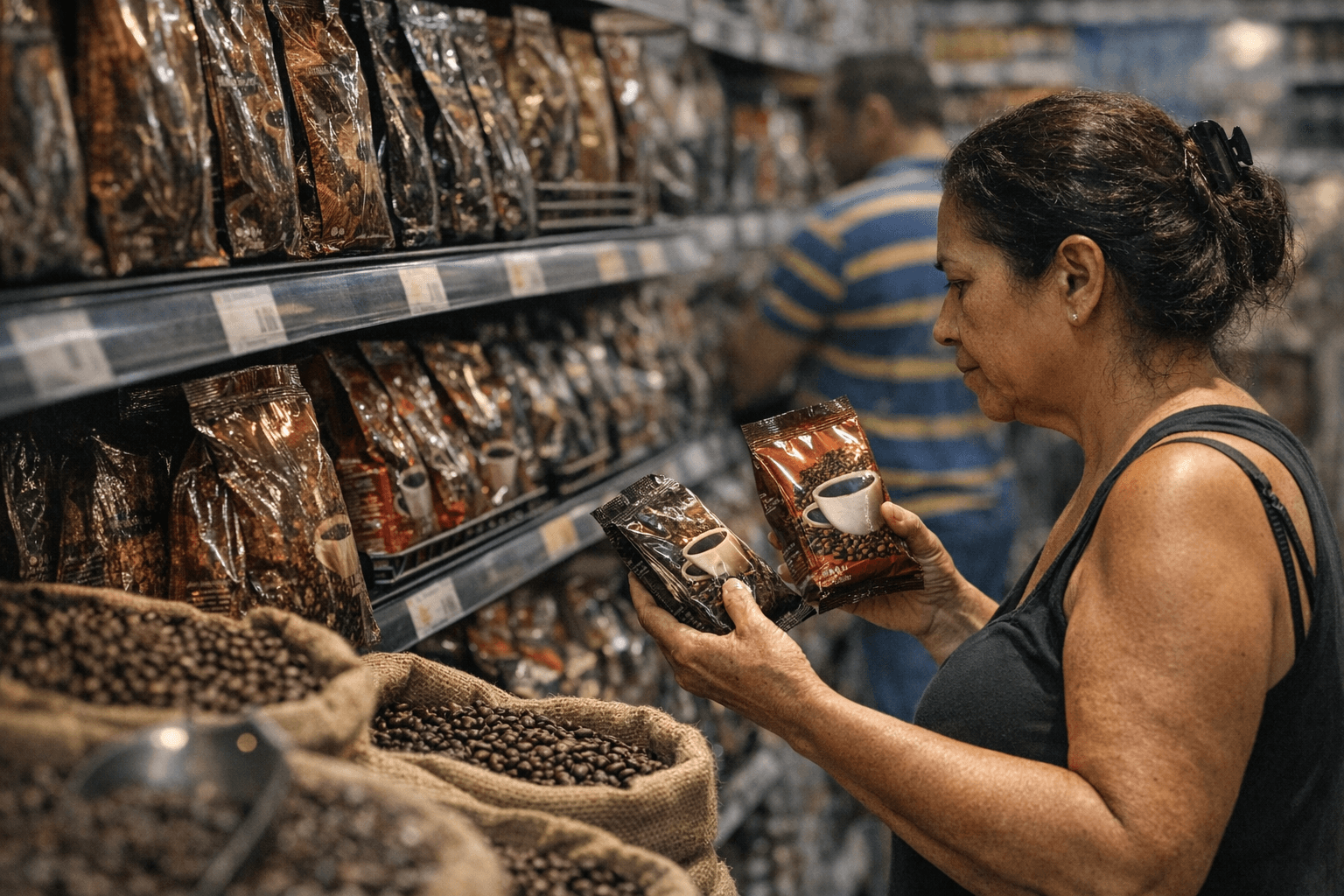
Coffee is the kind of purchase Brazilian households know by muscle memory, which is exactly why shrinkflation works so well. The bag looks familiar on the shelf, the price tag still feels painful, and the grams quietly disappear. That is the squeeze now landing on Luiz Inacio Lula da Silva’s cost-of-living politics, with everyday staples shrinking even as prices stay high or climb higher.
The inflation backdrop is still sticky. IBGE said Brazil’s consumer-price index, the IPCA, rose 0.88% in March 2026 and was up 4.14% over 12 months. The INPC, which tends to hit lower-income households more directly, advanced 0.91% in March and 3.77% over 12 months. In that setting, smaller packs are more than a supermarket annoyance. They are a hidden price increase that many shoppers only notice after a few trips, when the same weekly coffee run suddenly buys less.
Coffee is especially exposed because it is in 98% of Brazilian homes, according to ABIC. Even so, internal coffee consumption fell 2.31% in 2025 to 21.409 million 60-kilogram bags. At the same time, roasted-and-ground coffee industry revenue climbed 25.6% to R$46.24 billion, and ABIC said that increase came from higher shelf prices. Brazil remains the world’s second-largest coffee consumer, about 5 million bags behind the United States, and the average Brazilian drinks 1,400 cups a year. That makes even small package cuts feel bigger than they look.
The supply side has not helped. StoneX said Brazil’s green coffee exports fell in March 2025, with robusta shipments down 40% from February to 138,600 bags. Export income still rose 41.8% to US$1.321 billion because prices were higher, a reminder that weak domestic availability can keep retail prices elevated even when volume softens. Reuters later reported that U.S. roasters were drawing down inventories after Washington imposed a 50% tariff on Brazilian beans in August 2025, a move widely viewed as politically aimed at Lula’s government. Some American consumers were paying as much as 40% more for their morning coffee.
The U.S. GAO has warned that shrinkflation matters especially in categories like coffee and cereal because shoppers often miss subtle size cuts. It also found downsizing accounted for less than 1/10 of a percentage point of the 34.5% rise in overall consumer prices from 2019 to 2024. That is the trap in Brazil now: the pack still looks like coffee, but the real price is creeping up one smaller bag at a time.
This article was produced by Prism’s automated news system from verified source data, official records, and press releases, then run through automated quality and moderation checks before publishing. The system is built and supervised by the people who set the standards it runs under. Read our full AI policy.
Did this article answer your question?