Portable soil tests help Kenyan coffee farmers improve fertilizer decisions
Portable soil tests are giving Kenyan coffee farmers a sharper fertilizer playbook, and the payoff can run from healthier trees to better coffee in the cup.
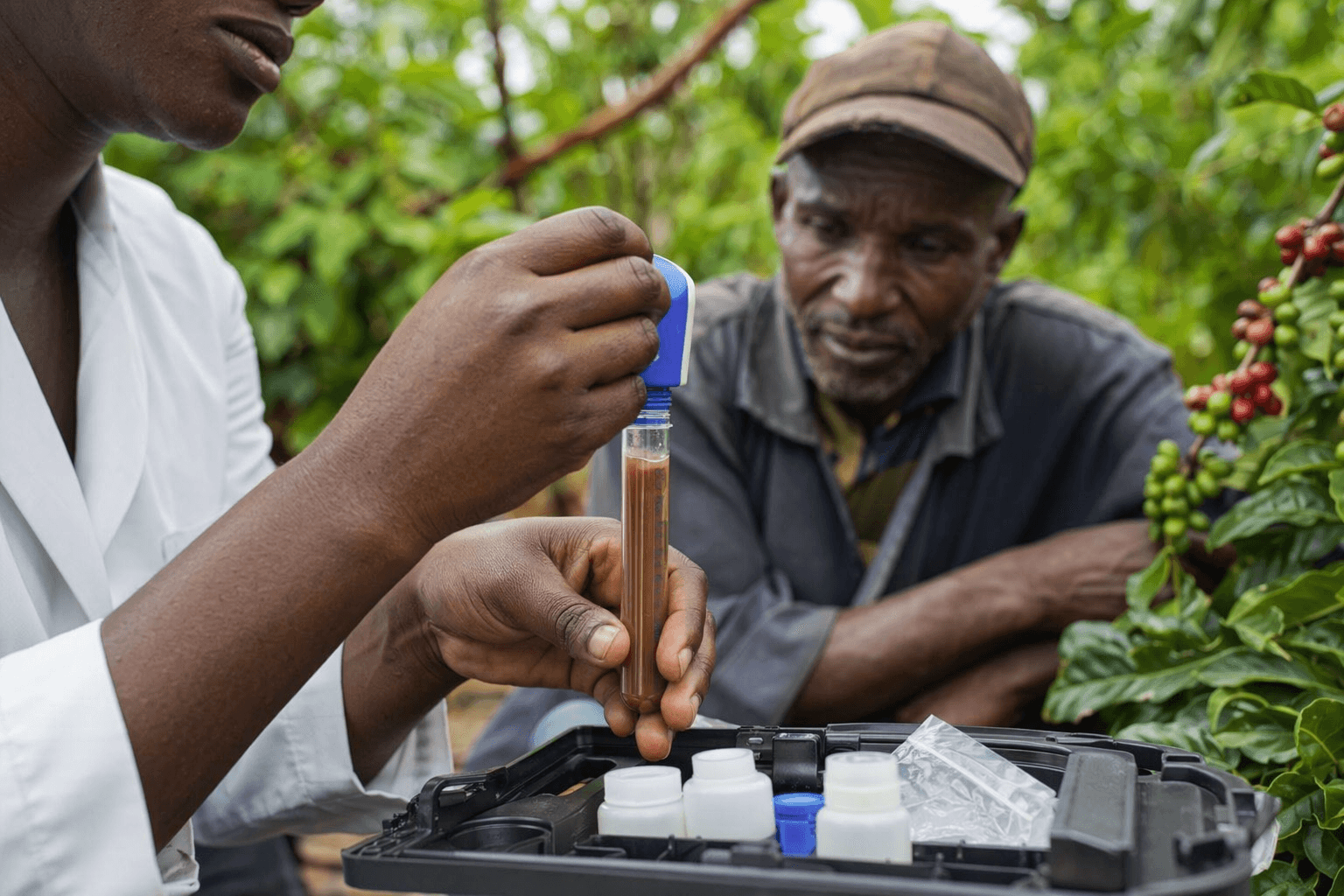
Portable soil tests change the fertilizer conversation
The biggest shift in Kenyan coffee right now is not a new bean variety or a flashy farm gadget. It is the move from guessing to measuring. On smallholder plots that are often only about 0.2 hectares, where coffee grows alongside food crops and livestock, portable soil tests are helping farmers see what their fields actually need before they spend money on fertilizer.
That matters because these farms are juggling too much already: tight margins, erratic rainfall, aging trees, and limited outside support. Blanket recommendations are a bad fit for that reality. Integrated nutrient management, paired with portable testing, gives farmers a more exact read on where to put scarce cash, which nutrients are missing, and how to avoid wasting inputs on land that will not respond well anyway.
Why this matters in Kenya’s coffee belt
Kenya’s coffee story has always been bigger than one season or one harvest. Coffee has been grown in the country since 1893, and today it is cultivated in 33 counties. But the productivity gap is still stark: smallholder farms average about 2 kilograms of coffee per tree per year, while estates average about 4 kilograms.
That gap is not just a statistic. It is the difference between a farm that can keep investing in trees and one that slowly falls behind. The pressure is even heavier because about 60 percent of Kenya’s coffee land needs renovation and rehabilitation, and some trees are already 50 to 70 years old. Old wood, tired soil, and inconsistent rainfall are a rough combination, especially when fertilizer money is limited and every application has to count.
Portable soil testing fits this picture because it helps farmers stop treating every plot the same. A field with nutrient depletion, one with stronger organic matter, and one under different shade or livestock pressure will not need the same fertilizer recipe. When the test data drive the decision, the farmer is no longer buying hope in a bag.
How NKG is trying to make precision practical
Neumann Kaffee Gruppe is pushing that idea through its Kenyan work with Ibero Kenya and NKG Bloom. The company’s local footprint includes 29 employed staff working directly with farmers and cooperatives, and its partner networks reach around 80,000 smallholder farmers nationwide. That scale matters because precision agriculture only helps if it can be delivered beyond a pilot plot.
The program is not just about soil tests. Ibero Kenya and farmer-owned cooperatives are also investing in washing-station infrastructure and technical assistance, while extension officers work with co-op members on low yields and the agronomy problems that come with climate and disease pressure. NKG Bloom is adding certification training, fertilizer and other soil-nutrient inputs, plus working-capital loans for infrastructure and other needs. In other words, the soil test is the starting point, not the whole answer.
That approach is smart. A test result does not pay for lime, fertilizer, labor, or pruning on its own. But it can prevent the wrong purchase, which is often the first leak in a farmer’s budget.
From better inputs to better output
The clearest reason to care about soil testing is what it can do for cherry volume and consistency. One NKG Bloom Kenya example says Priscilla Wanjiru Ndungu and her husband, Joseph Ndungu Njoroge, produced 1,850 kilograms of fresh cherry last year and expect more than 3,000 kilograms with NKG Bloom support.
That kind of jump is exactly why nutrient decisions matter. On a small farm, even a modest improvement in cherry yield can change whether a household can reinvest in the plot, pay labor at the right moment, or keep up with pruning and disease control. Better nutrition also tends to support more even ripening and stronger trees, which helps deliver cleaner, more consistent coffee instead of stressed lots that are harder to process well.
For buyers and drinkers, that matters too. Better-fed trees do not automatically produce specialty coffee, but underfed trees almost never do. The cup starts at the root zone, and soil tests make the root zone visible.
Climate and pests are raising the stakes
This is not happening in calm weather. Fairtrade-linked reporting found that 93 percent of surveyed Kenyan Fairtrade coffee farmers were already experiencing climate change effects, including erratic rainfall and more pests and diseases. That is a brutal operating environment for a crop that already needs careful timing on feeding, flowering, and harvesting.
Coffee berry borer adds another layer of pressure. A CABI report says the pest can cause up to 80 percent losses in low-altitude zones, and erratic rainfall makes its life cycle harder to break. That means fertilizer decisions cannot be separated from resilience planning. If rain arrives late, nutrients may not be taken up efficiently. If heat and pest pressure rise, weak trees will show it first.
This is where integrated nutrient management earns its keep. It is not a buzzword; it is a way to make the crop sturdier so that the farm can absorb shocks instead of collapsing under them. Nutrients, pruning, shade, pest monitoring, and soil health all have to work together.
Production is recovering, but the rebound still needs support
Kenya’s coffee sector has been in long decline, but the latest numbers point to a recovery. One official forecast projects production at 850,000 60-kilogram bags in marketing year 2025/26, up 13.3 percent year over year. A separate industry snapshot places the crop around 740,000 bags and frames the season as a modest rebound. The exact estimate differs, but the direction is the same: Kenya is trying to grow back, not just hold on.
That rebound is being helped by improved farm practices, high coffee prices in marketing year 2024/25, and a government expansion program reaching both traditional and new growing regions. The Ministry of Agriculture and Livestock Development’s Coffee Development and Marketing Strategy 2024-2029 is aiming to resuscitate growth and put coffee back among Kenya’s top foreign-exchange earners. For that to stick, the gains have to reach the farm level, where the trees are old and the margins are thin.
The real takeaway for coffee people
The important part of this story is not that portable soil tests sound modern. It is that they solve a very old problem: how to spend limited money on the right tree, in the right dose, at the right time. In Kenya, that decision can help a smallholder move from 1,850 kilograms of cherry to something closer to 3,000, keep aging land productive a little longer, and protect quality in a climate that is getting harsher by the season.
That is the chain worth watching: soil data to smarter fertilizer use, smarter fertilizer use to healthier farms, healthier farms to more reliable coffee, and more reliable coffee to a better chance of paying farmers fairly for what ends up in the cup.
This article was produced by Prism’s automated news system from verified source data, official records, and press releases, then run through automated quality and moderation checks before publishing. The system is built and supervised by the people who set the standards it runs under. Read our full AI policy.
Did this article answer your question?