Rising coffee prices add inflation pressure amid weather shocks and tariff fears
Coffee prices climbed to $9.61 a pound in March, as weather shocks and tariff fears pushed a daily staple deeper into the inflation fight.

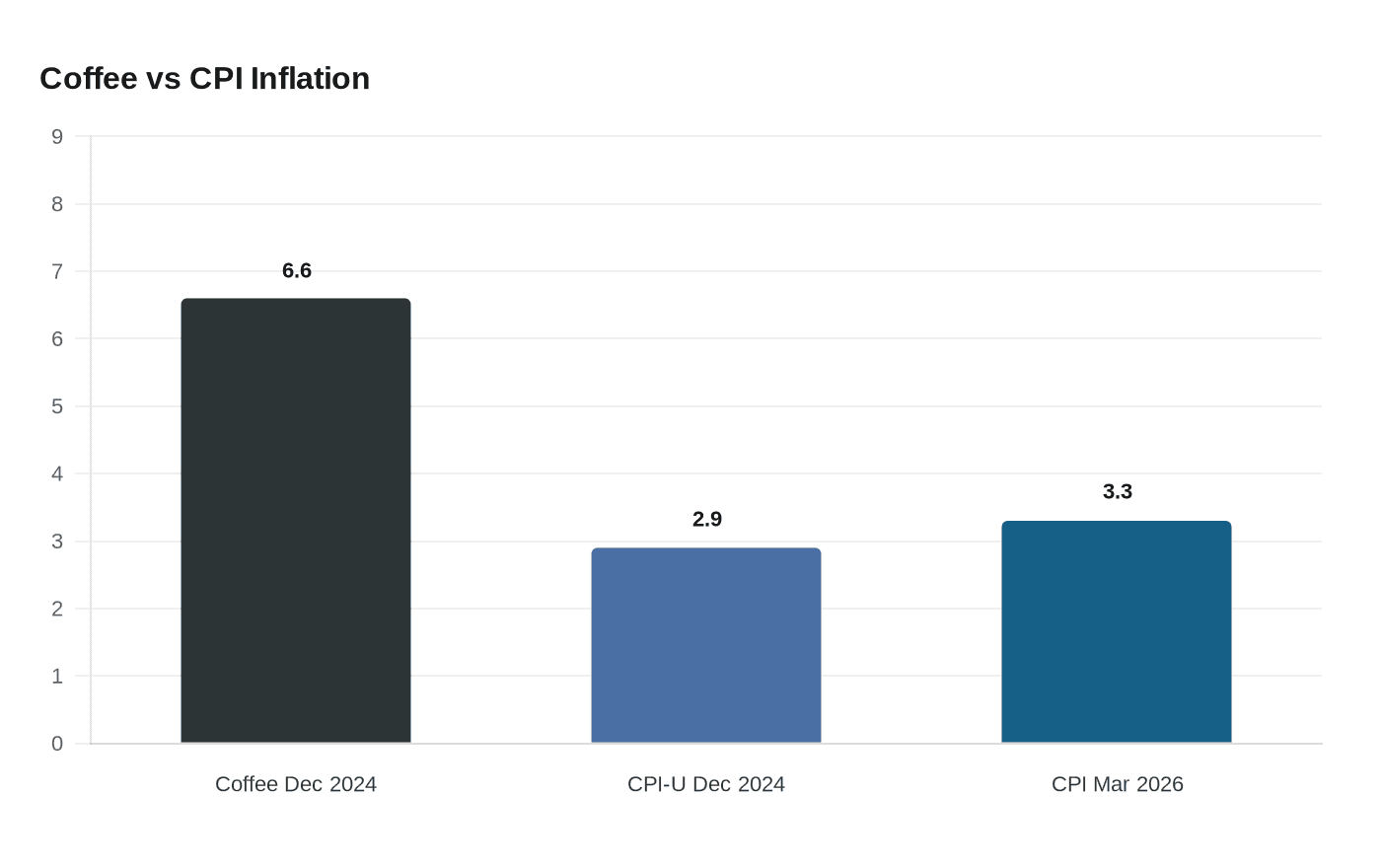
Coffee is becoming one of the clearest ways inflation reaches the kitchen table. In March 2026, the average U.S. coffee price hit $9.61 per pound, while the overall consumer price index rose 3.3% from a year earlier, keeping pressure on shoppers already facing higher costs in cafés, grocery aisles and subscription boxes.
The latest coffee market data show how fast the squeeze has built. The International Coffee Organization said its Composite Indicator Price averaged 299.61 U.S. cents per pound in December 2024, up from 270.72 cents in November. That jump came after a year in which adverse weather in major producing countries pushed global coffee prices to record highs, forcing roasters to stretch supplies and, in some cases, use cheaper beans in blends.
Those higher commodity costs were already landing on U.S. consumers. The Food and Agriculture Organization of the United Nations said early data showed Americans were paying 6.6% more for coffee in December 2024 than a year earlier. The Bureau of Labor Statistics said the overall CPI-U rose 2.9% year over year that same month, underscoring how coffee was rising faster than the broader basket of consumer goods.
Weather remained the central shock. Production problems in Brazil and Vietnam, two of the most important coffee origins, tightened supply and kept traders on edge. For drinkers, the result was not abstract: higher green coffee costs filtered into roasted beans, café pricing and retail packs on store shelves, turning a morning habit into a visible inflation signal.
Trade policy added another layer of uncertainty. Reporting in 2025 said tariff threats and Trump-era levies shook coffee markets, with exporters facing broad duties and U.S. importers warning of higher costs. That mattered because coffee is a heavily traded commodity, and any new friction in the supply chain can move prices quickly long before shoppers see the change at the register.
For policymakers, coffee now sits alongside fuel and housing as a reminder that inflation is not only a macroeconomic story. It is also the price of a bag of beans, the cost of a latte, and the monthly bill from a subscription service that is suddenly more expensive than it was a year ago.
This article was produced by Prism’s automated news system from verified source data, official records, and press releases, then run through automated quality and moderation checks before publishing. The system is built and supervised by the people who set the standards it runs under. Read our full AI policy.
Did this article answer your question?