Vietnam’s coffee boom faces forest loss and water strain
Vietnam’s cheap robusta engine is colliding with forest loss, sinking wells and stricter export rules, and the supply shock could hit everyday coffee fast.
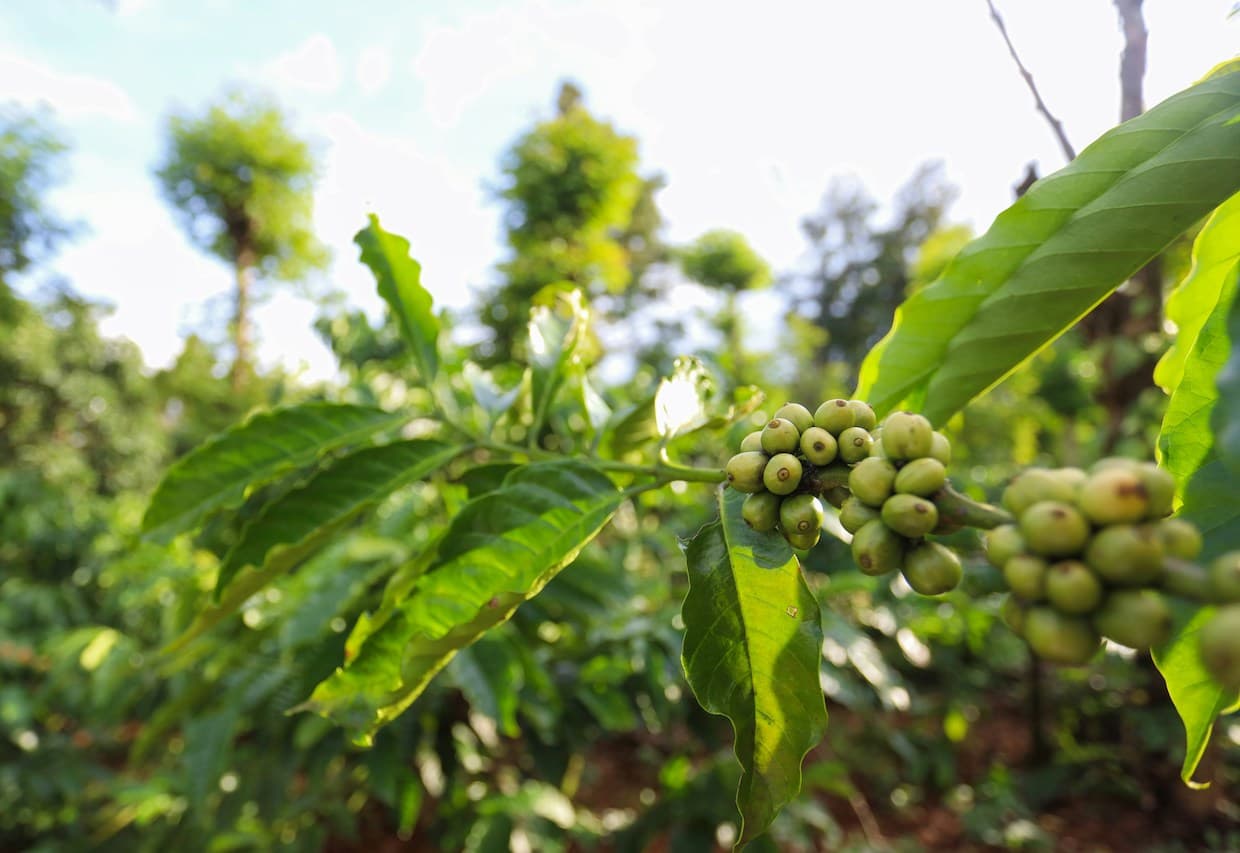
In some Vietnamese coffee districts, wells that once reached 10 to 15 meters now have to go down about 45 meters. Vietnam’s coffee boom built the modern cheap-coffee economy, but the same system is now running into hard limits. Coffee Watch identifies the country’s robusta engine as a stress point for the whole market: if the land and water behind it keep tightening, the price of espresso blends, cold brew and value coffee gets less predictable.
How Vietnam became the robusta power in your cup
Vietnam’s rise started after the Đi mi reforms in the late 1980s, when land rights were loosened and exports were pushed hard. That policy shift turned coffee into one of the country’s defining agricultural exports and made Vietnam the world’s second-largest green coffee producer after Brazil. The backbone of that growth is robusta, not arabica, and the crop is still overwhelmingly concentrated in the Central Highlands.
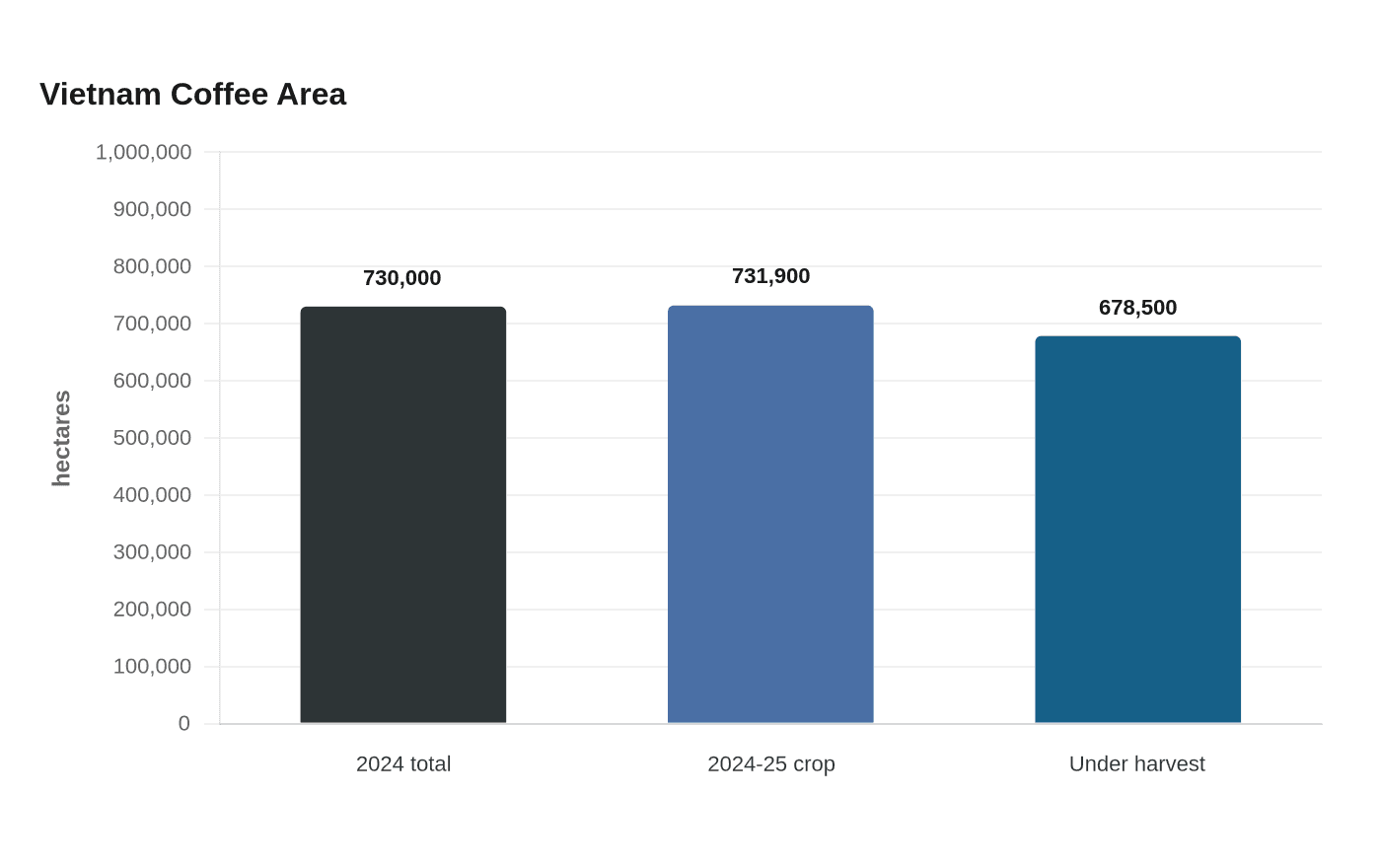
Vietnam’s total coffee area was about 730,000 hectares in 2024, and the 2024 to 2025 crop year covered 731,900 hectares, with 678,500 hectares under harvest. About 92 percent of the area is harvested, another sign that the planted footprint remains large and productive. About 95 percent of Vietnamese coffee grows in the Central Highlands, and about 90 percent of national output comes from there. This is a concentrated system built around robusta, which accounts for roughly 90 percent to 97 percent of production.
Vietnam’s coffee is a key input for the world’s affordable coffee supply, and robusta is the bean that props up a huge share of cold brew, espresso blends and lower-cost instant and brewed coffee. When the supply chain leans this hard on one country and one crop, any weakness in that system can ripple far beyond the farmgate.
The forest bill behind the boom
The expansion did not happen in an empty landscape. Coffee Watch found more than 207,428 hectares of tropical forest cleared between 1990 and 2024 in areas now used for coffee production. In the Central Highlands, undisturbed forest fell from about 2.49 million hectares in 1990 to 1.61 million hectares by 2024. An archived dataset summary tied to the report shows forest cover in the region dropped from more than 42 percent in 1990 to 19 percent by 2020.
Coffee Watch estimates coffee drove roughly one-third of the Central Highlands’ forest loss in a single generation, and the pace of clearing may be slowing only because the easiest forest to convert is already gone.
The pressure is especially visible in Dak Lak, Lam Dong, Gia Lai, Dak Nong and Kon Tum, the provinces that anchor the Central Highlands coffee belt around Buon Ma Thuot.
Water is turning into the next hard limit
Forest loss is only half the equation. Water is the other choke point, and it may be the more immediate one. Coffee Watch estimates that between 57 percent and 95 percent of irrigation water in the Central Highlands comes from groundwater.
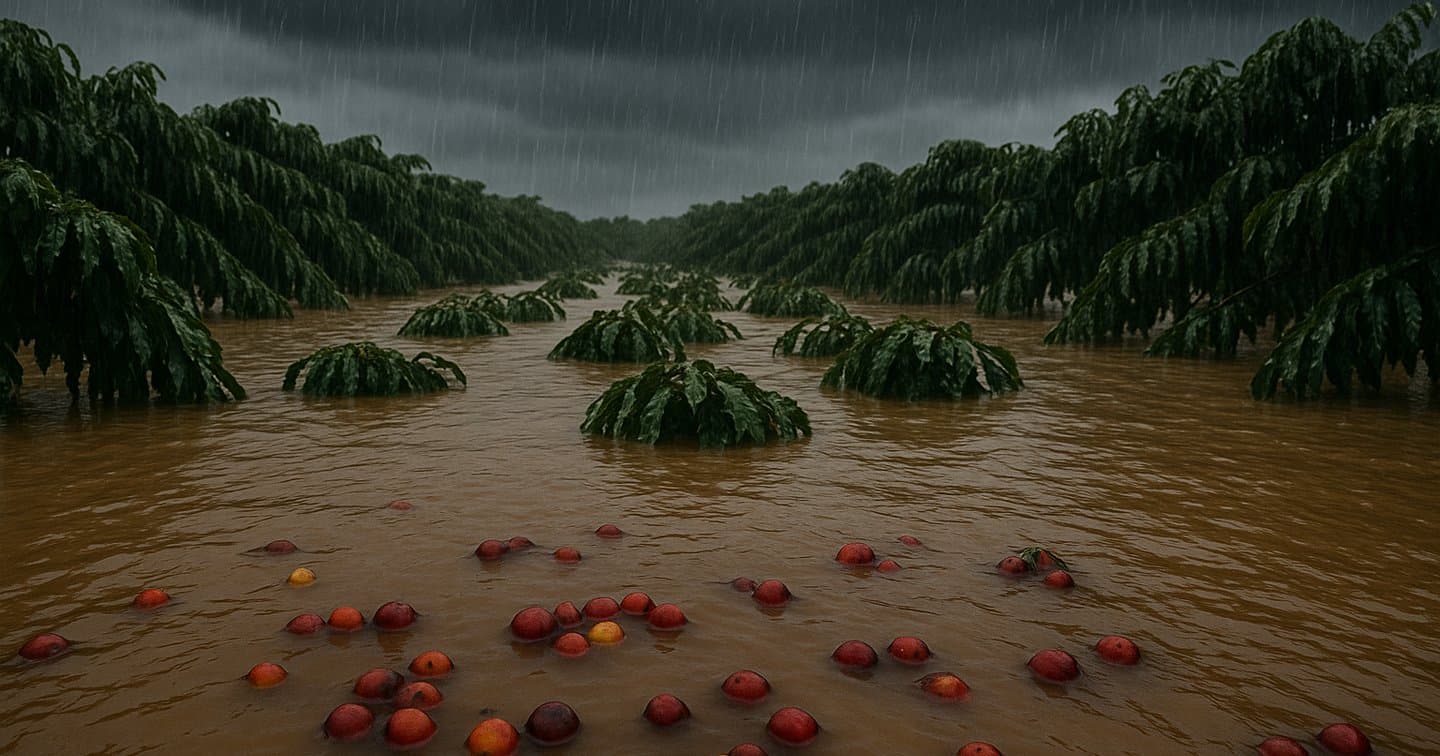
A 2024 USDA Foreign Agricultural Service report found groundwater levels are dropping in many Vietnamese coffee areas. A 2023 Frontiers study on climate-smart irrigation found Central Highlands coffee farmers rely on irrigation from heavily depleted aquifers. The International Water Management Institute has warned that groundwater development is pushing up against its limits and that better water-use efficiency is essential if the region wants to stay viable.
For a crop that has been scaled on high volume and relatively cheap production, that is the core problem. Robusta has looked affordable because the true cost was absorbed by land conversion, deepening wells and repeated chemical and water inputs.
The economics still look strong, which is why the strain matters
Vietnam’s coffee sector is not slowing because demand has disappeared. It just posted a record $8.4 billion in coffee exports in the 2024 to 2025 crop year, about 60 percent higher than the previous season. High global prices helped, and some farmers have been earning more from durian and holding back coffee stocks rather than selling immediately.
The country is trying to improve competitiveness through traceability systems, but prices have fallen from their 2024 to 2025 peaks and rising input costs are squeezing farmers’ incomes. In the Central Highlands, farmers are diversifying into higher-earning crops such as durian and passion fruit, which is a rational response when coffee no longer guarantees the best return on scarce water and land.
Coffee Watch’s Etelle Higonnet said, “Vietnam is the backbone of the world’s affordable coffee supply.”
Export rules are forcing the industry to change fast
Coffee is among the commodities covered by the European Union Deforestation Regulation, which requires products entering the EU to be deforestation-free and traceable to precise geolocations. That turns forest loss from a sustainability problem into a market-access problem.
Vietnam’s industry has already been discussing a transparent forest-and-coffee-area database as a practical way to meet those requirements in 2025.
This article was produced by Prism’s automated news system from verified source data, official records, and press releases, then run through automated quality and moderation checks before publishing. The system is built and supervised by the people who set the standards it runs under. Read our full AI policy.
Did this article answer your question?