Baby Dragon Amigurumi Pattern Uses Star to Shape Pose
A star-hugging baby dragon turns a simple amigurumi into a balanced display piece, with the pose doing the engineering work as much as the stitches.
A pose that gives the dragon its personality
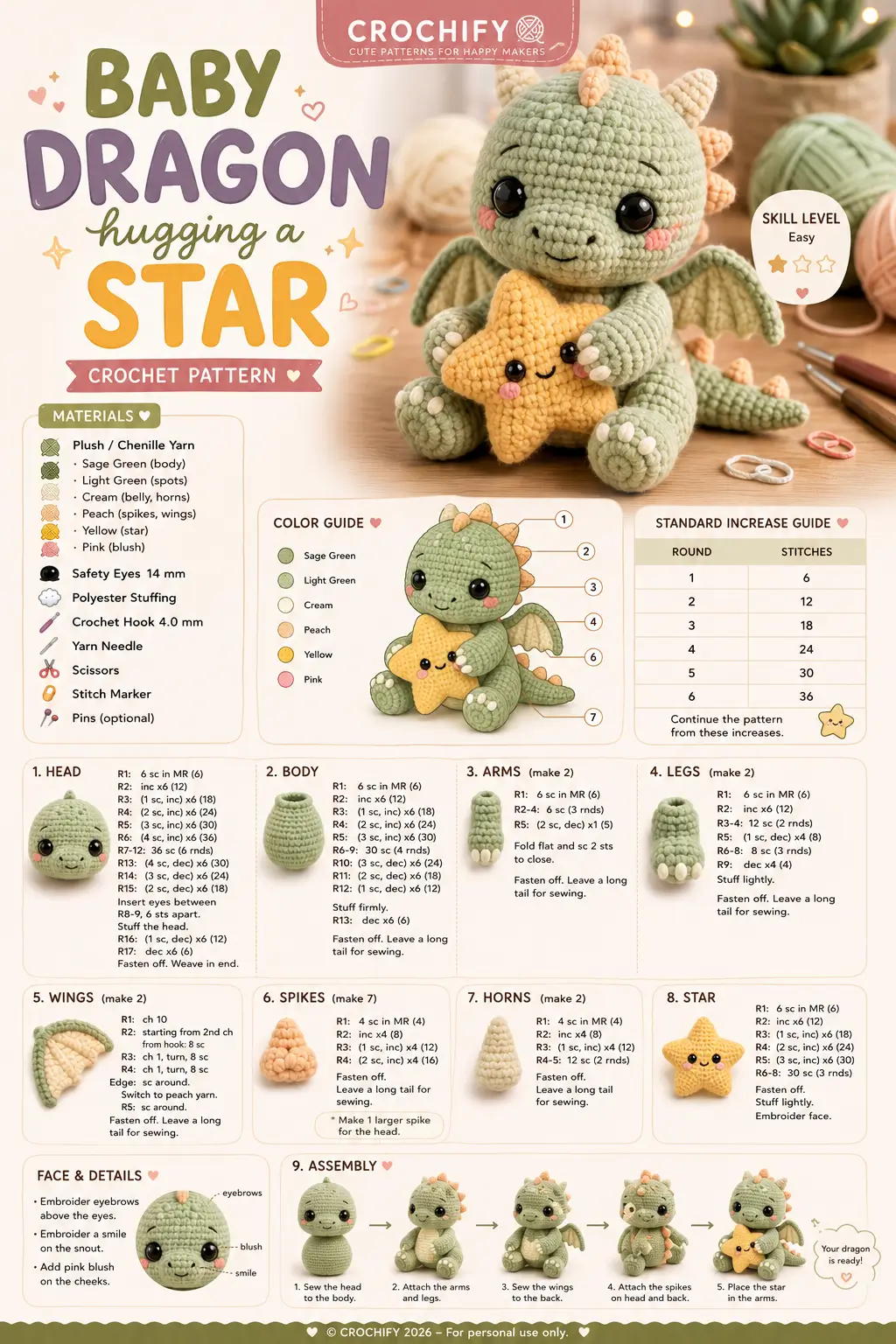
The first thing that sells this baby dragon is not the snout or the wings, it is the way it hugs the star. That single choice turns the pattern from a standard plush into a little character with a clear job: cradle the star without tipping forward. The result is a seated build, not a long flying one, and that shift is what gives the finished piece its charm and its shelf presence.
That pose also explains why the pattern feels more memorable than a plain fantasy toy. The dragon reads as gentle before it reads as sharp, with short arms, wide feet, and a chest-scaled star creating an immediate storybook silhouette. You are not just making a dragon; you are shaping a moment.
What the pattern asks you to make
Krochify positions the design as an easy to confident-beginner project, and the construction fits that promise. You work with plush yarn, a 4.0 mm hook, 14 mm safety eyes, and easy spiral shaping, then build a finished dragon that lands at about 19 to 20 cm tall. It is the kind of project that gives you a satisfying result in roughly 5 to 7 hours, which makes it especially appealing if you want a display plush without signing up for a weeks-long commitment.
The size matters here because it keeps the dragon substantial enough to show off the shaping, but small enough to stay approachable. At that scale, the 14 mm eyes have real presence, the star reads clearly from across a room, and the overall form stays compact enough for a desk, shelf, or market table. It sits in that sweet spot crocheters know well: detailed enough to feel special, quick enough to finish before momentum fades.
How the engineering works
The star is not just an accessory stitched on at the end. Because it sits in front of the body, the pattern has to solve a balance problem, which is why the dragon’s body is built as a seated shape with a 36-stitch middle, short arms, and wide feet. The tail helps counterbalance the front-heavy pose, while the wings need to sit high enough to read as wings instead of side fins.
That kind of sculptural thinking is the real hook. The flat-row wings with a darker border add definition without overwhelming the body, and the stuffed star is scaled to the chest so the dragon appears to be holding something believable rather than wrestling a prop. Add the gentle claws and the spiral shaping, and the whole piece starts to feel engineered rather than merely assembled.
The details that make the silhouette read instantly
The contrast is part of the appeal. Soft cheeks keep the dragon friendly, while sharper horns and spikes give it just enough fantasy edge to keep the design from drifting into pure nursery sweetness. That balance makes the plush feel playful from every angle, which is exactly what matters when a pattern is meant to live on a shelf instead of only in a toy bin.
For display, the pose does more work than embellishment ever could. A seated dragon hugging a star tells the viewer what they are looking at in one glance, which is why the pattern would make a strong craft-market sample. The silhouette is memorable, the scale is manageable, and the object interaction gives it a finished-story feeling that a floating dragon rarely achieves.
Where this pattern fits in crochet culture
Amigurumi, the term for small stuffed figures made by knitting or crocheting, has long been a gateway format because it combines familiar stitches with clear shaping and an obviously cute payoff. Interweave notes that amigurumi has become popular worldwide, and Japanese knitting and crochet books have earned a devoted following for their precision and variety. This baby dragon sits comfortably inside that tradition, using classic construction techniques to create a character with a strong visual identity.
The broader appeal is easy to understand when you remember how many people already live in yarn craft culture. The Craft Yarn Council says more than 50 million people know how to knit, crochet, and craft with yarn, which helps explain why compact, finishable projects remain so attractive. It also notes that U.S. crochet patterns commonly use standardized abbreviations and chart symbols, a structure that makes a pattern like this feel readable and familiar even when the final object looks inventive.
Why dragon patterns keep showing up
Dragon crochet is a lively niche because it can go in so many directions without losing the core fantasy appeal. Recent roundups have highlighted everything from baby dragons and Toothless-inspired designs to dragon-scale hats, wing scarves, pocket-sized minis, cozy baby gifts, and elegant Eastern-style serpents. That range shows how adaptable the motif is, whether you want something wearable, collectible, or nursery-friendly.
This baby dragon earns its place in that field by leaning into character instead of spectacle. The star gives it a prop, the seated body gives it structure, and the balance work gives it a reason to exist beyond being cute. In a crowded category, that combination of engineering and personality is what makes people stop scrolling and imagine the finished piece on their own shelf.
This article was produced by Prism’s automated news system from verified source data, official records, and press releases, then run through automated quality and moderation checks before publishing. The system is built and supervised by the people who set the standards it runs under. Read our full AI policy.
Did this article answer your question?