Free Crochet Hook Case Pattern Features Fabric Lining, No Sewing Required
Skip the sewing machine entirely: this free lined hook case uses just 187 yards and fabric glue to deliver a polished, gift-worthy organizer any half double crocheter can finish in an evening.
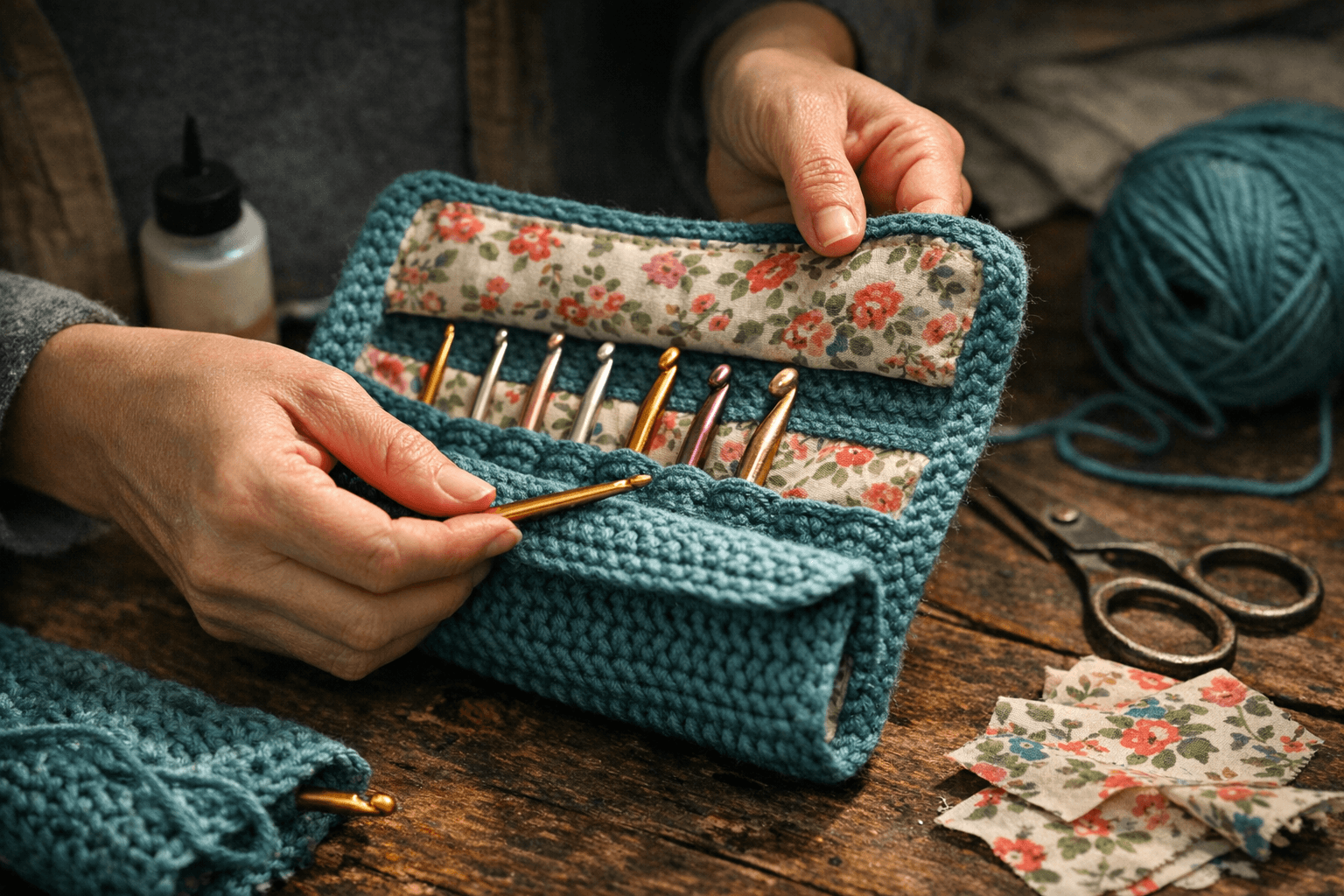
A lined crochet hook case sounds like a project that demands both a crochet hook and a sewing machine. Just B Crafty's free pattern proves you need neither a machine nor advanced skills. Published in late March 2026, the pattern delivers a fully finished, fabric-lined hook pouch using nothing more than half double crochet stitches and a bottle of fabric glue. That combination, beginner-accessible construction paired with a detail that most makers assume requires sewing, is exactly what makes this one worth adding to your queue.
What You're Actually Making
This is a flat-worked hook case with a crocheted exterior and a cotton fabric interior lining. The body is constructed in simple rows, and the finished result is a structured pouch that protects your hooks, keeps the inside looking clean, and holds up to the daily dig-around-in-your-bag test. Functionality was the central design priority: the case needs to actually work as storage, not just look good in a photo. The fabric lining solves the problem that plagues purely crocheted interiors; hooks don't snag on a smooth cotton surface the way they can on open crochet stitches, and the whole thing feels more intentional and finished.
Materials and Yarn Requirements
The materials list stays lean. You need approximately 187 yards of worsted weight yarn, which puts this squarely in one-skein territory and makes it an ideal stash-busting project. Worsted weight acrylic or cotton both work well; the designer used Loops and Threads Soft Classic in Pink, but any smooth worsted weight will behave the same way. Beyond yarn, you need a scrap of cotton fabric for the lining and fabric glue. That's the whole non-crochet supply list. No zipper foot, no bobbin thread, no ironing interfacing.
The one-skein requirement isn't just convenient, it's strategically useful if you plan to make multiples. At under 200 yards per case, a single standard skein leaves enough yarn to begin a second colorway, and the low per-unit cost makes this a realistic option for craft market sellers who want a product that looks expensive but isn't.
Construction: How It Comes Together
The barrier to entry here is genuinely low. If you can work a half double crochet, you can complete this pattern. The case body is worked flat in rows, so there's no working in the round, no complex shaping, and no stitch pattern you need to memorize. Row by row construction also makes this an easy project to put down and pick back up without losing your place.
Once the crocheted body is complete, the lining process is straightforward:
1. Cut your cotton fabric to the interior dimensions of the case.
2. Apply fabric glue along the edges of the fabric panel.
3. Press the lining into place against the interior of the crocheted body and allow it to cure.
No basting stitches, no pinning, no hemming required. The fabric glue method keeps the lining flat and secure, and the result looks like a piece that took significantly more effort than it actually did.
The Pattern's FAQ and Troubleshooting Sections
One of the underrated elements of this pattern is that it doesn't just give you the stitches and send you off. The post includes FAQ and troubleshooting sections specifically aimed at makers who are new to combining fabric and crochet. That mixed-media hesitancy is real: plenty of crocheters are comfortable with yarn but uncertain about cutting fabric, applying glue, or worrying whether the lining will stay put. Having those questions answered within the pattern itself removes a meaningful amount of friction for anyone who has never worked with fabric glue before. It's the kind of support that turns a pattern someone bookmarks into a pattern someone actually makes.
Gifting and Craft Market Potential
A hook case is one of those gifts that lands well with anyone who crochets, knits, or uses art markers. Pair the finished case with a set of hooks and a skein of yarn, and you have a gift basket that costs relatively little but reads as extremely thoughtful. The pattern even notes that a handmade hook organizer is something "people genuinely would use every single day," which is a higher bar than most handmade gifts clear.
For craft market sellers, the economics work in your favor:
- Single-skein yarn cost keeps per-unit materials low
- The no-sew construction means faster production with no machine setup time
- Multiple colorways are easy to run simultaneously using the same basic fabric glue method
- The finished piece has a high-perceived-value look that justifies a solid price point at market
The design also slots neatly into workshop kits. A bundle of yarn, a fabric scrap, and a printed copy of the pattern makes a self-contained project kit that workshop organizers or yarn shops can assemble without sourcing complicated materials.
Why the Fabric Lining Is the Real Story
What separates this pattern from the dozens of other free hook case patterns available is the interior. A crocheted case is functional. A crocheted case with a printed cotton lining is a finished object. That distinction matters both for personal satisfaction and for the visual reality of selling at a booth or posting a reel. The contrast between a crocheted exterior (texture, color, handmade character) and a clean printed cotton interior creates a compelling before-and-after story that reads well in short-form video. The "reveal" moment of opening the case to show the fabric lining is the kind of natural hook that drives views on social platforms without needing a script.
The no-sew method is what makes that visual payoff accessible. Fabric-lined crochet projects have historically required at least basic sewing knowledge, which cut out a large portion of the crochet community. Fabric glue removes that barrier entirely, and the pattern is built around making that clear from the start. If you own a crochet hook and can find fabric glue at a craft store, you can make a lined hook case. That's the actual news here.
This article was produced by Prism’s automated news system from verified source data, official records, and press releases, then run through automated quality and moderation checks before publishing. The system is built and supervised by the people who set the standards it runs under. Read our full AI policy.
Did this article answer your question?