Bay of Pigs museum reopens in Miami, marking 65 years since invasion
Manuel Portuondo helped reopen a larger Bay of Pigs museum in Little Havana, as only about 200 Brigade 2506 veterans are left to tell the story.
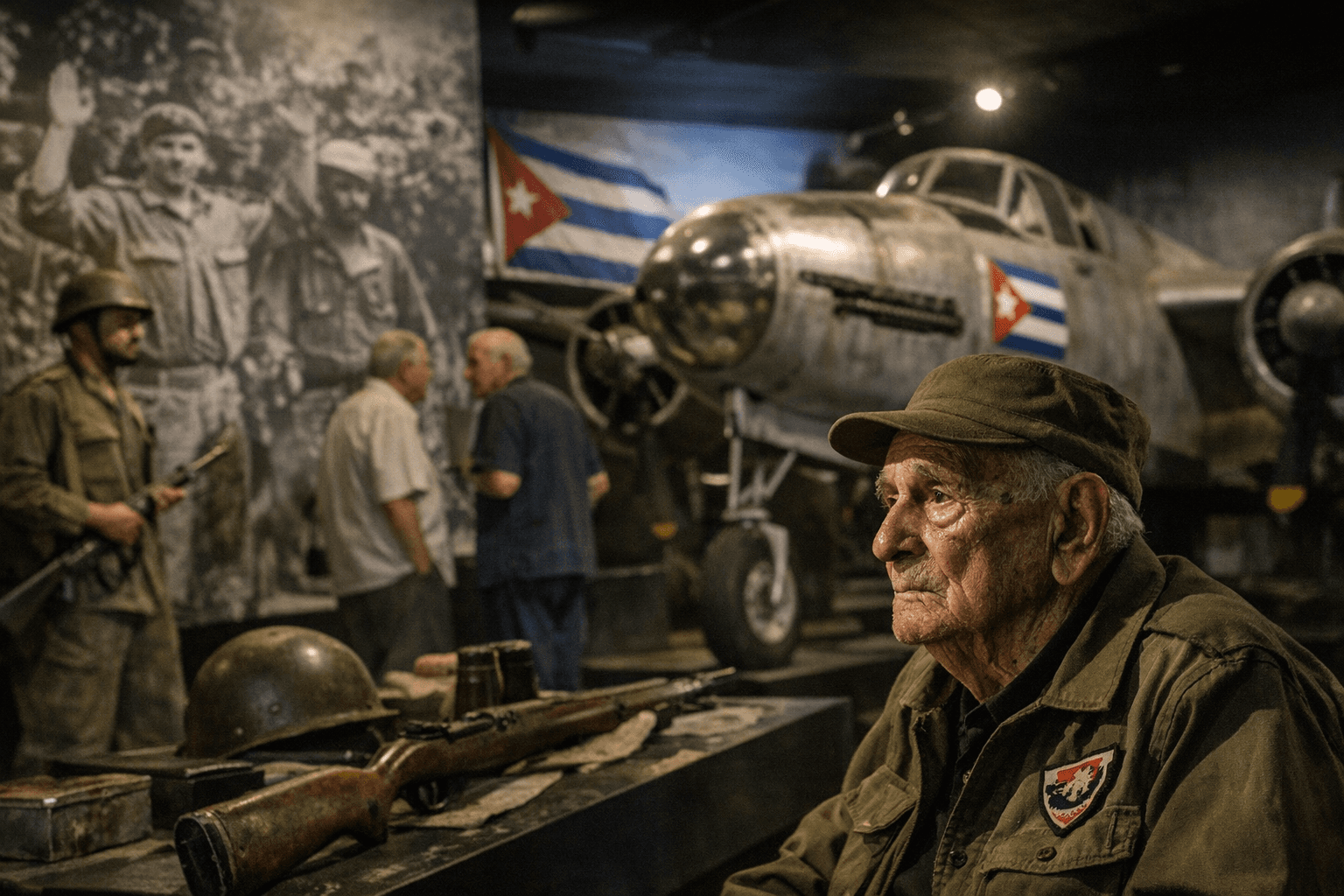
Manuel Portuondo was still a teenager when his family fled Cuba for Miami in 1960, and that exile memory stood at the center of the Bay of Pigs Brigade 2506 Museum and Library as it reopened in Little Havana. For Portuondo and the aging veterans who filled the room, the new space was not just a commemoration of the failed invasion 65 years ago. It was a bid to make sure younger Cuban Americans inherit the story while the men who lived it are still here to tell it.
The reopening came as South Florida marked the anniversary of the April 17, 1961 invasion, when about 1,500 Cuban exiles, backed by the CIA, landed in an attempt to overthrow Fidel Castro. More than 100 were killed or drowned, around 1,200 were captured, and many spent roughly 20 months in prison before being released. Today, only about 200 veterans remain, many of them in their 80s, which gives the museum’s expansion the urgency of a last chance to preserve testimony, not just display artifacts.
The new Bay of Pigs Brigade 2506 Museum and Library is a two-story, 11,000-square-foot facility built with support from Miami-Dade County, the State of Florida, and private donors. The museum says it operates as a nonprofit with backing from the Miami-Dade County Department of Cultural Affairs, the county mayor and board of county commissioners, the state arts division, and the National Endowment for the Arts. During construction, the organization operated from 1338 SW 8 St. in Miami, while the original museum had opened in 1988 in an old home in Little Havana.
Brigade 2506 leaders have framed the space as a teaching tool as much as a memorial. The museum offers school visits and Zoom calls for students, part of an effort to shape how younger generations understand exile, anti-Castro politics, and the long shadow of Cuba’s communist government on Miami and the wider region. Francisco J. Hernandez has pointed out the names of fellow brigade members he knew personally who died in 1961, a reminder that the invasion still lives in family memory, not just in archives.
That is why the reopening carried more than ceremonial weight. For veteran families split by the revolution and the Cold War that followed, the museum has become a place to keep a political history visible in the city where it still matters most. In Miami, the Bay of Pigs is not frozen in the past. It remains part of the argument over Cuba’s future.
This article was produced by Prism’s automated news system from verified source data, official records, and press releases, then run through automated quality and moderation checks before publishing. The system is built and supervised by the people who set the standards it runs under. Read our full AI policy.
Did this article answer your question?