China and Cuba deepen agriculture ties as rice aid arrives in Havana
A 15,000-ton rice shipment reached Havana as Beijing and Havana held agriculture talks, raising questions about whether aid will ease shortages beyond one delivery.
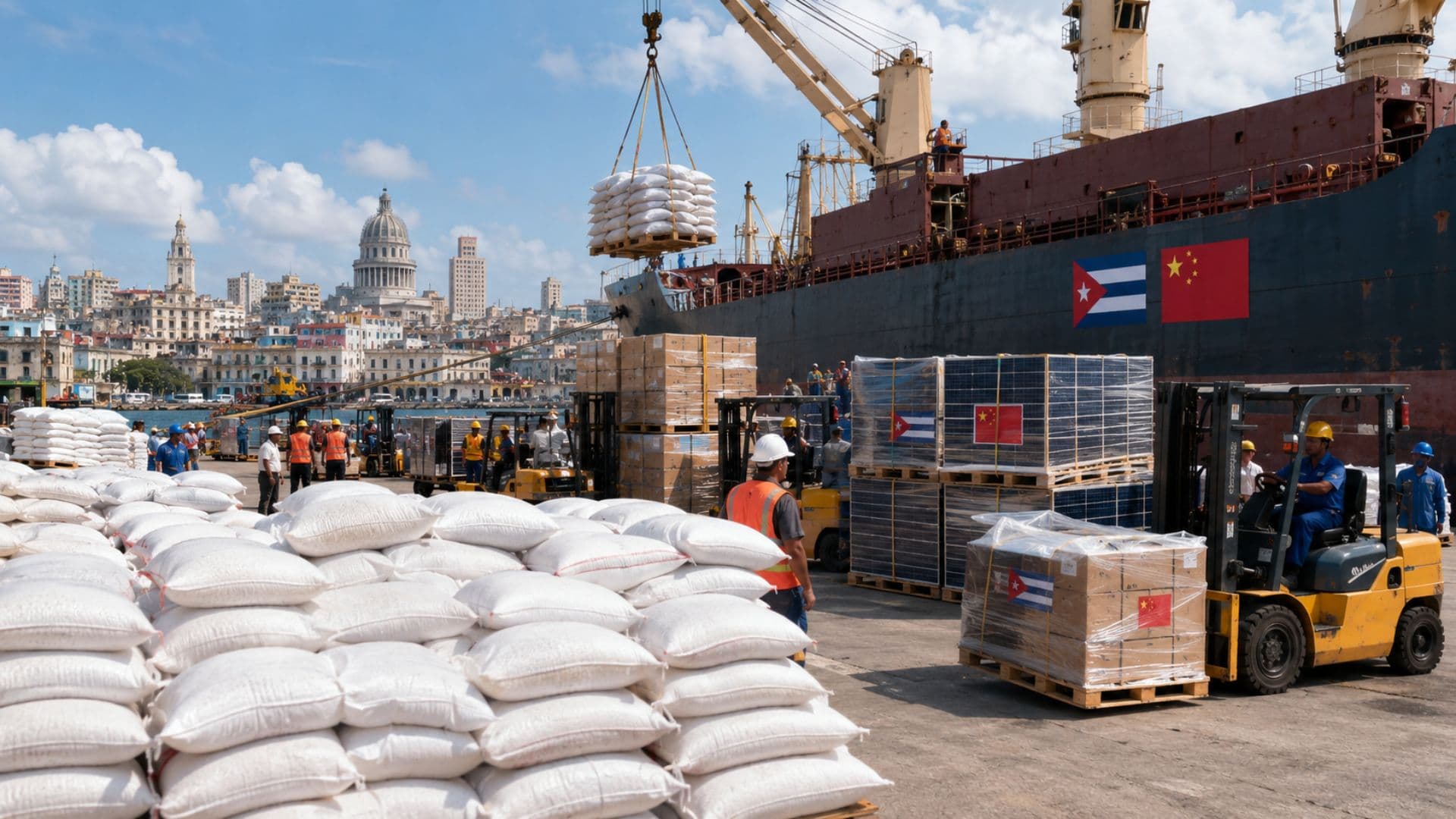
China’s latest rice shipment landed in Havana just as Beijing and Havana were widening their agriculture talks, giving Cuba something immediate to put in the market while the island’s food and health systems remain under strain. The first 15,000 tons arrived at the Port of Havana on Saturday, May 24, as part of a 60,000-ton Chinese donation that Cuban officials said would reach consumers across the provinces, along with hospitals and schools.
Five days later in Beijing, Chinese Vice-Minister of Agriculture and Rural Affairs Zhang Zhili met Cuban Deputy Agriculture Minister Telce Gonzalez to review ongoing projects and look for new areas of cooperation. Cuban officials said agriculture remains a priority in the bilateral relationship, and the timing of the meeting made the message plain: China is not only sending emergency food, but also signaling that it wants a deeper role in Cuba’s farms and supply chain.
That matters because the pressure on Havana is no longer abstract. On May 23, the U.S. State Department announced sanctions on 11 Cuban regime elites and three government organizations under Executive Order 14404, signed by Donald Trump on May 1. At the same time, United Nations officials said on May 15 that hospitals across Cuba were suspending surgeries, struggling to keep lifesaving equipment running, and facing severe medicine shortages as blackouts and fuel shortages pushed the health system deeper into crisis.

The Chinese response has been presented in practical terms. Cuban state media said the rice donation was the first batch of an emergency aid package, and Chinese ambassador Hua Xin described it as China’s largest food aid to Cuba in recent years. Cuban officials said the shipment will help a population of about 9.6 million people, a figure that shows why even one cargo can ripple far beyond Havana’s port.
The longer-term question is whether this turns into more than relief. China’s Ministry of Agriculture said in 2024 that the two countries signed an agricultural cooperation memorandum in 2007 and set up the China-Cuba Joint Committee on Agricultural Cooperation. Chinese agricultural institutions have also pointed to possible work in tropical crops such as cassava, sugarcane, bananas, coffee and cocoa. If those talks move from paper to field, they could matter as much as the rice itself, because Cuba’s real shortage is not just food in the port, but food on shelves, inputs on farms, and stability in the market.
This article was produced by Prism’s automated news system from verified source data, official records, and press releases, then run through automated quality and moderation checks before publishing. The system is built and supervised by the people who set the standards it runs under. Read our full AI policy.
Know something we missed? Have a correction or additional information?
Submit a Tip