China’s solar push eases Cuba’s energy crisis, deepens ties
China’s solar buildout is already trimming some daytime outages in Cuba, but without storage it cannot yet save households after dark.
Havana’s new solar bet
The first thing Cuba’s solar push can do is make the lights stay on long enough for a neighborhood to breathe. In Havana, where the first of the country’s 92 planned photovoltaic parks was inaugurated, the promise is not abstract climate policy but a more basic relief: fewer daytime blackouts, at least when the sun is high and the grid is under its usual strain.
That matters in a country where electricity failures have been part of daily life, not a rare inconvenience. The most punishing reminder came in October 2024, when the national system collapsed after the Antonio Guiteras plant failed and the island endured a nationwide blackout from October 18 to 22. In that kind of environment, even a modest amount of new solar generation is politically meaningful because it can interrupt the cycle of repeated outages, rolling cuts, and improvisation.
How big the buildout is meant to be
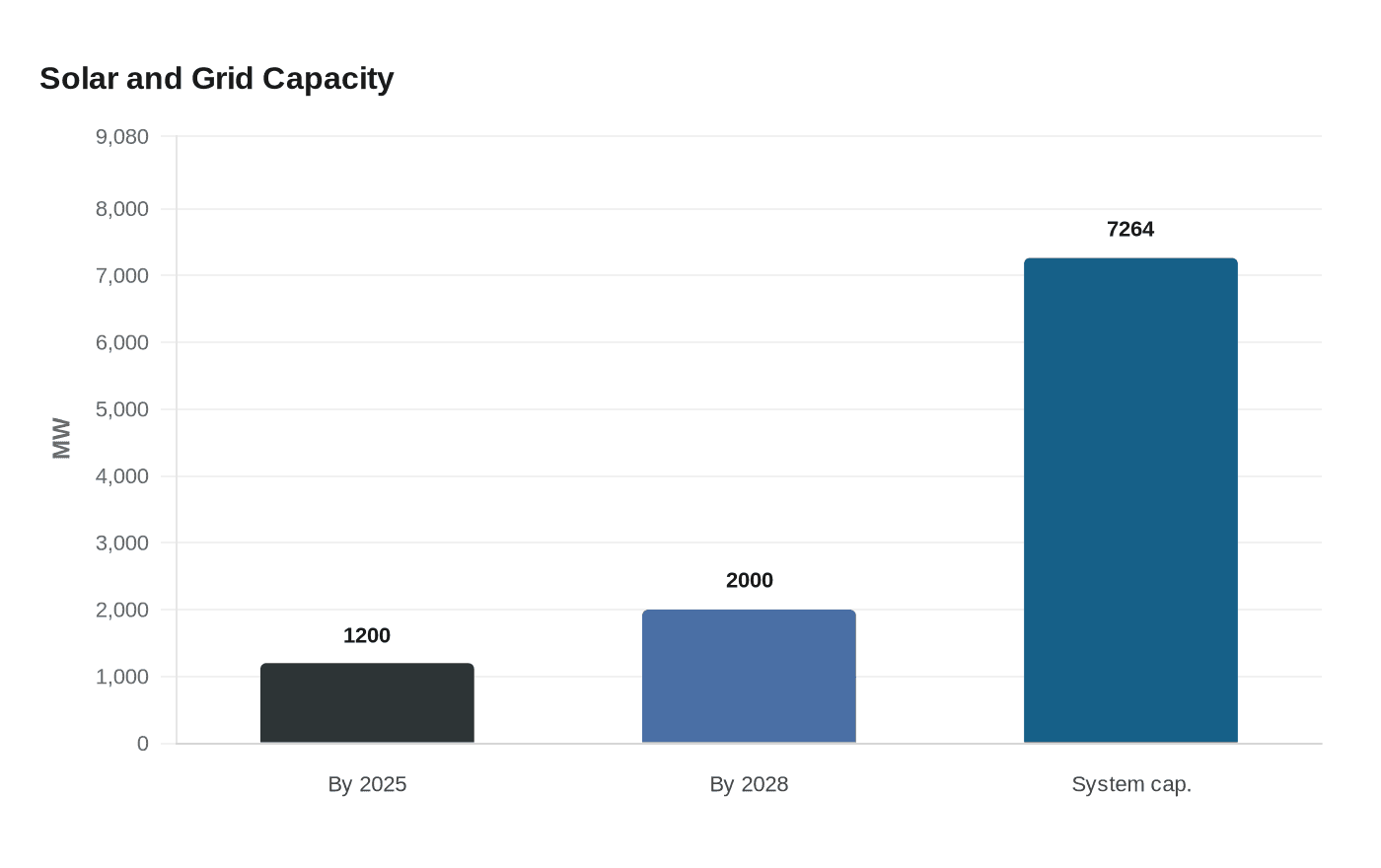
Cuba’s energy ministry laid out an unusually specific plan in March 2024: 92 photovoltaic parks by 2028, with a combined target of 2,000 megawatts. The same plan called for 55 solar parks to be operating by 2025, reaching about 1,200 megawatts by the end of that year. Official Cuban reporting said earthworks were already underway while equipment was still being assembled or awaited, which gives the rollout its shape: the country is building in parallel, not waiting for one project to finish before the next begins.
The first park was inaugurated in Havana by Miguel Díaz-Canel in February 2025, and later coverage said Cuba had connected dozens of parks to the grid by early 2026. That pace suggests the program is moving from announcement to infrastructure, even if the grid still has a long way to go before it becomes stable. Cuba’s power system capacity has been described at about 7,264 megawatts, so a 2,000-megawatt solar target would be significant, but still only part of a much larger and more fragile system.
Why the daytime promise matters to ordinary Cubans
The clearest gain from these parks is daytime relief. Cuban officials have said the solar sites are designed to reduce or even eliminate blackouts during daylight hours, when solar output is strongest and households, schools, clinics, and workplaces need power to keep basic routines moving. That is the practical test Cubans are watching: not whether the island has a future-energy story, but whether a fan stays on, a refrigerator holds cold, or a clinic can operate without constant interruption.
The limits are just as important. Without large-scale storage, solar power cannot solve nighttime shortages, and that means the technology can ease pressure without ending the crisis. This is why the rollout feels both hopeful and incomplete at the same time. It can soften the worst daytime disruptions, but after sunset the old vulnerabilities remain, especially when thermal generation is unreliable and fuel is scarce.
China’s role, and why it is more than a supplier relationship
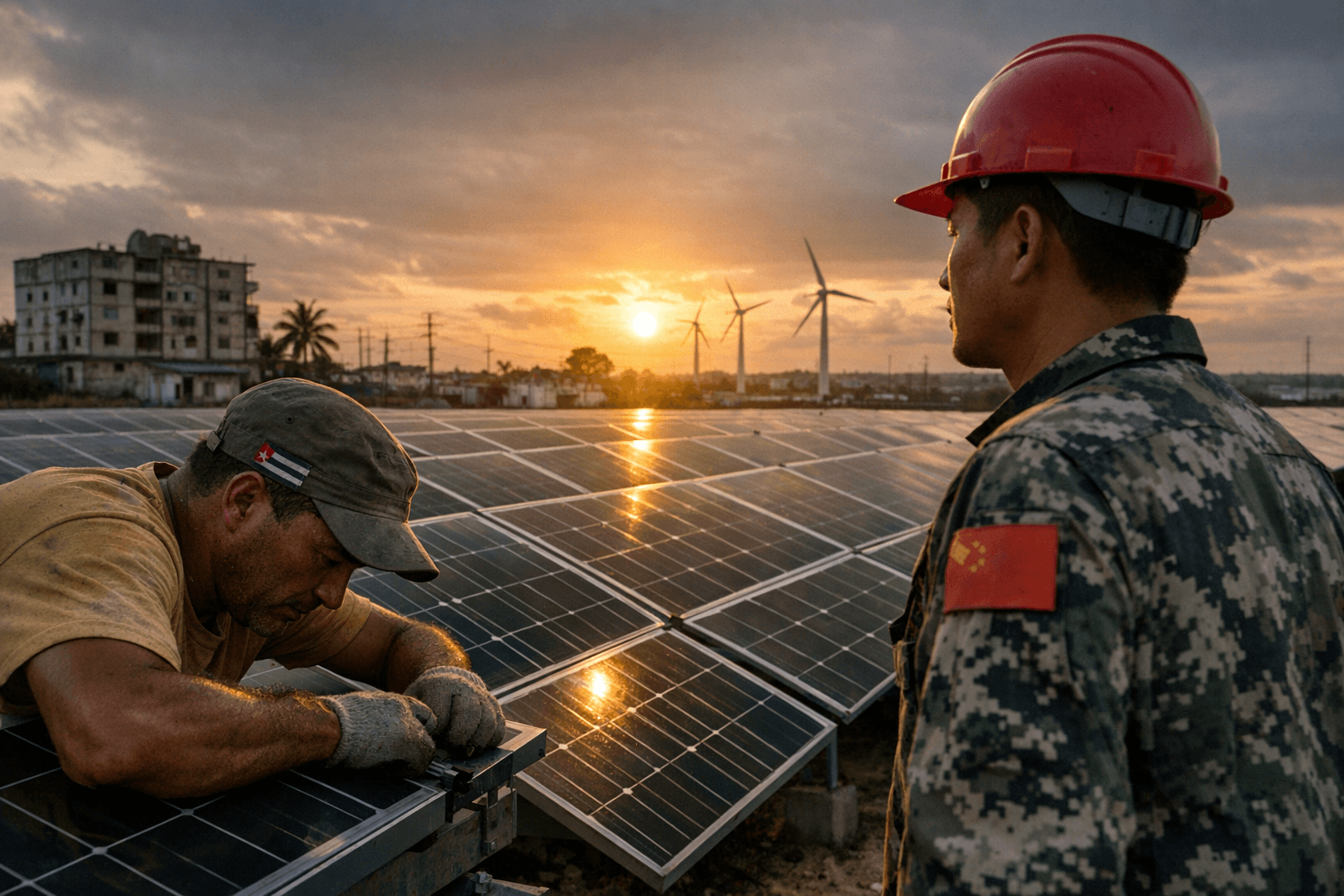
China is not just sending panels. It is stepping into Cuba’s energy emergency as a major partner in a wider transition, supplying equipment for seven solar parks and supporting the broader buildout. Chinese and Cuban coverage have framed the relationship as one of practical help and grid strengthening, and Chinese state-linked reporting has portrayed Beijing as a reliable ally in the island’s effort to stabilize power.
That language carries weight in Havana. China Daily quoted Cuban scholar Ruvislei González Sáez describing China as a “comrade and brother,” a phrase that captures how the partnership is being sold: not as charity, but as solidarity between countries trying to solve a hard problem. The deeper point is that Cuba’s energy recovery now depends on outside supply chains, financing, and industrial capacity as much as it depends on local repairs. The solar parks are therefore both infrastructure and diplomacy.
The political meaning of a solar park in a blackout country
The urgency of this project makes sense only against the backdrop of Cuba’s recent outages. In 2024, blackouts affected nearly half the country in February, protests followed in March, a third of the island experienced outages in early October, and then the nationwide failure in late October laid bare how vulnerable the grid had become. When electricity is that unstable, even a new solar park becomes a symbol of state competence, foreign partnership, and the hope of a more predictable day.
That is also why the government has treated renewable energy as part of a broader effort to reduce dependence on imported fossil fuels and on unreliable thermal generation. Solar is not being presented as a luxury or a green add-on. It is being cast as crisis management, a way to keep the system from slipping further into breakdown while Cuba searches for a longer-term fix.
What the rollout can realistically change
The most useful way to read the China-Cuba solar story is to separate what it can do now from what it cannot yet do. It can ease pressure during the day, reduce some of the strain on hospitals, schools, and neighborhoods, and give people a little more confidence that the system will not fail every afternoon. It can also help Cuba slow its fuel dependence, which matters in a country where every imported barrel and every thermal plant failure can trigger wider disruption.
It cannot, by itself, make the electricity crisis disappear. The lack of storage, the age and weakness of the grid, and the recurring fragility of the National Electric System mean that blackouts remain a real part of life. Even so, the fact that Cuba has moved from a broad promise to dozens of connected parks in barely a year shows why this partnership has become so significant. The solar panels are not a full solution, but they are the first visible sign that the country is trying to build its way out of an emergency rather than just endure it.
This article was produced by Prism’s automated news system from verified source data, official records, and press releases, then run through automated quality and moderation checks before publishing. The system is built and supervised by the people who set the standards it runs under. Read our full AI policy.
Did this article answer your question?