Cuba launches food security art contests for children, artists and photographers
Cuba is asking children to draw “a colorful plate for each stage of life” as many families still struggle to secure basic meals.
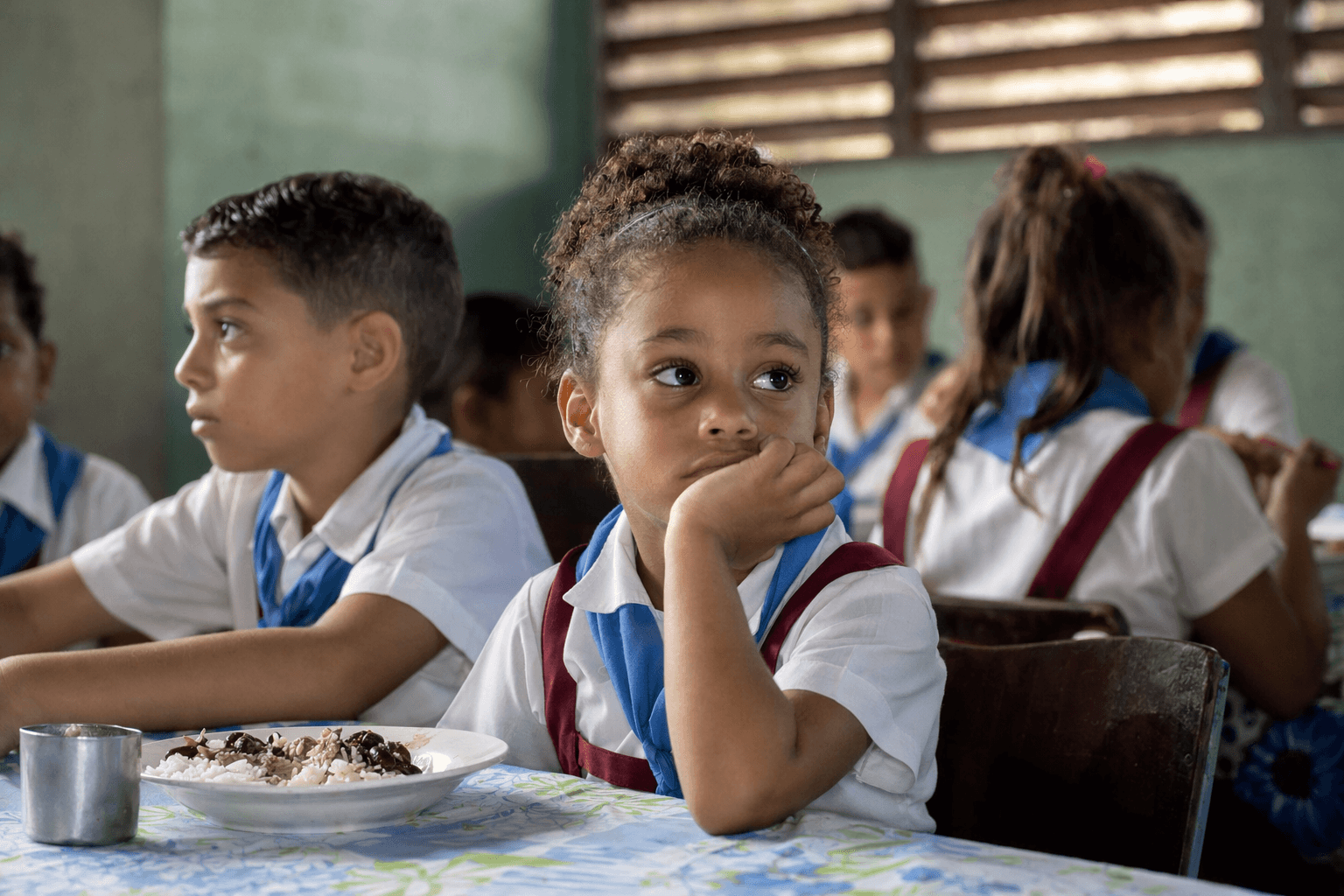
Cuba is asking children to draw, paint and sculpt around food security at a moment when many households still struggle to put together a basic meal. The new contest invites Cubans ages 5 to 18 to submit visual works in Havana by July, with the theme tied to a colorful plate for every stage of life.
The initiative is being folded into a broader World Food Programme effort on the island, and it arrives with a familiar tension that many parents, teachers and children know well: official language about nutrition landing in homes where food is scarce, ration baskets are smaller than expected, and daily meals are often improvised. The campaign’s wording, "Nutrición en todo momento, para toda la vida", sounds like classroom guidance. In the current Cuban reality, it also reads like a reminder of what is missing.
WFP Cuba says it has run children’s and adult art competitions since 1998 to promote healthy eating and raise awareness of its work. The 2024 relaunch expanded the children’s contest to ages 5 to 18 and added digital art, while the adult competition, Arte para la conciencia, focused on sculpture, painting and printmaking. A photography category, Miradas que alimentan, or looks that feed, was also included.
The contests land against a severe food and energy crisis. WFP says Cuba’s economy contracted 1.1% in 2024, after a prolonged downturn marked by inflation, fuel shortages and limited access to foreign currency. It says the monthly government food basket is imported almost entirely and has faced shortages and distribution delays, a reality that keeps the official message about nutrition far from the dinner table in many homes.
WFP’s country strategy says Cuba still faces major food security and nutrition challenges despite the constitutional right to food adopted in 2019. The agency points to dependence on imports, limited access to diverse, safe foods, the double burden of malnutrition and the lack of a strong food-security monitoring system. It also links the crisis to climate shocks and extreme weather.
Outside assessments underline the scale of the problem. The U.S. Department of Agriculture’s Economic Research Service estimated that 1.4 million Cubans, or 12.8% of the population, failed to meet the 2,100-calorie daily threshold in 2023. In a more severe scenario, it estimated 4.2 million people, or 37.8% of the population, could be food insecure.
The arts push also comes as international aid has grown. Canada announced $5.5 million in additional assistance on April 17 and said part of it would go to the World Food Programme. On February 25, it accelerated an $8 million payment for a WFP-UNICEF food security and nutrition program. Two days later, UN Resident Coordinator Francisco Pichón warned that food security was deteriorating and that fuel shortages were disrupting healthcare, water services and food distribution. WFP says it supported 1.3 million people in 2024 and provided food to more than 460,000 people in disaster response, a sign of how deeply the hunger problem now runs.
This article was produced by Prism’s automated news system from verified source data, official records, and press releases, then run through automated quality and moderation checks before publishing. The system is built and supervised by the people who set the standards it runs under. Read our full AI policy.
Did this article answer your question?