Cuba moves tourism fair online as travel slump deepens
Cuba is putting FITCuba online because the old tourism playbook is cracking. The fair will now have to market a country where hotel beds are empty and flights keep disappearing.
Cuba’s biggest tourism showcase is moving behind a screen at the same moment the industry it is meant to promote is shrinking. FITCuba 2026 will run from May 7 to 9 in a hybrid format, with May 7 and 8 devoted to business sessions on a specialized virtual platform and May 9 reserved for an in-person public day at Josone Park in Varadero.
The setup is unusually stripped down for a fair built to sell sun, beaches, and full hotels. Digital stands, presentation rooms, continuous programming, real-time chats with exhibitors, and business meetings will replace much of the usual on-site bustle. The platform is set to stay open for two months after the fair, giving Cuba a much longer sales window than a normal trade show. Officials are also using the event to push food, mixology, music, tobacco, nature tourism, aviation, and health travel, with meetings planned with Meliá, Iberostar, and Gaviota, alongside Palmares, Ecotur, and Campismo Popular.
One of the clearest signals of how much the market has changed is that, for the first time, the Cuban private sector will get its own virtual booth. That opening may be small, but it carries weight in a tourism system that has become more dependent on improvisation, public relations, and digital outreach as the physical product contracts.
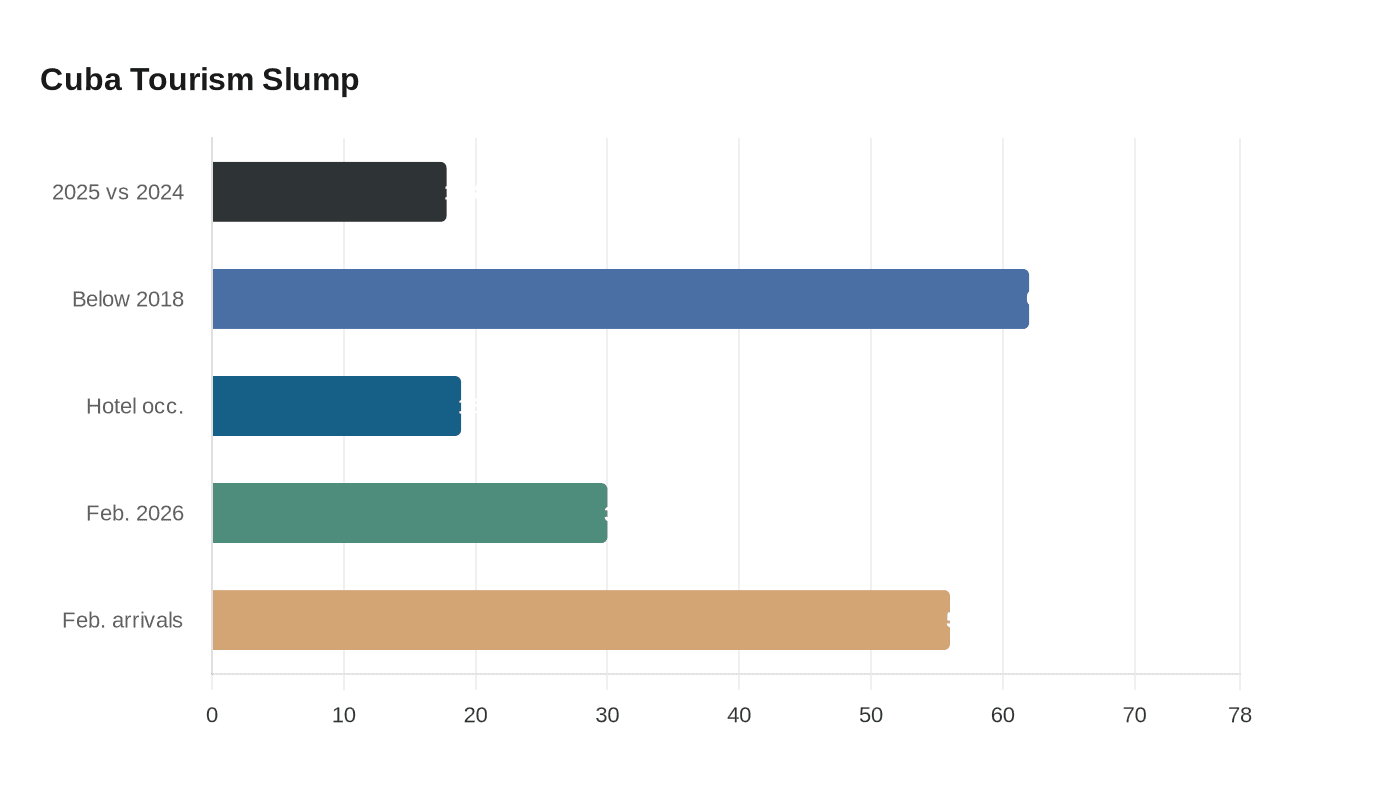
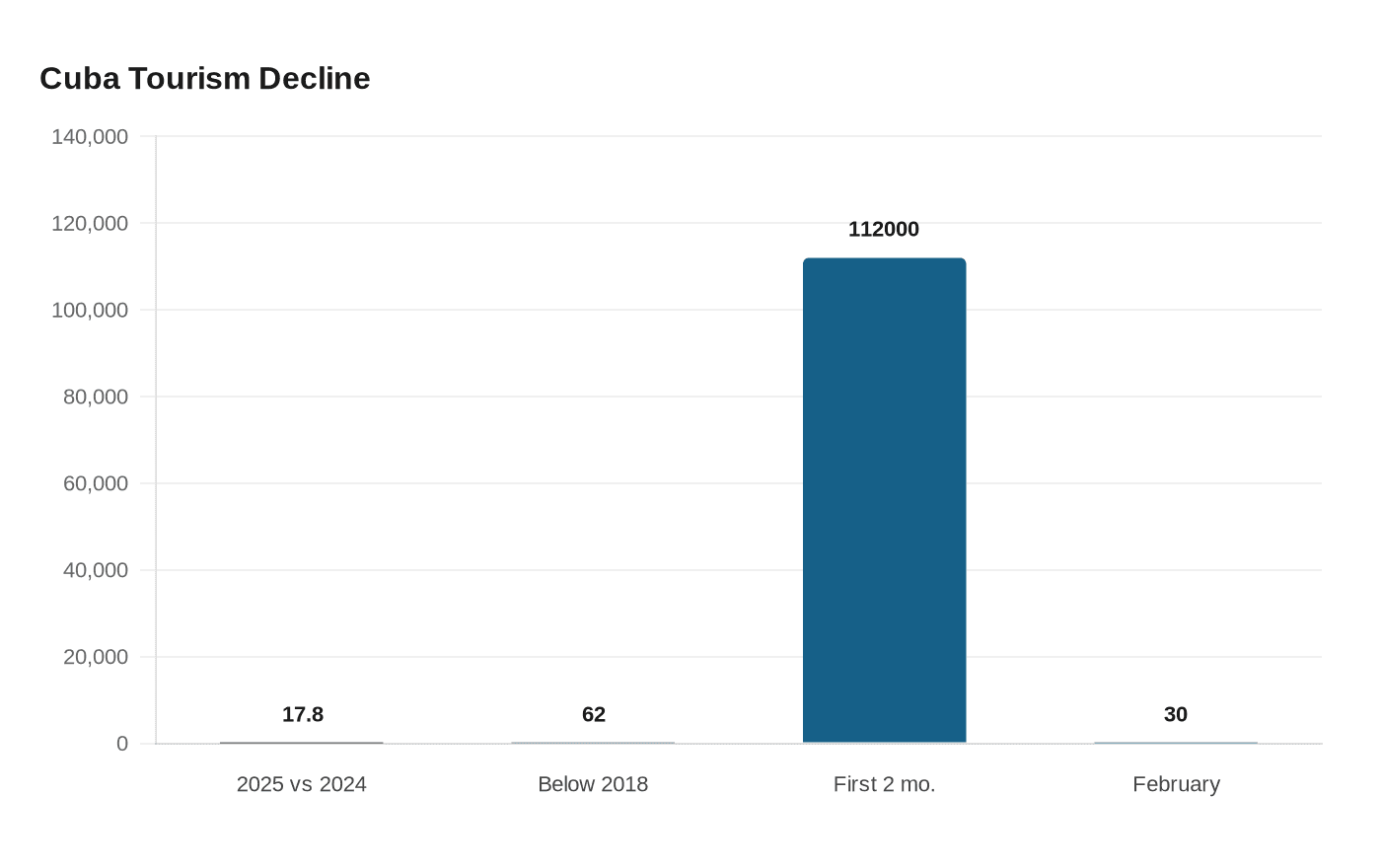
The numbers explain why FITCuba has taken this shape. Cuba ended 2025 with 1.81 million international visitors, down 17.8 percent from 2024 and 62 percent below the 2018 peak. The country’s international hotel occupancy rate fell to 18.9 percent. The slide carried into 2026, with the first two months bringing 112,000 fewer visitors than the same period a year earlier, and February alone down 30 percent. In another sharp indicator of the collapse, international tourist arrivals plunged 56 percent in February from a year earlier.
The weakness is tied to more than demand. Cuba’s energy crisis and transport crunch have shaken the basics of moving visitors in and keeping properties open. Reporting in February said airline cutbacks could reach 1,709 flight operations by April. The government also began a hotel compaction plan on February 7, closing low-occupancy properties to save fuel and electricity. By spring, that squeeze had reached places like Varadero and the northern cays, while Gaviota’s closure of 20 hotels in Cayo Santa María affected more than 7,000 workers.
That is the backdrop for FITCuba 2026: a tourism fair trying to project stability while Cuba’s hotel rooms, airport schedules, and labor force all tell a different story.
This article was produced by Prism’s automated news system from verified source data, official records, and press releases, then run through automated quality and moderation checks before publishing. The system is built and supervised by the people who set the standards it runs under. Read our full AI policy.
Did this article answer your question?