Cuba still draws a trickle of visitors amid U.S. pressure and fuel crisis
Cuba’s visitor stream is down to a trickle: 2.2 million arrivals in 2024, then a 29.1% drop in international visitors by February 2025.

A thin stream of visitors still reaches Cuba, but the trip now runs through blackout schedules, scarce fuel and unreliable transfers. In Havana, Varadero and out in places like Playa Larga and Ciénaga de Zapata, the people who make tourism work are keeping it together one room, one ride and one dinner service at a time.
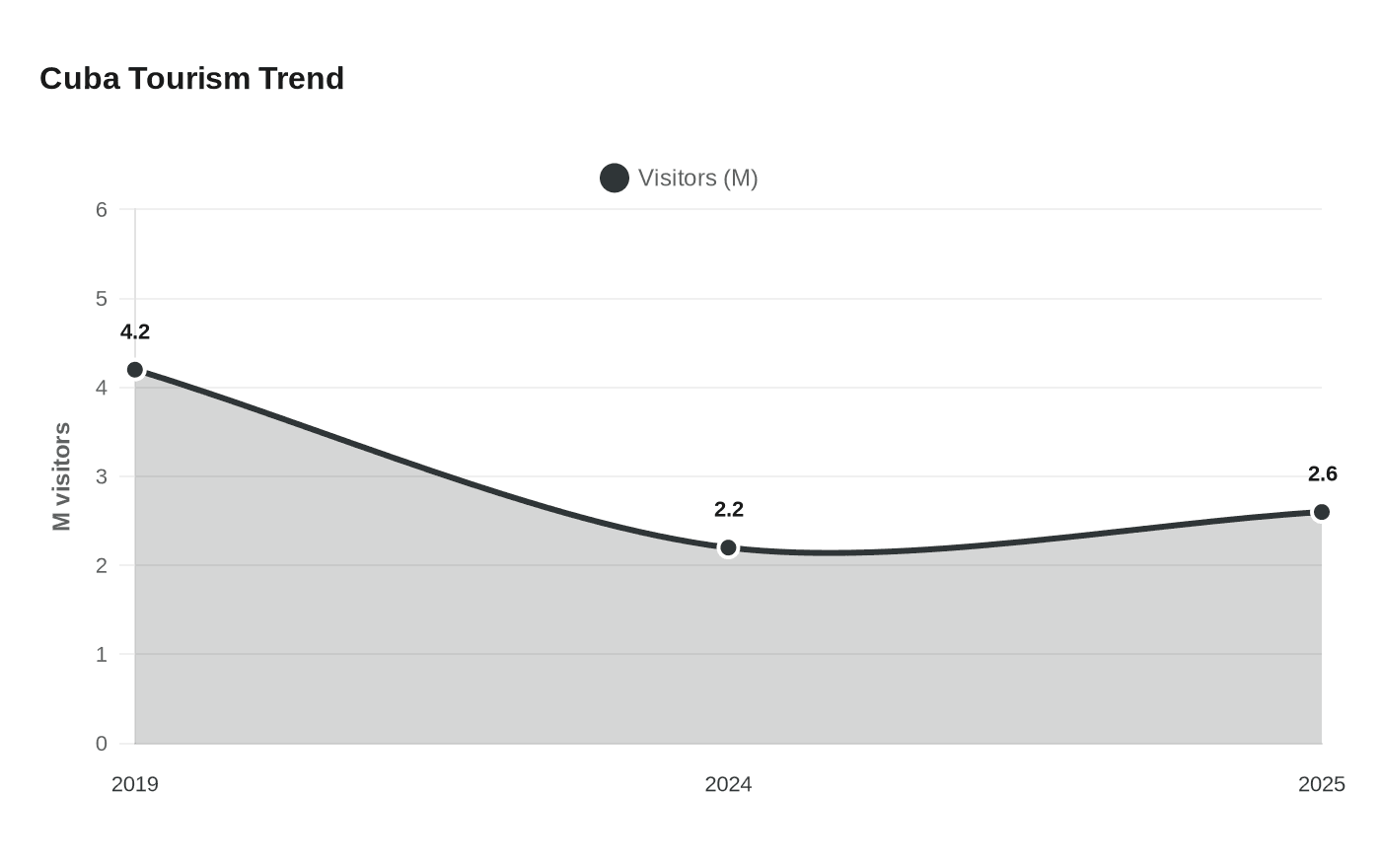
The numbers show how far the sector has slid. Cuba received 2.2 million international tourists in 2024, down 9.6% from 2023 and well below the government’s original target of 3.2 million, later cut to 2.7 million. The island brought in 4.2 million visitors in 2019, before the pandemic, and officials have already projected only 2.6 million international visitors for 2025. That is not a rebound. It is a smaller market trying to survive a longer squeeze.
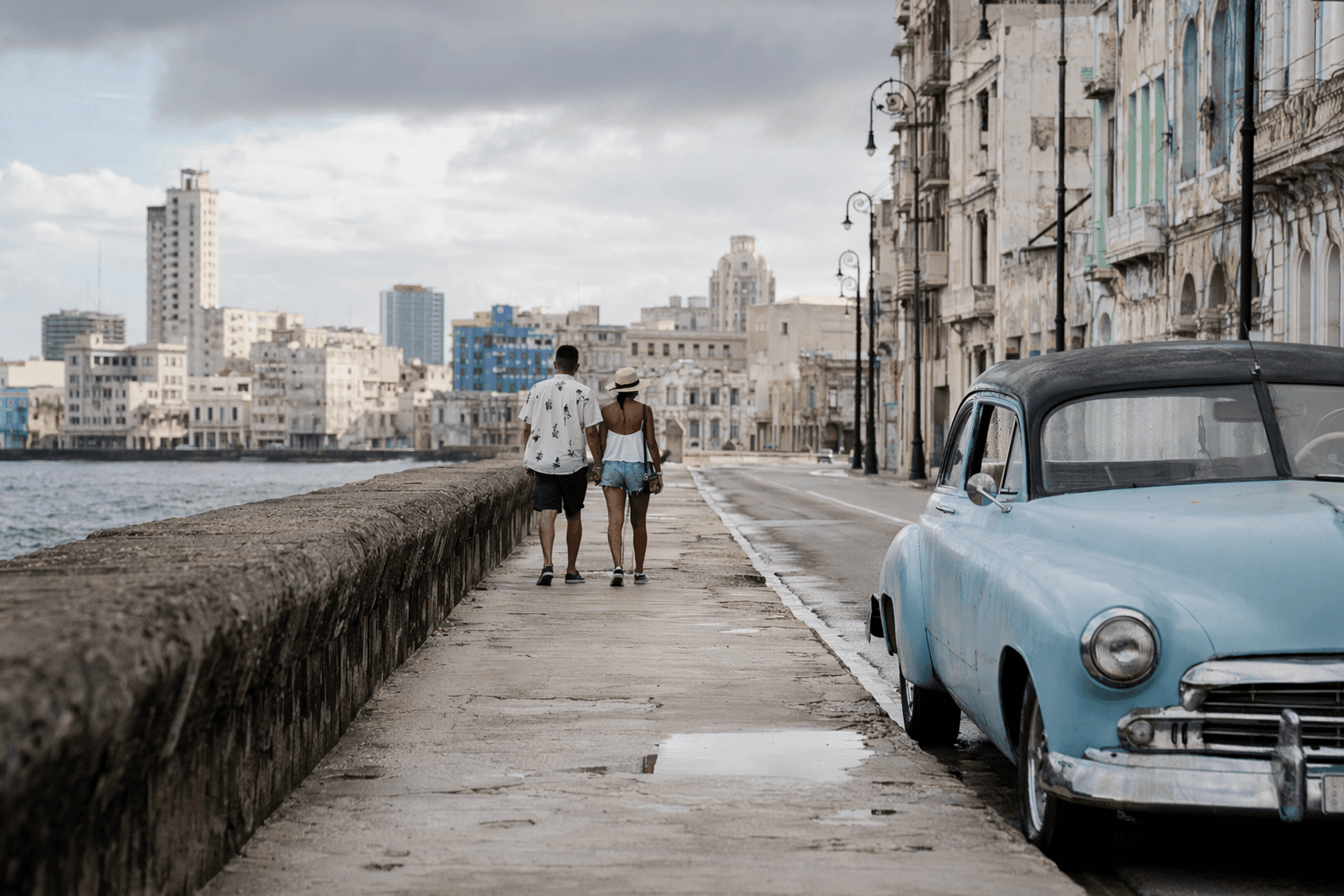
The deterioration was already clear early in 2025. By February, Cuba had received 496,858 travelers, including 374,267 international visitors, a 29.1% drop from the same stretch a year earlier. Canada remained the biggest source market in 2024, sending 860,877 travelers, while Russia, the United States, Germany, Spain and Mexico also stayed on the list. But the mix says as much about dependence as it does about demand. The island is leaning harder on a narrow set of markets while the broader flow keeps thinning out.
What changed most was not just interest, but access. Fuel shortages and power outages have been disrupting airports, flights and resort transfers, turning basic logistics into the day’s first obstacle. Aviation fuel shortages were affecting multiple Cuban airports through at least early April 2026, and Iberia planned to suspend Havana flights in June because of Cuba’s exceptional situation and lack of jet fuel. At José Martí International Airport, and on the roads that connect it to hotels and beach towns, the crisis is no longer abstract. It is the reason a driver may not have gasoline, a hotel may not keep steady power, and a guest may wait longer for a transfer that used to be routine.
That reality has also changed who still comes. Some foreigners are drawn precisely because Cuba feels politically charged and harder to reach, not because it offers an easy Caribbean escape. For Cuban officials, the collapse is the product of U.S. pressure and they have ordered emergency fuel-saving measures to protect essential services. For the tourism sector, the verdict is harsher: even the visitors who still arrive are evidence of the island’s pull, but not enough to reverse the damage. Cuba still attracts a stubborn trickle. What it can no longer reliably sell is certainty.
This article was produced by Prism’s automated news system from verified source data, official records, and press releases, then run through automated quality and moderation checks before publishing. The system is built and supervised by the people who set the standards it runs under. Read our full AI policy.
Did this article answer your question?